 Ferndale Siding
 Siding Built for Life on the Water Near Semiahmoo
Homes in and around Semiahmoo sit close enough to the water that siding takes a different kind of beating than it would a few miles inland. Salt-laden air off the bay works on fasteners and finishes year-round. Wind-driven rain off Puget Sound doesn't fall straight down — it hits walls sideways, which means it finds every gap in flashing, caulking, and lap joints that a calmer climate would never expose. And the long, damp Whatcom County winters keep north-facing and shaded walls wet long enough for moss and algae to take hold and stay there for months.
None of this is unusual for the area — it's just the reality of building on Washington's northwest coast. But it means siding installation here isn't a job you want done by a crew that mostly works drier, inland neighborhoods. The materials, the flashing details, and the sequencing all need to account for a wall that stays wet longer and gets hit harder than most.
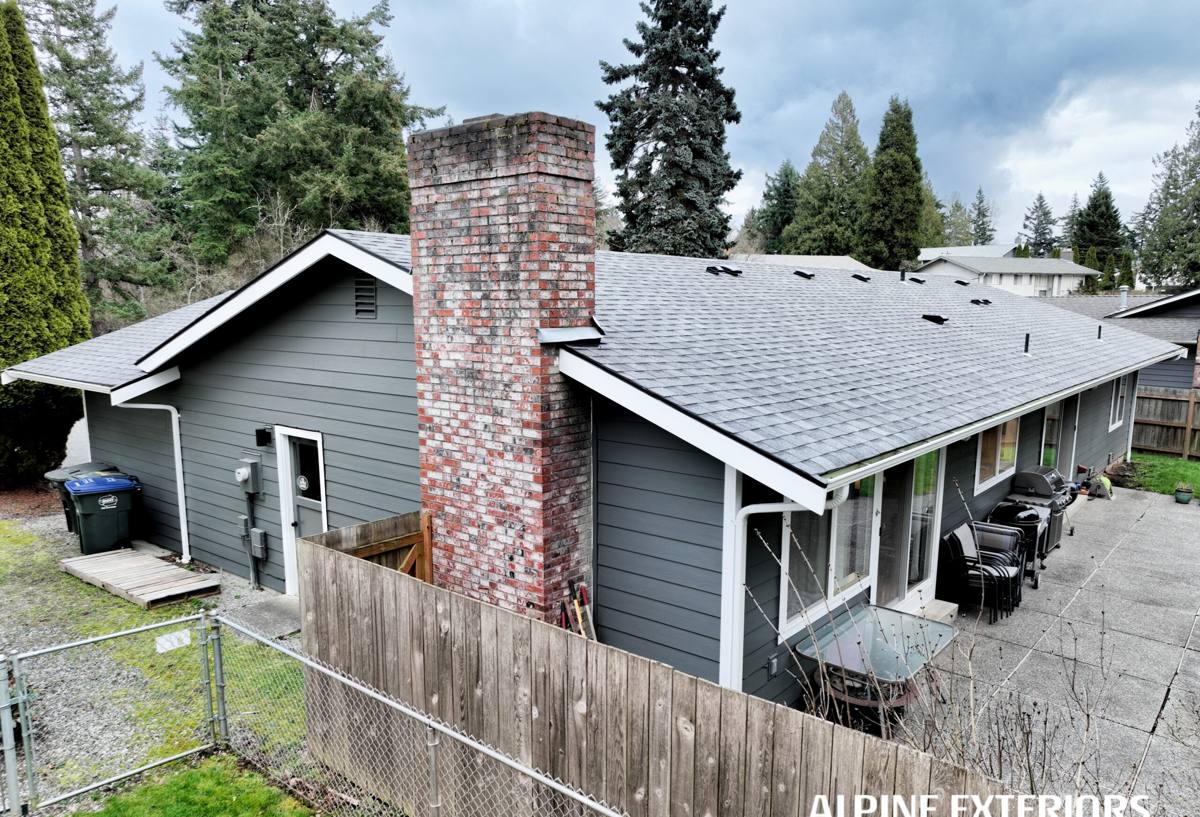
What Semiahmoo's Climate Actually Does to a Wall
Salt Air and Corrosion
Airborne salt accelerates corrosion on anything metal — nail heads, flashing, trim fasteners. Left unaddressed, corroding fasteners eventually stain the siding face and, worse, lose their grip. Correct installation means using fasteners and flashing rated for coastal exposure, not standard interior-grade hardware.
Driving Rain and Wall Moisture
Wind off the bay pushes rain into laps, seams, and penetrations that would stay dry on a calmer site. A wall assembly here needs a properly lapped weather-resistive barrier, correctly flashed windows and doors, and siding installed with the manufacturer's specified gaps and clearances — not just nailed up tight and caulked over the mistakes.
Shade, Moisture, and Moss
Whatcom County's overcast winters mean shaded and north-facing walls can stay damp for weeks at a stretch. That's exactly the environment moss and algae need. Siding that can't handle sustained moisture exposure — or that traps moisture behind it — will show green growth and soft spots years before a properly ventilated, moisture-resistant assembly will.
Why We Install Only James Hardie Fiber Cement Here
We don't install vinyl, LP SmartSide, primed wood, or other fiber cement brands. That's not a marketing position — it's a decision built around what actually holds up on a coastal Whatcom County wall. Vinyl can warp and fade under sustained UV and temperature swings, and its seams give wind-driven rain more chances to work its way behind the panel. Wood-based and OSB-core products depend entirely on an unbroken factory coating and flawless field caulking to keep moisture out; on a wall that stays wet as long as ours do, that margin for error is too thin.
James Hardie fiber cement is non-combustible, dimensionally stable in wet-dry cycling, and available in HZ5 and HZ10 formulations engineered for different climate exposure levels — the kind of product line built with regions like ours in mind. The factory-applied ColorPlus finish is baked on rather than field-painted, which matters when you're trying to keep a consistent finish through decades of salt air and rain. It's also backed by a strong, transferable manufacturer warranty, which is worth something when a house eventually changes hands.
What Correct Installation Involves
Fiber cement siding is only as good as the wall assembly underneath it. A rushed or corner-cut install can fail even with premium material. On a Semiahmoo-area home, our process includes:
- Removing existing siding and inspecting the sheathing for rot, soft spots, or prior water damage before anything new goes up
- Installing a continuous, properly lapped weather-resistive barrier — shingle-style, top over bottom, so water is always directed outward
- Flashing every window, door, and penetration so water sheds away from the opening rather than behind it
- Maintaining manufacturer-specified clearances at grade, roof lines, and butt joints so the assembly can breathe and drain
- Using coastal-rated, corrosion-resistant fasteners throughout, not standard interior hardware
- Caulking and sealing to Hardie's application specs — enough to seal, not so much that it traps moisture
- Final inspection of every course and joint before trim and paint touch-up
Skipping any one of these steps doesn't usually show up right away. It shows up two or three winters later, as staining, soft trim, or moss creeping in behind a joint that wasn't lapped correctly.
Our Process, Start to Finish
1. On-Site Assessment
We walk the exterior with you, note problem areas — chronic damp corners, prior water intrusion, shaded walls — and talk through what's driving the need for new siding.
2. Written Estimate
You get a clear, itemized estimate: material, prep work, and any sheathing repair we anticipate, with no pressure to sign on the spot.
3. Prep and Tear-Off
Old siding comes off, sheathing gets inspected and repaired as needed, and we confirm the scope before the new barrier goes on.
4. Weather Barrier and Flashing
This is the step that determines how the house performs in a storm five years from now. We don't rush it.
5. Hardie Installation
Panels, planks, or shingle-style siding installed to manufacturer spec, with attention to fastening pattern, clearances, and joint treatment.
6. Final Walkthrough
We review the finished work with you before calling the job done, and answer questions about care going forward.
Comparing Siding Options for a Coastal Whatcom County Wall
| Factor | James Hardie Fiber Cement | Vinyl | Wood / OSB-Based Panel |
|---|---|---|---|
| Salt air resistance | Strong — non-combustible, stable material | Moderate — can chalk and fade over time | Weak — depends on unbroken coating |
| Wind-driven rain tolerance | Strong when correctly flashed | Moderate — seams are vulnerable | Weak — moisture intrusion risk at seams/edges |
| Moss/algae resistance | Good with proper ventilation gap | Fair — surface growth, doesn't structurally damage | Poor — trapped moisture can rot the substrate |
| Finish longevity | Factory-baked ColorPlus finish | Color molded in, but fades/chalks with age | Field-applied paint/primer, needs repainting |
| Fire resistance | Non-combustible | Combustible | Combustible |
What Drives Cost on a Semiahmoo-Area Project
Every home is different, so we won't quote a number without seeing the site — but a few factors consistently move the price on jobs in this area:
- Sheathing condition — homes with hidden moisture damage from prior siding need repair before new material goes on
- Home size and wall complexity — dormers, multiple gables, and tall walls take more time and material
- Siding profile — lap, shingle-style, and panel siding all have different labor and material costs
- Trim and accessory work — corner boards, window trim, and fascia often get replaced alongside the field siding
- Site access — waterfront lots with limited staging area can add setup time
We give a written, itemized estimate before any work starts, so you know what you're paying for and why.
What to Ask Before Hiring Anyone for Siding Work Here
A contractor who mostly works drier, inland jobs may not think about flashing and clearances the same way a crew that works this coastline every season does. Before you hire anyone for siding in the Semiahmoo area, it's worth asking:
- Do you carry current Washington contractor licensing and liability insurance?
- Have you installed siding on other homes in this specific coastal area, and can you speak to how you handle flashing and moisture barriers here?
- What brand and product line are you installing, and why?
- Will you inspect and repair sheathing before installing new siding, or just cover what's there?
- What does your written estimate include, and what would trigger a change order?
A straight answer to all five is a good sign. Vague answers to the flashing and sheathing questions are worth a second opinion.
Caring for Hardie Siding in a Salt Air, High-Moss Environment
James Hardie siding is low-maintenance compared to wood or vinyl, but "low-maintenance" doesn't mean "no maintenance" on a wall this close to the water. A yearly rinse-down removes salt residue and early moss growth before it takes hold. Keeping gutters clear and vegetation trimmed back from walls helps shaded, damp areas dry out between storms. And an occasional walk-around to check caulking at trim and penetrations catches small issues before they become water intrusion. None of this is heavy work — it's the kind of upkeep that protects the investment you made in a correctly installed system.
Why a Crew That Already Works This Area Matters
Siding installation isn't just about the material — it's about how well the crew understands the specific conditions a wall in this location will face. A contractor based in and around Ferndale, working Whatcom County's coastal neighborhoods regularly, already knows which walls take the worst of the wind-driven rain, where moss tends to establish first, and how to detail flashing so it holds up through a full wet season rather than just passing a walkthrough. That local familiarity shows up in the details you don't see once the siding is up — the flashing behind the trim, the gap at the bottom course, the fastener choice — which are exactly the details that determine whether the job still looks right in ten years.
If you're weighing a siding replacement for a home near Semiahmoo, we're happy to take a look and talk through what your specific walls need. Reach out for a free, no-pressure estimate using the form below.