 Ferndale Siding
 Semiahmoo Sits Right at the Edge of the Weather
Semiahmoo occupies one of the more exposed pieces of real estate in Whatcom County — a low, waterfront spit with open water on multiple sides and very little natural windbreak. That position is part of what makes it a special place to live, but it's also exactly the kind of setting that ages siding faster than almost anywhere else nearby. Salt-laden air off the water, wind-driven rain that hits walls at an angle instead of falling straight down, and a long, damp moss season all work on exterior siding year-round, not just during the wet months.
Homes a few miles inland in Ferndale deal with plenty of rain too, but they don't get the steady salt exposure that comes with being this close to open saltwater. Salt air accelerates corrosion on fasteners, trim flashing, and any exposed metal, and it also interacts with paint and caulking in ways that shorten their working life. If you own a home in Semiahmoo, your siding is doing more work than a similar house set back from the water — which is exactly why repair here needs to be diagnosed and executed differently than a routine patch job elsewhere in the county.
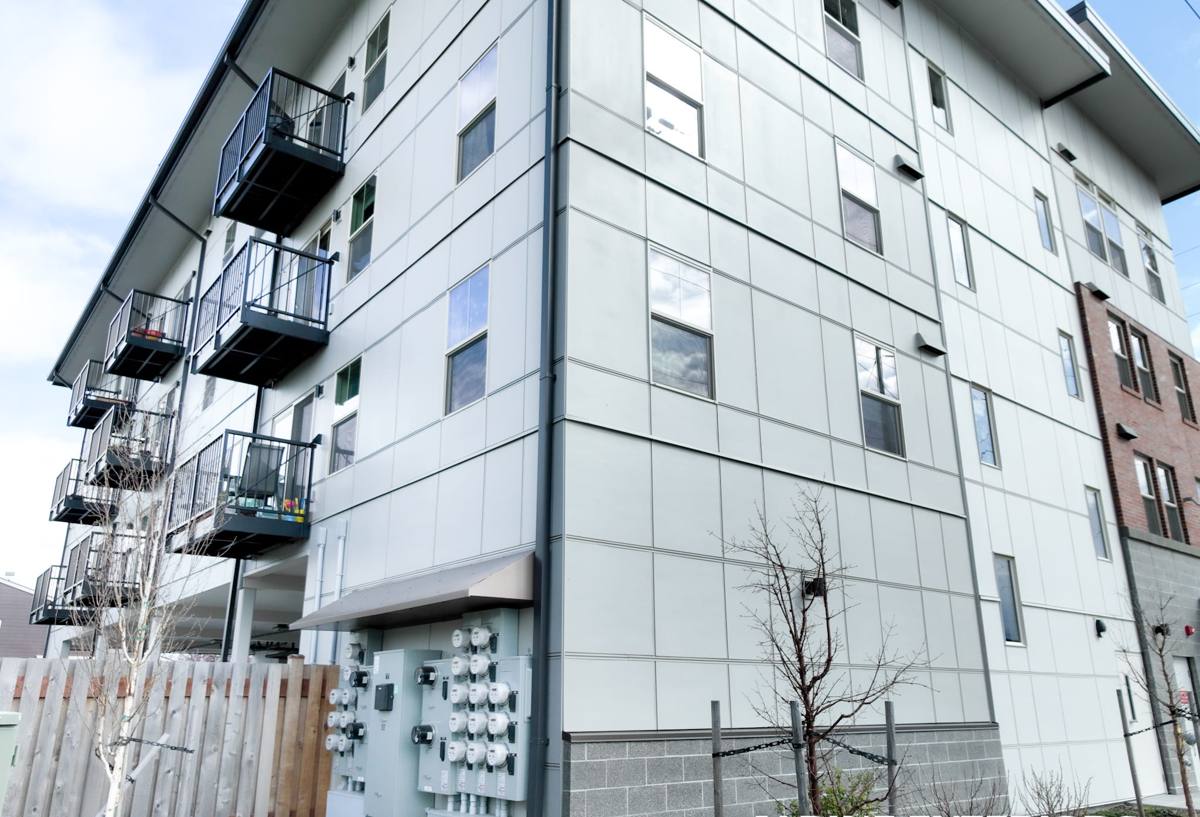
What Salt Air, Rain, and Moss Actually Do to Siding
Salt Air
Airborne salt is hygroscopic — it pulls moisture out of the air and holds it against whatever surface it lands on. On siding, that means panels, trim, and especially fasteners stay damp longer than they would in a drier inland spot, even on days when it isn't raining. Over years, this speeds up caulk failure, paint breakdown, and corrosion of any nails, screws, or metal flashing that isn't rated for coastal exposure.
Wind-Driven Rain
Rain that comes in sideways off the water finds every gap a straight-down rain never would. Lap joints, butt seams, window and door trim, and inside corners all take direct hits. If those details weren't sealed and flashed correctly during the original install, wind-driven rain will eventually find its way behind the siding — and once it's behind the cladding, the damage is happening where you can't see it.
Moss and Sustained Moisture
Whatcom County's moss season runs long, and a waterfront property like Semiahmoo tends to stay shaded and damp on its north- and west-facing walls even after the rest of the neighborhood dries out. Moss and algae don't just look bad — they hold moisture against the siding surface for extended periods, which is hard on paint film and, on wood-based products, on the substrate underneath.
Signs a Semiahmoo Home Needs Siding Repair, Not Just Paint
A lot of homeowners reach for a pressure washer or a paint touch-up when the real issue is underneath the surface. Here's what actually signals repair is needed:
- Soft or spongy spots when you press on the siding, especially near the bottom courses or below windows
- Visible gaps opening up at butt joints, corners, or where siding meets trim
- Paint that's bubbling, peeling, or failing in patches rather than evenly across a wall
- Dark staining or streaking that comes back quickly after cleaning — often a sign moisture is being held rather than shed
- Persistent moss or algae growth concentrated on one or two walls (usually the shaded, water-facing sides)
- Nail heads or fastener corrosion showing through the paint surface
- Warping, cupping, or visible separation of boards from the wall plane
- Musty odor or visible moisture inside on an exterior wall that lines up with damaged siding outside
What a Correct Repair Actually Involves
Siding repair done right is not just cutting out a bad board and nailing in a new one. In a coastal setting like Semiahmoo, that approach almost guarantees the same failure returns in a year or two. A repair worth paying for addresses three things every time:
1. Finding the Real Source of the Water
Damaged siding is usually a symptom. Before anything gets replaced, we trace where water is actually getting in — a failed seal at a window head, a missing kick-out flashing, a butt joint that was never caulked, or a grade issue pushing splash-back onto the lower courses. Replacing the visible damage without fixing the entry point just buys you a short delay before the same spot fails again.
2. Checking and Repairing the Water-Resistive Barrier
Behind every siding system is a weather-resistive barrier (housewrap or building paper) that's supposed to be the home's real waterproofing layer — siding is the first line of defense, but the barrier is what's supposed to stop anything that gets past it. If that barrier is torn, improperly lapped, or missing at a repair area, we address it before new siding goes back on. Skipping this step is the single most common reason siding repairs fail early on windward, water-exposed homes.
3. Matching Material and Fastening Correctly
Repairs need to match the existing siding's profile, reveal, and finish closely enough that they don't stand out, and they need to be fastened with corrosion-resistant hardware appropriate for a salt-air environment. Using standard interior-grade fasteners on a Semiahmoo repair is a shortcut that shows up as rust streaks within a season or two.
Repair or Replace? Honest Factors to Weigh
Not every damaged section needs full replacement, and not every home should keep patching indefinitely. These are the factors that actually decide which makes sense:
| Factor | Favors Repair | Favors Replacement |
|---|---|---|
| Extent of damage | Isolated to one or two areas | Spread across multiple walls or elevations |
| Siding material | Fiber cement in otherwise good condition | Original wood, LP, or aging vinyl nearing end of life |
| Underlying barrier | Intact where damage occurred | Torn, degraded, or missing in multiple spots |
| Home's age vs. siding age | Siding is newer than 10-15 years | Siding is original and near or past expected lifespan |
| Exposure | Repair area is sheltered from prevailing wind/rain | Damage is concentrated on the water-facing walls |
| Cost pattern | First repair on this section | Same wall has needed repair more than once |
If we're standing at a Semiahmoo home and the damage is limited, the barrier underneath is sound, and the existing siding is fiber cement in reasonable shape, a targeted repair is the honest recommendation — we're not going to sell a full re-side when it isn't warranted. But if the damage keeps recurring on the same wall, or the existing material is wood, LP SmartSide, or vinyl that's already showing its age in a coastal environment, repair becomes a short-term fix on a product that was never well suited to this exposure in the first place.
Why We Only Replace With James Hardie
When a repair does turn into a replacement — a full wall, a corner, or an entire elevation — the material choice matters more in Semiahmoo than almost anywhere else we work. This is why we install James Hardie fiber cement exclusively and don't offer LP SmartSide, vinyl, cedar, primed spruce, or other cement-board brands.
Wood-based products like LP SmartSide and untreated cedar or spruce rely on a factory or field-applied coating to keep moisture out, and in a salt-air, high-moisture environment that coating is under constant stress — once it's compromised, the wood substrate underneath is vulnerable to rot in a way fiber cement simply isn't. Vinyl siding can handle rain fine, but it expands and contracts significantly with temperature swings, its seams and fastening are more forgiving of gaps that let wind-driven rain track in, and it doesn't hold paint if you ever want to change the color. Other fiber cement brands may look similar on a spec sheet, but Hardie's ColorPlus factory finish and its HZ5 product line are engineered specifically for damp, moisture-heavy climates like ours, backed by a strong transferable warranty.
Fiber cement doesn't rot, doesn't attract the moss and algae growth the way some coatings do, and holds up to the freeze-thaw and wet-dry cycling that a waterfront property sees more of than an inland home. It's not the cheapest option on day one, but it's the product we're willing to stand behind on a house that's going to keep taking salt air and sideways rain for the next several decades.
Our Repair Process for Semiahmoo Homes
1. On-Site Diagnosis
We inspect the damaged area and the surrounding siding, checking fastener condition, caulk lines, flashing details, and — where damage suggests it — pulling a section to look at the barrier underneath before quoting anything.
2. Honest Scope
You get a clear explanation of what's actually wrong, whether it's a contained repair or something that's going to spread, and what it will take to fix it correctly. We'd rather tell you a repair is enough than upsell a replacement you don't need yet.
3. Correct Repair Execution
Damaged material comes out, the barrier gets inspected and repaired as needed, new material goes in matched to the existing profile, and everything is fastened and sealed with hardware and sealants rated for coastal exposure.
4. Final Check
Before we call it done, we walk the repair with you, confirm the seams and finish match, and flag any other areas worth keeping an eye on given the home's exposure.
Why a Crew That Already Works Semiahmoo Matters
A contractor who mostly works drier, more sheltered inland neighborhoods can still do competent general siding work — but they may not default to marine-grade fasteners, may not think to check flashing details as closely, and may underestimate how fast a small gap turns into real water intrusion on a wall that takes direct salt spray and wind-driven rain. Crews who regularly work Whatcom County's waterfront communities know to treat those details as standard practice, not an upgrade, because they've seen what happens when they're skipped.
That local pattern recognition is worth something on a property like this: knowing which walls in a coastal spit setting take the worst of the weather, what corrosion looks like at six months versus six years, and how moss behaves differently on a shaded water-facing wall than it does a few miles inland in Ferndale proper.
Protecting the Repair Going Forward
A correctly done repair still benefits from basic upkeep, especially in this environment:
- Rinse salt residue off siding periodically, particularly after storms with onshore wind
- Keep gutters clear so overflow isn't running down the wall face
- Trim back vegetation that's shading a wall and keeping it damp longer than necessary
- Recaulk seams and joints on a normal maintenance cycle rather than waiting for visible failure
- Have any new soft spots, staining, or moss regrowth looked at early rather than waiting a season
Catching problems early is almost always cheaper and less invasive than waiting until the damage has spread or reached the framing.
If you're seeing soft spots, staining, or moss on your Semiahmoo home's siding, we're happy to take a look and give you a straight answer on whether it's a repair or something bigger — no pressure, no upsell. Reach out for a free estimate using the form below.