 Ferndale Siding
 Siding Repair in Kendall: A Different Set of Problems Than a New Build
Kendall sits inland from Ferndale, in the kind of Whatcom County terrain that holds moisture longer than the open coastline does — tree cover, low light in the wet months, and long stretches where siding simply doesn't get a chance to dry out between storms. Add in the salt-tinged air that moves through this part of Whatcom County off the Strait of Georgia and Bellingham Bay, and you get a slow, steady set of conditions that eat away at siding from the outside in, whether the house is twelve years old or forty.
Repair work here is rarely about one dramatic failure. It's usually a handful of smaller issues that were left alone too long: a cracked board that let water behind the wall, a caulk joint that gave out, a patch of moss that held moisture against the surface for months at a time. None of those problems fix themselves, and most get more expensive the longer they sit. Our repair work in Kendall is built around finding and fixing those root causes, not just covering them up.
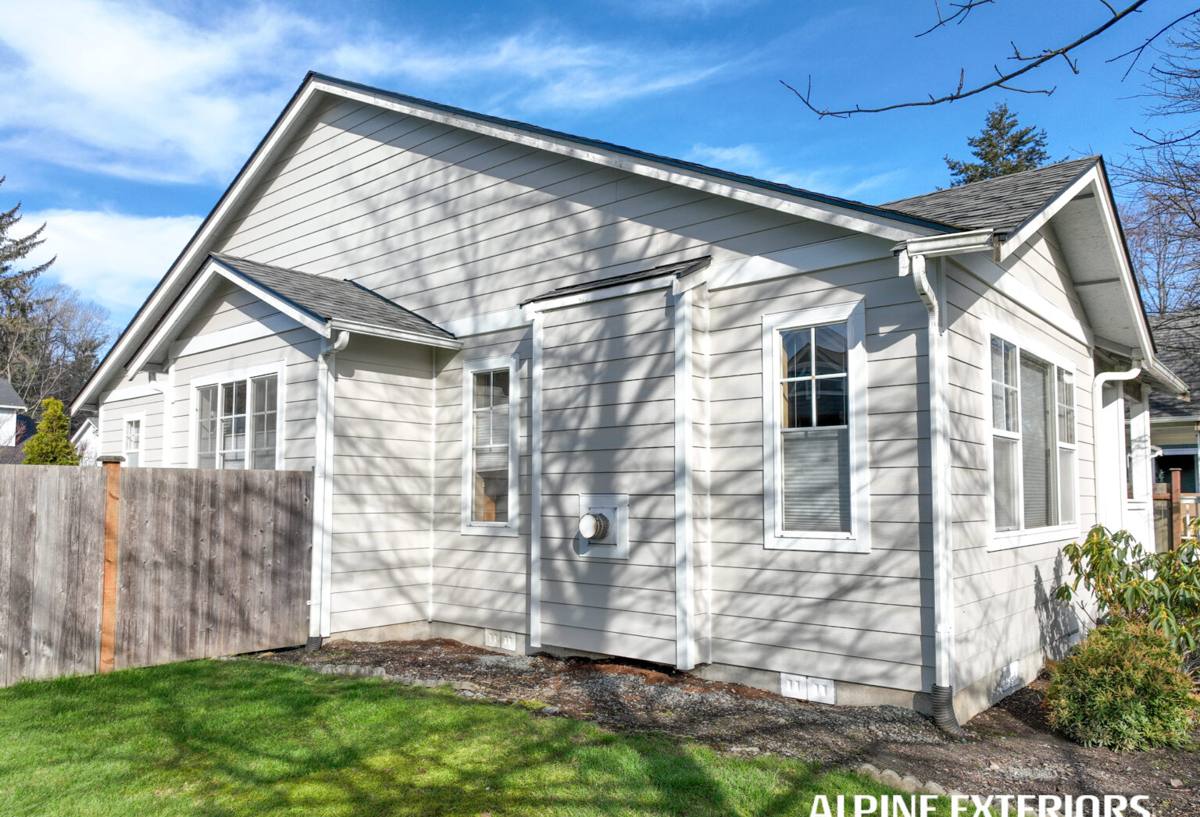
What Driving Rain, Moss, and Salt Air Actually Do to Siding
Driving Rain and Wind-Driven Moisture
Whatcom County storms don't just fall straight down — wind pushes rain sideways into wall assemblies, especially on west- and south-facing elevations. Over years, that wind-driven moisture finds every weak point: nail pops, hairline cracks, gaps at trim and window returns, and seams where caulk has shrunk or failed. Once water gets behind the siding, it doesn't just sit there — it soaks into sheathing, framing, and insulation, and it can travel a long way from the original entry point before you ever see a stain on drywall inside.
Long Moss Season
Shaded, tree-lined lots around Kendall stay damp for months at a stretch, and that's exactly what moss and algae need to take hold. On horizontal trim, window sills, and lower courses of siding, moss holds water against the surface far longer than open air ever would. On a material that isn't engineered to resist that kind of sustained moisture contact, the surface starts breaking down from underneath the growth — often invisibly, until a board is soft to the touch.
Salt-Influenced Air
Whatcom County's proximity to saltwater means fasteners, flashing, and any exposed metal components on a home's exterior corrode faster than they would further inland. Salt-laden air also accelerates the breakdown of caulks and sealants, and it interacts with moisture cycling to speed up wear on anything that isn't built to shed water cleanly. It's a slower factor than rain or moss, but it compounds with both.
Signs a Kendall Home Needs Siding Repair
Most homeowners call us after noticing one of these — but by the time any of these are visible from the ground, the underlying damage is usually further along than it looks:
- Soft or spongy spots when you press on the siding, especially near the bottom courses or under windows
- Visible cracking, splitting, or buckling in individual boards or panels
- Peeling or bubbling paint, or a chalky finish that wipes off on your hand
- Dark streaking, staining, or persistent moss and algae that keeps coming back after cleaning
- Gaps opening up at seams, corners, or where siding meets trim, window, or door casings
- Nail heads working loose or popping through the surface
- A musty smell or visible moisture inside on an exterior wall, which usually means water has already gotten past the siding
What a Correct Repair Actually Involves
A lot of "siding repair" in this region is really just cosmetic patching — caulk over a crack, a fresh coat of paint over a stain, a new piece of trim nailed over rot without ever finding out how far it spread. That kind of work looks fine for a season or two and then fails again, often worse than before, because it never addressed what let water in to begin with.
Our approach starts with taking the damaged material off, not covering it. That's the only way to actually see what's happening behind the siding — whether the sheathing is still sound, whether the house wrap or weather barrier is intact, whether framing has taken on moisture. We also check the flashing and drainage details around windows, doors, and any wall penetrations in the repair area, because a siding failure and a flashing failure often show up together. If we find rot or water damage in the substrate, that gets addressed before any new siding goes back on — patching over compromised sheathing just resets the clock on the same failure.
Once the wall assembly itself is confirmed sound (or repaired), we match the replacement material, cut and fasten it correctly for the wall type and exposure, and re-seal and re-paint to match the surrounding siding as closely as possible. On a well-maintained home, a good local repair can be nearly invisible from the curb.
Common Repair Scenarios We See Around Kendall
| Issue | Typical Cause | What Correct Repair Looks Like |
|---|---|---|
| Soft or rotted boards at the base of walls | Splashback, poor grade slope, or moss holding moisture against the surface | Remove affected boards, inspect sheathing for rot, correct drainage/grade issue if present, replace with matched material |
| Cracked or split panels | Impact damage, freeze-thaw cycling, or material that was never rated for this climate | Cut out and replace the damaged section; check surrounding fasteners and seams |
| Failed caulk joints and gaps at trim | UV and moisture cycling breaking down sealant over years | Remove old caulk fully, confirm substrate is dry and sound, re-seal with an exterior-grade product suited to the gap |
| Persistent moss/algae staining | Shade, low airflow, and extended damp periods typical of this part of the county | Clean surface correctly (no pressure-washing damage), address the moisture source, repaint or refinish as needed |
| Water intrusion near windows or corners | Failed or missing flashing behind the siding | Pull siding back, correct the flashing detail, then reinstall or replace siding |
| Corroded or popped fasteners | Salt-influenced air accelerating metal fatigue, or fasteners not rated for the exposure | Remove and replace with corrosion-resistant fasteners set to the correct depth and pattern |
Our Siding Repair Process
- On-site inspection. We look at the whole elevation, not just the spot you called about — a single problem area is often a symptom of something happening across the wall.
- Diagnosis behind the surface. We pull back enough siding to see the sheathing, weather barrier, and flashing, and check for hidden moisture with a moisture meter where it's warranted.
- Honest scope and estimate. We tell you plainly whether this is a targeted repair, a larger repair, or whether the siding's condition means a repair won't hold and replacement is the better use of your money.
- Substrate repair first. Any rot, soft sheathing, or flashing problem gets corrected before new siding goes back on.
- Matched material and correct installation. Replacement siding is cut, fastened, and sealed to spec — not just nailed up fast.
- Finish work. Caulking, priming, and painting to blend the repair with the rest of the wall as closely as the existing material allows.
Repair or Replace? How We Help You Decide
Not every damaged wall needs full replacement, and not every "small" repair is actually small once you're behind the surface. Here's roughly how we think about it, and how we'll walk you through it on-site:
| Factor | Favors Repair | Favors Replacement |
|---|---|---|
| Extent of damage | Isolated to one or two wall sections | Recurring problems across multiple elevations |
| Age and condition of remaining siding | Siding is otherwise sound and well-maintained | Siding is near or past its expected service life |
| Substrate condition | Sheathing and framing are dry and intact | Widespread rot found behind the siding |
| Original material | Durable material (fiber cement) that's holding up structurally | Original material that's prone to repeat moisture failure |
| Cost over time | Repair cost is well below the cost of a full re-side | You're facing repeat repairs on the same areas year after year |
We'll never push a full replacement when a targeted repair will genuinely hold up. We also won't talk you into a patch job we don't think will last through another Whatcom County wet season — that just costs you twice.
What We Repair With — and Why That Matters
We install and repair with James Hardie fiber cement siding exclusively. That matters for repair work specifically: when we're matching new material into an existing Hardie wall, we can get a clean, durable, long-term match using the same product system, the same ColorPlus factory finish options, and installation methods built for this exact climate — non-combustible, engineered for moisture exposure, and backed by a transferable manufacturer warranty.
If your home is currently sided in something other than fiber cement — vinyl, LP SmartSide, primed wood, or another product — we'll still diagnose the problem honestly and tell you what a real repair involves. But we won't install patch material we don't stand behind long-term. In cases where the existing siding is failing broadly rather than in one isolated spot, we'll usually recommend replacing the affected sections (or the whole elevation) with Hardie rather than layering more of the original problem material back onto the wall. That's not a sales pitch — it's the same standard we hold every job to.
Why a Crew That Already Works Kendall Matters
Repair work rewards local experience in a way new construction doesn't always. A crew that regularly works this part of Whatcom County has already seen how moss builds up on shaded lots, which wall orientations take the worst of the driving rain, and how quickly corrosion shows up on fasteners this close to salt air. That means less time spent diagnosing and more time spent getting the fix right the first time.
It also means accountability. We're not driving in from out of the area for a one-time job — we're repairing homes in the same communities we live and work in, which is exactly why we don't cut corners on substrate inspection or hide a bigger problem behind a quick cosmetic patch.
Protecting Your Siding Between Repairs
A correct repair should last, but a few habits go a long way toward preventing the next one:
- Trim back tree branches and vegetation that keep siding shaded and damp longer than necessary
- Clean moss and algae gently (no high-pressure washing directly at siding) as soon as it appears
- Walk your home's exterior once or twice a year and look for cracks, gaps, or soft spots before they spread
- Re-caulk trim and joint seams proactively when the existing sealant starts to look worn, rather than waiting for a gap to open
- Make sure gutters and downspouts are clear so water isn't overflowing onto siding below
- Check that grade and landscaping slope water away from the foundation and lower wall areas
If you're noticing any of the warning signs above, or you just want an honest read on what's happening with your siding before it turns into a bigger repair, we're glad to take a look. Reach out for a free, no-pressure estimate using the form below.