 Ferndale Siding
 Siding Repair Built for Sudden Valley's Conditions
Sudden Valley homes sit in a corner of Whatcom County where the weather doesn't let up. Long stretches of driving rain, salt-laden air moving in off the water, and heavy tree cover that keeps siding damp and shaded for days at a time all add up to conditions that wear siding down faster than a typical inland home ever sees. Add a moss season that can run from early fall through late spring, and you've got a climate that actively works against whatever is on your exterior walls, all year round.
Siding repair here isn't about slapping a patch over a crack and calling it done. It's about understanding why that spot failed in the first place, because in this climate, the visible damage is rarely the whole story. We repair siding for homes throughout Whatcom County, and Sudden Valley properties consistently show a specific pattern of wear tied directly to moisture, shade, and salt exposure. Knowing that pattern before you start pulling boards is what separates a repair that lasts from one you'll be redoing in three years.
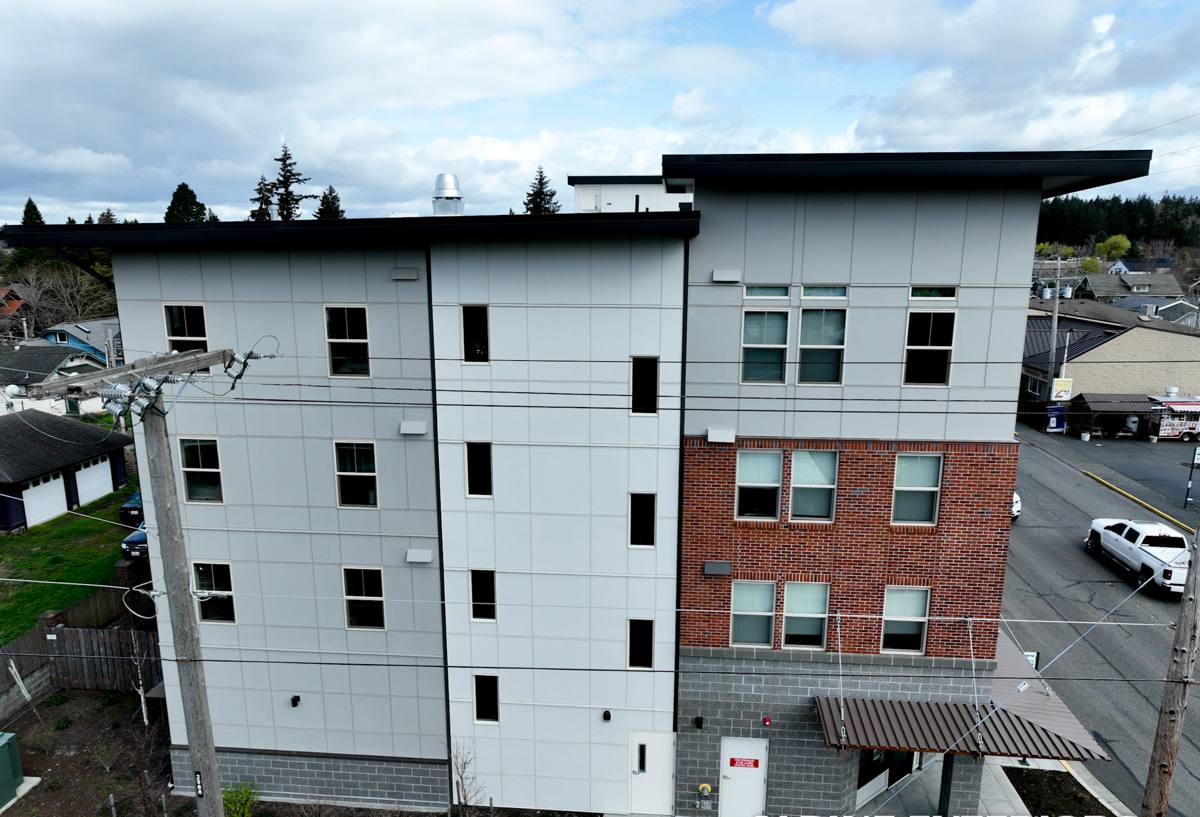
Why This Climate Is Hard on Siding
Salt Air and Driving Rain
Wind-driven rain doesn't just wet the surface of your siding, it forces moisture up under laps, into seams, and behind trim where it has nowhere to dry out quickly. Add salt in the air and you get a slow corrosive effect on fasteners, flashing, and any exposed metal, along with a film that holds moisture against the siding surface longer than plain rain would on its own.
Shade and Moss
Homes tucked into wooded lots or set close to mature trees lose direct sun for large parts of the day, sometimes for weeks at a stretch during the winter. That shade keeps siding damp far longer than a home in open sun, and damp, shaded surfaces are exactly what moss, algae, and lichen need to take hold. Once moss starts growing on or against a siding surface, it holds even more moisture right where you don't want it, and its root structure can work into seams and joints over time.
Temperature Swings
Whatcom County doesn't get extreme heat, but it does get repeated freeze-thaw cycles through the colder months. Any water that's already worked its way into a seam or a crack expands when it freezes, widening the opening and making the next rain event worse than the last. It's a slow, compounding problem, which is exactly why small siding issues in this area rarely stay small if they're ignored.
Signs Your Siding Needs Repair, Not Just Cleaning
A lot of homeowners assume moss stains or a little discoloration is purely cosmetic. Sometimes it is. But there are signs worth taking seriously before you schedule a pressure wash and call it handled.
- Soft or spongy spots when you press on the siding, especially near the bottom courses or around windows and doors
- Visible cracking, splitting, or bubbling paint, particularly on older wood, engineered wood, or fiber cement that wasn't finished correctly
- Moss or algae that keeps returning to the same spot within a season or two of cleaning
- Dark streaking or staining below seams, trim, or fastener heads, which usually points to water tracking through a gap
- Gaps opening up at butt joints, corners, or where siding meets trim, flashing, or the foundation
- Rust-colored streaks near fasteners, a sign the fastener itself is failing
- A musty smell near an exterior wall, or visible staining on interior drywall near that same wall
Any one of these on its own might be minor. Several of them together, or any sign of softness in the material, means water has already gotten past the surface and it's worth having someone look before it spreads.
What's Actually Happening Behind Damaged Siding
The part homeowners don't usually see is what's happening behind the siding panel itself. Every properly built wall has a weather-resistive barrier, sometimes called housewrap, installed against the sheathing, with the siding attached over the top, ideally with a drainage gap between the two. That barrier and gap are what let any moisture that does get past the siding surface drain and dry out before it reaches the wood framing underneath.
When siding fails at a seam, around a penetration like a hose bib or light fixture, or at a poorly sealed trim joint, water can get behind the barrier itself, not just behind the siding. From there it soaks into sheathing and framing, and that's where the real damage happens: soft, rotting wood that won't show on the surface until the problem is well established. This is exactly why a proper repair starts with pulling back the damaged material and checking what's underneath, not just replacing what's visibly cracked or stained.
In a climate with as much sustained moisture as Sudden Valley sees, we treat every repair as a chance to check the barrier and framing behind it, not just swap a board. Repairing over a hidden moisture problem doesn't fix anything, it just hides it for another season.
Repair or Replace: How We Make the Call
Not every siding problem calls for a full re-side, and not every repair is worth doing on its own. The right call depends on how far the damage has spread and what condition the rest of the siding is in.
| Factor | Leans Toward Repair | Leans Toward Replacement |
|---|---|---|
| Extent of damage | Isolated to one or two areas | Recurring across multiple walls or elevations |
| Underlying framing | Dry, solid sheathing found once opened up | Soft or rotted sheathing found in multiple spots |
| Age of existing siding | Siding is still within its useful service life | Siding is already near or past its expected lifespan |
| Material match | Matching material or color is available | Original product discontinued or badly faded compared to the rest |
| Root cause | A fixable, localized issue like one bad seal or flashing detail | A systemic problem like a missing drainage gap or failed barrier across the wall |
We'll walk you through which category your home falls into before any work starts, and we're not going to talk you into a full re-side if a targeted repair genuinely solves the problem. If the damage does turn out to be widespread, we'll explain exactly why, in plain terms, before you decide anything.
Our Sudden Valley Siding Repair Process
1. On-Site Inspection
We start by looking at the whole exterior, not just the spot you called about. Water and moss damage in this climate rarely stays contained to one panel, and a full walk-around often turns up early-stage issues you haven't noticed yet, especially in shaded, north-facing, or tree-covered areas of the home.
2. Opening Up the Damaged Area
Once we've identified the problem area, we open it up enough to see the sheathing, framing, and weather-resistive barrier behind it. This is the step that tells us whether we're dealing with a surface issue or something that's already reached the structure.
3. Addressing the Root Cause
If we find a bad seal, a flashing detail that was never installed correctly, or a section of barrier that failed, we fix that first. Replacing siding over an unresolved moisture path just buys you a repeat visit down the road.
4. Repairing or Replacing the Siding
With the underlying issue handled, we replace the damaged siding sections with matched material, properly flashed and fastened to manufacturer spec, with correct clearances and a working drainage path behind it.
5. Finish and Cleanup
Repaired sections get caulked, painted, or color-matched as needed so they blend with the surrounding siding rather than standing out as an obvious patch, and the site is cleaned up before we call the job done.
Matching James Hardie ColorPlus After a Repair
One of the trickiest parts of any siding repair is making the new section actually look like it belongs. Field-painted repairs on most siding materials tend to weather at a different rate than the surrounding panels, which means a repair that looks perfect on day one can look mismatched within a year or two.
Because we only install James Hardie fiber cement, repairs on Hardie siding can be done with factory-applied ColorPlus finish, engineered to hold color consistently and resist fading in a way field-applied paint struggles to match over time. Where an exact color match isn't available for an older installation, we'll tell you honestly what your options are, whether that's a close match, a repaint of the affected section, or a broader conversation about the siding's remaining service life, rather than pretending a mismatch won't be noticeable.
Why We Only Repair With James Hardie Fiber Cement
We don't install vinyl, LP SmartSide, primed spruce, cedar, or other fiber cement brands, and that standard applies to repairs as much as it does full installs. In a climate like this one, the material doing the repair matters as much as the workmanship.
James Hardie fiber cement is non-combustible, engineered specifically for wet, cold-swing climates like the Pacific Northwest under its HZ5 product line, and backed by a strong transferable warranty when installed to spec. It doesn't absorb water the way wood-based products can, which matters enormously in a moss-and-moisture-heavy environment where trapped water is the root cause of most of the repairs we see. It also holds its factory finish far longer than field-applied paint on other materials, which keeps a repaired section looking right for years instead of months.
When we're called out to repair siding on a home with a different material, we'll still assess it honestly and tell you what your realistic options are. But if that repair turns into a larger conversation about long-term durability, our recommendation is going to be Hardie, because it's what we've seen hold up in exactly these conditions.
Why a Crew That Knows Sudden Valley Matters
Sudden Valley isn't a typical suburban street grid. Many homes here sit on private roads or within a community that has its own access considerations, on wooded and sloped lots that create shade and drainage patterns you don't see on an open, flat site, with a mix of home ages and siding materials that varies a lot from one property to the next. A crew that's worked in the area already understands how to plan around that, from coordinating site access to knowing what kind of moisture and moss issues tend to show up on lake-adjacent, tree-shaded lots.
That familiarity also shows up in diagnosis. A crew that repairs siding across a wide range of climates might treat every job the same way. A crew that regularly works Whatcom County's wetter, shadier neighborhoods knows to check specific spots first, like north-facing walls, areas under heavy tree cover, and sections near ground level where splashback and standing moisture do the most damage.
What to Expect When You Hire Us
- An honest inspection that tells you whether you need a repair, a larger repair, or nothing at all
- A clear explanation of what's happening behind the siding, not just what's visible on the surface
- A written scope of work before anything is opened up or replaced
- Matched James Hardie material and ColorPlus finish wherever a match is available
- Correct flashing, sealing, and fastening to manufacturer specification, not just a quick patch
- A cleaned-up site and a finished repair that blends with the rest of your home's exterior
Keeping Repaired Siding in Good Shape Going Forward
A good repair should buy you years, not months, but a little maintenance on your end helps it last. Keep an eye on gutters and downspouts near repaired sections, since overflow and splashback are a common cause of repeat moisture damage. Trim back branches or brush that keep a wall shaded and damp longer than necessary, and rinse off moss or algae buildup before it has a chance to establish itself again. If you notice any softness, staining, or gaps returning to an area we've repaired, or showing up somewhere new, it's worth a call before it has a chance to spread the way the original damage did.
If you're dealing with damaged, stained, or aging siding on a Sudden Valley home, we're happy to take a look and give you a straight answer about what it needs. There's no pressure and no obligation, just an honest read on your siding and what it would take to fix it right. The form below is the easiest way to get a free estimate started.