 Ferndale Siding
 Lummi Island's Climate Is Harder on Siding Than Most Homeowners Expect
Homes on Lummi Island sit right at the edge of the Salish Sea, and that location cuts both ways. The water views are the reason people build here, but the same water is why siding fails faster on the island than it does a few miles inland. Salt-laden air moves off the water and settles on exterior walls day after day, working into seams, fasteners, and any spot where a coating has started to thin. Add the driving rain that comes through Whatcom County in fall and winter storms, and you have moisture finding its way behind siding that isn't detailed correctly the first time.
Then there's moss. Lummi Island's tree cover and marine humidity create a long moss season that can run most of the year on shaded, north-facing walls. Moss holds moisture against the surface long after a storm has passed, and on materials that aren't built to handle sustained dampness, that constant wet contact is what eventually causes swelling, delamination, or rot at the edges. None of this means siding is doomed on the island — it means the material and the installation both have to be chosen with this specific exposure in mind, not a generic one.
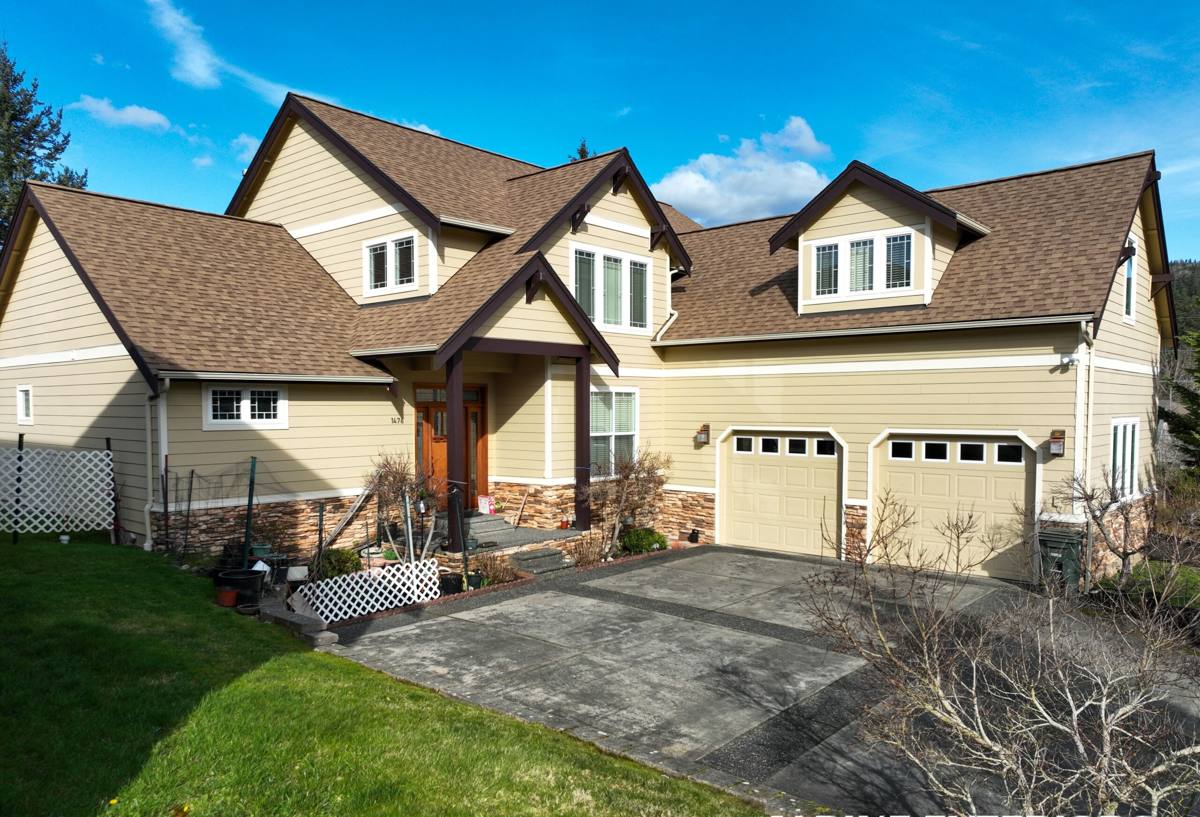
What "Correct" Siding Replacement Actually Involves Here
A siding replacement that holds up on Lummi Island isn't just a new skin over the old wall. The parts nobody sees from the street are what determine whether the job lasts fifteen years or fifty.
Weather-Resistive Barrier and Flashing
Before a single piece of siding goes up, the wall needs a continuous, correctly lapped weather-resistive barrier, with flashing integrated at every window, door, and penetration so water is directed out and down instead of finding a path inward. On a salt-air, high-rain site, gaps or shortcuts here are exactly where hidden rot starts.
Drainage and Ventilation Gap
A small airspace behind the siding lets any moisture that does get past the outer layer drain and dry out instead of sitting against the sheathing. This detail matters more on shaded, moss-prone elevations than it does on a sun-exposed wall, since those walls simply don't get the same drying time between rain events.
Fastening and Field Cuts
Fiber cement has specific nailing patterns, fastener types, and clearances from grade and roof lines. Field-cut edges need to be sealed and primed per the manufacturer's instructions — an exposed raw edge is a moisture entry point, and it's one of the most common corners cut on rushed jobs.
Factory Finish, Not Field Paint
A factory-applied finish is baked on under controlled conditions and bonds to the material more consistently than paint applied on site after installation. In a marine environment where the finish is the first line of defense against salt exposure and UV, that difference shows up in how well the color and surface hold up over the following decade.
Why We Install Only James Hardie Fiber Cement
We made a decision a long time ago to install one siding system and install it well, rather than offer several products and hope each one works out. That system is James Hardie fiber cement. It's non-combustible, it doesn't feed moss the way wood-based products can, and it's engineered in specific formulations for regional climate zones — including the wetter, milder conditions found throughout Western Washington. Paired with a factory ColorPlus finish and backed by a strong, transferable warranty, it's the product we're willing to put our name behind on a site as exposed as Lummi Island.
That doesn't mean every other siding product is without merit — vinyl is inexpensive and low-maintenance in mild climates, and engineered wood products have real advantages in dry, inland settings. But on a marine, moss-heavy, high-rain site, we've seen where those products are most likely to struggle, and we'd rather not install something we can't stand behind fully. Fiber cement's rigidity, moisture stability, and finish durability are why it's the only system we put on homes.
How Common Siding Options Compare on a Marine Site
| Factor | James Hardie Fiber Cement | Vinyl | Wood / Engineered Wood |
|---|---|---|---|
| Salt air exposure | Formulated finish resists fading and chalking | Can become brittle over time in coastal UV/salt exposure | Finish needs more frequent attention to hold up |
| Moss and sustained moisture | Does not feed moss growth or swell from damp contact | Doesn't absorb moisture, but seams can trap it | Vulnerable to swelling and rot where moss holds moisture |
| Wind-driven rain | Rigid, holds tight seams and flashing details | Can flex and loosen at fasteners over time | Depends heavily on maintenance schedule |
| Fire exposure | Non-combustible | Combustible | Combustible |
| Finish longevity | Factory-baked finish, long warranty | Color molded in, can fade unevenly | Field-applied paint/stain needs repainting cycles |
Our Siding Replacement Process
- On-site assessment. We look at the wall assembly, not just the surface — checking for hidden moisture, moss buildup patterns, and how each elevation is exposed to wind and rain.
- Tear-off and sheathing check. Old siding comes off and we inspect the sheathing underneath for soft spots or existing damage before anything new goes up.
- Weather barrier and flashing installation. This is the step that determines long-term performance more than any other, and it's done to manufacturer and code specification, not shortcuts.
- Hardie panel or plank installation. Installed with correct fastening, clearances, and sealed field cuts.
- Trim, caulking, and final detailing. Every joint and penetration gets closed out properly — this is where a lot of future call-backs get prevented.
- Final walkthrough. We go over the finished work with you before we consider the job done.
Signs Your Current Siding May Already Be Failing
- Soft or spongy spots when you press on the siding surface
- Persistent moss or algae staining that comes back quickly after cleaning
- Visible warping, bubbling, or separation at seams and corners
- Paint or finish that's chalking, peeling, or fading unevenly
- Rising energy bills that suggest a compromised weather barrier
- Visible gaps at trim, windows, or where siding meets the foundation
Why Hiring a Crew That Already Works Lummi Island Matters
Lummi Island is only reachable by ferry, and that reality shapes how a siding project needs to be planned. Material deliveries, crew scheduling, and equipment staging all have to account for ferry logistics — a contractor who hasn't worked the island before is learning that on your project's timeline, not before it. A crew with island experience plans deliveries and workdays around that constraint from the start, so the job moves at a normal pace instead of losing days to logistics nobody accounted for.
There's also a practical trust factor. An island community is small, and a contractor who's done work there has a track record you can actually check. That matters as much as the product going on the wall — a great siding system installed carelessly will fail just as fast as a mediocre one, and a contractor with local footing has more reason to get every detail right.
Cost Factors in a Lummi Island Siding Replacement
Every home is different, but the same categories of factors drive cost on most island siding projects. We'll walk through all of these specifically for your home during a free estimate, but here's what generally moves the number:
| Factor | Why It Affects Cost |
|---|---|
| Home size and wall complexity | More corners, dormers, and trim detail mean more labor and material cuts |
| Current siding condition | Hidden sheathing repair, if needed, adds to the tear-off phase |
| Siding profile and finish selection | Lap, shingle, and panel profiles carry different material costs |
| Access and staging | Ferry logistics and site access can affect scheduling and delivery planning |
| Trim and detail work | Window and door surrounds, fascia, and corner details add labor time |
Planning a Siding Replacement on Lummi Island
Timing matters here more than in a lot of climates. Scheduling a replacement before the wettest stretch of the year gives new siding, flashing, and caulking time to fully cure before it faces its first real test. It also gives us better working conditions to get flashing and sealant details right, which is exactly where corners get cut on rushed jobs done in bad weather.
If you're weighing repair versus full replacement, the honest answer depends on how much of the wall assembly is still sound. Isolated damage on an otherwise healthy wall can sometimes be addressed without a full tear-off. But once moisture has gotten behind the siding in multiple areas, patch repairs tend to be a short-term fix on a problem that's already spread further than it looks from the outside.
If your Lummi Island home is showing any of the wear signs above, or you're simply due for a siding replacement, we're happy to take a look and walk you through what we're seeing — no pressure, no obligation. Reach out for a free estimate using the form below.