 Ferndale Siding
 Sudden Valley's Climate Challenge: Salt Air, Rain, and Moss
Homes in Sudden Valley sit in the same weather pattern that shapes every siding decision across Whatcom County: salt-laden air moving in off the water, long stretches of driving rain, and shaded, tree-lined lots that stay damp for months at a time. None of that is unusual for this part of Washington. But it does mean siding here works harder than siding in a drier inland climate, and it fails faster when it's the wrong material or the wrong installation.
Salt air and driving rain
Salt air accelerates corrosion on exposed metal fasteners and trim, and it breaks down cheaper paint films faster than inland weather does. Combine that with wind-driven rain — rain that doesn't just fall straight down but gets pushed sideways into wall assemblies — and you get moisture pressure at every seam, corner, and butt joint. Siding that isn't detailed correctly at those points doesn't leak all at once. It leaks slowly, for years, until someone finds soft sheathing behind a wall.
A long moss season
Ferndale-area properties with mature trees and partial shade, which describes a lot of Sudden Valley lots, stay wet longer after every rain event. That extends the moss and algae season well beyond what homeowners in more open, sun-exposed neighborhoods deal with. Moss holds moisture against the siding surface, and on porous or poorly sealed materials that moisture eventually finds its way past the surface and into the substrate underneath.
How to Tell Your Siding Needs Replacing, Not Just Repair
Repair makes sense when the damage is isolated and the material underneath is still sound. Replacement is the right call when the problem is systemic — when the material itself, or the way it was installed, is working against the house rather than protecting it.
Signs that point to replacement
- Soft or spongy spots when you press on the siding, especially near the bottom courses or around windows
- Persistent black or green staining that comes back within weeks of cleaning
- Visible cupping, warping, or separation at panel seams
- Paint that's peeling or bubbling rather than just fading
- Interior signs — musty smell, discoloration on interior drywall near exterior walls, or trim that feels damp to the touch
What we typically find behind older siding in this area
On homes with older wood or engineered wood siding, we regularly find that the original moisture barrier was either missing, torn, or installed with the laps running the wrong direction — a detail that matters enormously in a driving-rain climate. On homes with vinyl, the siding itself often looks fine from the road while the sheathing behind it has been slowly absorbing moisture through gaps at the corners and butt joints. The exterior can look presentable right up until it doesn't.
What Correct Siding Replacement Actually Involves
Siding replacement is not just removing old panels and nailing up new ones. Done correctly, it's a system — and every layer of that system matters more in a climate like this one.
Tear-off and substrate inspection
Every job starts with full removal of the old siding and trim, not a re-side over the top of it. That's the only way to actually see the sheathing, framing, and any existing damage. In a moisture-heavy climate, skipping this step means sealing existing problems inside the wall instead of fixing them.
Weather-resistive barrier and flashing
A correctly lapped weather-resistive barrier, proper window and door flashing, and careful integration at every penetration — hose bibs, vents, light fixtures — are what actually stop wind-driven rain from reaching the sheathing. This is the layer most homeowners never see and most corner-cutting crews rush through.
Fastening and clearances to manufacturer spec
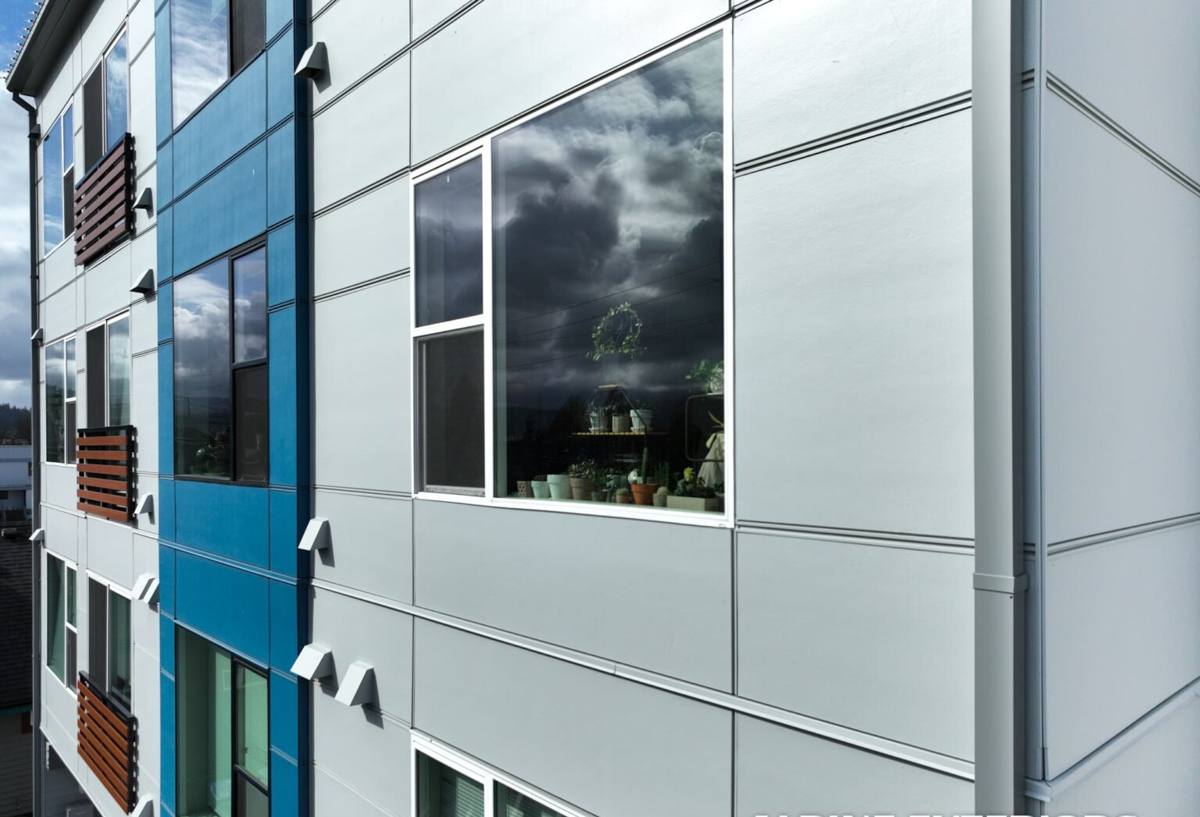
Fiber cement has specific fastening patterns, nail penetration depth, and clearance requirements from grade, roof lines, and decks. Ignore those specs and you void the manufacturer's warranty regardless of how good the material is. We install to the manufacturer's published spec, every time, because that spec exists specifically for climates like this one.
Why We Install Only James Hardie Fiber Cement
We don't install vinyl, LP SmartSide, or primed wood siding, and we're upfront about why: in a climate defined by salt air, sustained rain, and long wet seasons, those materials ask homeowners to take on maintenance and moisture risk that fiber cement doesn't.
Built for wet, coastal-influenced climates
James Hardie's HZ5 product line is engineered specifically for the wetter, harsher climate zones on the West Coast, including Western Washington. Fiber cement doesn't swell, rot, or delaminate when it takes on moisture the way engineered wood products can, and it's non-combustible, which matters as wildfire-season smoke and ember exposure becomes a more regular consideration even west of the Cascades.
ColorPlus finish and warranty
Hardie's ColorPlus factory-applied finish is baked on under controlled conditions, which gives it better fade and moisture resistance than field-applied paint, and it comes with its own finish warranty on top of the product warranty. That's a meaningfully different promise than what you get with a material that has to be painted or sealed on-site and re-painted on a maintenance cycle for the life of the house.
Comparing Siding Materials for This Climate
There's no single "best" siding for every climate — but for salt-air, high-rainfall, moss-prone conditions like Sudden Valley's, the trade-offs are clear once you line them up.
| Material | Moisture Performance | Maintenance | Typical Lifespan |
|---|---|---|---|
| James Hardie fiber cement | Excellent — non-combustible, won't swell or rot | Low — factory finish, occasional wash | 30-50+ years with proper install |
| Vinyl | Fair — moisture can travel behind panels at seams | Low, but cracks and fades over time | 20-30 years |
| LP SmartSide (engineered wood) | Fair — treated but still wood-based, sensitive to sustained moisture | Moderate — edge sealing and caulking upkeep | 20-30 years |
| Primed cedar or spruce | Poor to fair — natural material, high moisture sensitivity | High — regular repainting and sealing | 15-25 years, shorter in shaded/wet lots |
Our Sudden Valley Replacement Process
We've worked in and around Sudden Valley long enough to know the practical realities of the neighborhood: mature landscaping to protect, sometimes tighter lot access than a newer subdivision, and in some cases community guidelines on exterior color or materials that we need to work within rather than around.
- On-site walkthrough and honest assessment of what repair vs. replacement actually makes sense
- Written scope covering tear-off, substrate repair (if needed), weather barrier, flashing, and Hardie product selection
- Careful protection of landscaping, walkways, and outdoor living areas during tear-off and install
- Daily site cleanup — no job site left exposed to weather or debris overnight without reason
- Final walkthrough against the written scope before we consider the job done
If your property is part of a community with design or color review requirements, we'll work from those guidelines from the start rather than picking a product and colorway first and running into a conflict later.
What to Look for When Hiring a Siding Contractor Here
Siding is a one-time decision that lives on the house for decades. A few questions separate a crew that understands this climate from one that's just installing whatever's cheapest.
- Do they remove old siding down to the sheathing, or install over the top of it?
- Can they explain their weather-resistive barrier and flashing details specifically, not just "we use house wrap"?
- Do they install to the manufacturer's published fastening and clearance spec, and will they say so in writing?
- Are they a James Hardie-focused installer, or do they install whatever a homeowner picks off a sample rack?
- Do they have experience with homes in wet, shaded, coastal-influenced lots specifically — not just siding in general?
What Drives the Cost of a Sudden Valley Siding Replacement
Every home is different, so we don't publish flat pricing, but the real cost drivers are consistent: total square footage, the number of stories and roof lines that complicate flashing and access, how much trim and detail work the home has, whether the sheathing underneath needs repair once it's exposed, and which Hardie product line and profile you choose. A single-story home with straightforward elevations will cost meaningfully less than a multi-story home with dormers, bump-outs, and heavy trim detail — the labor and flashing work scale with complexity, not just square footage.
The only way to get a number that means anything is a walkthrough of your specific house, which is also the only way to catch substrate issues before they become a mid-project surprise.
Why Local Experience in This Area Actually Matters
A crew that's worked Sudden Valley and the surrounding Ferndale area already knows how the salt air, the rain patterns, and the shaded, moss-prone lots in Whatcom County actually behave against a house over time — not in theory, but from having torn open enough walls to see it firsthand. That's the difference between a generic install and one that's actually built for where your house sits.
If you're weighing repair versus replacement, or you just want a straight answer on what your siding needs, we're happy to walk the property with you. There's no pressure and no obligation — just a clear look at what's going on and what it would take to fix it right. Use the form below to request a free estimate.