 Ferndale Siding
 Cordata's Roofs Take a Different Kind of Beating
Cordata sits close enough to the water and open farmland that roofs here deal with a combination most drier climates never see: salt-tinged air rolling in off the Strait, driving horizontal rain during winter storms, and a moss season that can run most of the year in shaded, north-facing sections. None of those three things is dramatic on its own. Together, over years, they wear down roofing systems faster than homeowners expect, and they turn a small storm-related problem into a bigger one if it isn't caught early.
When we get called out to Cordata after a windstorm or a hard rain event, we're rarely looking at one isolated issue. Usually it's storm damage sitting on top of roofing that was already softened up by moisture and moss over the preceding seasons. That combination is exactly why storm damage repair in this part of Whatcom County needs to be handled by someone who understands both the acute damage and the slow-building conditions underneath it.
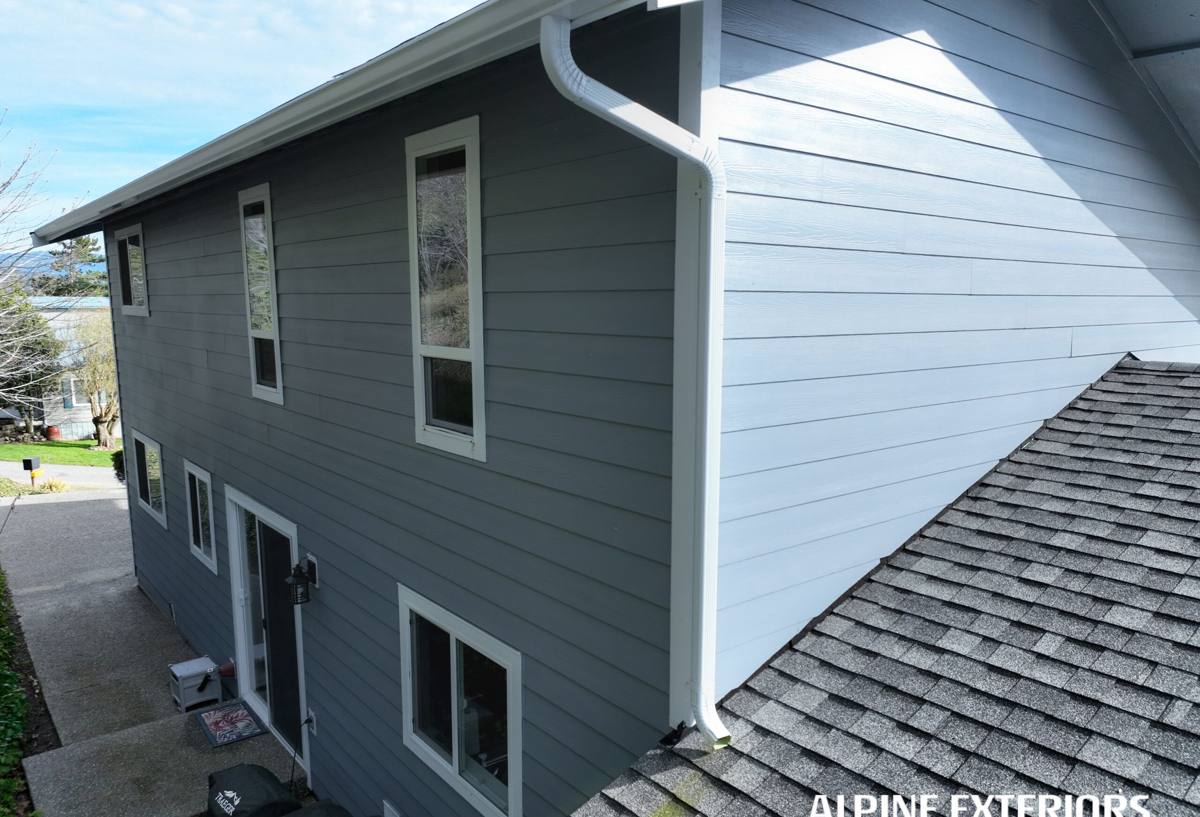
What Storm Damage Actually Looks Like Here
Storm damage on a Cordata roof rarely announces itself with a hole you can see from the driveway. Most of what we find is quieter than that, and it takes someone who knows what to look for.
Wind Damage
Whatcom County wind events tend to come in gusts rather than sustained straight-line wind, which lifts and cracks shingles or panels at the edges and ridge lines rather than tearing off whole sections. Lifted shingles that reseal crooked, cracked seals at fasteners, and bent or creased metal flashing are the common signs.
Wind-Driven Rain Intrusion
Because our storms usually bring rain sideways as much as down, water gets pushed up under shingle tabs, around chimney flashing, and into any gap that a calmer rain would never find. This is the damage type most often missed on a quick visual check, because the roof can look intact from the ground while water is already tracking into the underlayment or decking.
Debris Impact
Cordata has enough mature trees, both on individual lots and along adjacent green space, that falling limbs and wind-thrown branches are a real and recurring cause of storm damage — everything from a few cracked shingles to punctured decking, depending on the size of what came down.
Moss-Weakened Failure Points
Storms don't create moss problems, but they expose them. A roof section that's been holding moisture under a moss mat for a season or two has softer, more compromised roofing material underneath. A wind event that a healthy roof would shrug off can crack or dislodge material in a moss-affected area that was already halfway to failing.
Why Waiting Costs More Than the Repair Would
The instinct after a storm is often to wait and see — especially if there's no active drip inside the house. That's usually the most expensive decision a homeowner can make with storm damage. A cracked seal or lifted shingle in the Puget Sound climate doesn't just sit there; the next rain finds it, and once moisture gets under the roofing material it doesn't dry out quickly given how often it rains here and how much shade many Cordata lots have.
Left long enough, a small storm-related breach turns into saturated decking, which is a materially bigger and more expensive repair than the original damage. It can also void or complicate a roofing manufacturer's warranty, since most warranties require prompt repair of storm damage rather than deferred maintenance. Getting a roof looked at within a reasonable window after a storm — even if nothing looks obviously wrong — is the cheapest insurance you have against that outcome.
What a Correct Storm Damage Repair Actually Involves
A repair that's done right addresses three separate things, not just the visible damage:
- The immediate breach — replacing cracked, torn, or missing roofing material and correcting any lifted or displaced sections.
- What's underneath it — checking underlayment and decking in the damaged area for moisture intrusion that may have already started before the repair.
- Why it failed there — identifying whether the damage point was a pure storm event or a spot that was already weakened by moss, poor drainage, or aging material, so the same failure doesn't repeat next storm season.
Skipping that third step is the most common shortcut we see from repairs done by out-of-area crews working off a quick estimate. Patching the visible damage without asking why that particular spot failed usually means a callback after the next storm.
Our Process, Start to Finish
- On-site assessment. We walk the roof (not just look from the ground) and check the attic or interior ceiling line where accessible, since interior signs often tell us more about water intrusion than the exterior does.
- Honest scope, in writing. We tell you what's storm damage, what's pre-existing wear that the storm exposed, and what can reasonably wait versus what shouldn't.
- Material matching. We match repair materials to your existing roof as closely as possible so the repaired section performs — and weathers — consistently with the rest of the roof.
- Repair execution. Damaged material is removed, decking is checked and replaced if compromised, underlayment and flashing are corrected, and new roofing material is installed and sealed to current standards.
- Drainage and moss check. Since moss and poor water flow are so often connected to why a spot failed, we look at gutter function and moss buildup nearby as part of the same visit, not as a separate upsell.
- Documentation. You get a clear record of what was found and what was done, which matters if you're working with an insurance claim.
Repair vs. Replace: How We Make That Call
Not every storm-damaged roof needs a full replacement, and not every roof can be safely patched. Here's the general framework we use when advising Cordata homeowners:
| Factor | Favors Repair | Favors Replacement |
|---|---|---|
| Age of existing roof | Under roughly 10-15 years, in otherwise good condition | Nearing or past typical material lifespan |
| Extent of damage | Isolated to one or two areas | Multiple areas, or damage scattered across the roof |
| Decking condition | Dry, structurally sound | Soft, delaminated, or water-stained in multiple spots |
| Moss/moisture history | Minimal prior moss issues | Long-term moss coverage affecting large sections |
| Material availability | Matching material is available | Discontinued or badly weathered material that won't match |
We'll always recommend the repair when a repair genuinely solves the problem. Recommending a full replacement when a repair would hold isn't how we want to run this business, and it isn't how we build repeat relationships with people in this community.
Materials and Why They Matter in This Climate
What we use for a Cordata repair depends on what's already on the roof, but the underlying priority is the same regardless of material: managing moisture, not just shedding it. In a climate with this much sustained dampness and shade-driven moss growth, ventilation and underlayment quality end up mattering as much as the visible roofing material itself. A repair that ignores the ventilation path or reuses degraded underlayment under new shingles is solving the cosmetic problem while leaving the actual cause of failure in place.
Where moss has been a repeat issue, we'll talk through options for moss-resistant approaches in that specific area rather than a whole-roof product change nobody asked for — the goal is addressing what's actually failing, not selling an unnecessary upgrade.
What to Check Before You Hire Anyone for Storm Repair
Storms bring out traveling crews who canvas neighborhoods offering fast, cheap repairs. Some are legitimate. Many aren't set up to do quality work in this specific climate, or won't be around if a problem shows up next season. Before you sign anything, it's worth checking:
- Do they hold current Washington contractor licensing and carry liability insurance you can verify?
- Will they give you a written scope of work before starting, not just a verbal price?
- Do they check decking and underlayment, or only replace what's visible from outside?
- Are they local, with a track record and a way to reach them if an issue shows up after the next storm?
- Do they pressure you to sign immediately, or give you time to think it over?
Why It Matters That We Already Work in Cordata
Storm damage repair isn't a generic service — the right approach depends heavily on the specific conditions of the area it's happening in. A crew that regularly works Cordata and the surrounding Ferndale area already has a working sense of how local homes tend to fail: which roof orientations hold moss longest, how wind tends to move through this part of Whatcom County during a storm, and what drainage issues tend to recur on lots with mature tree cover. That local pattern recognition shortens the diagnosis and reduces the chance of missing a related issue that isn't obvious on a first look.
It also means we're not disappearing after the invoice is paid. As a Ferndale-based crew, we're back in this area regularly, which matters if a repair needs a follow-up look after the next storm rolls through — and around here, there's always a next storm.
If you've got storm damage on a Cordata roof, or you're not sure whether what you're looking at is worth a repair call, we're glad to come take an honest look. The estimate is free, there's no pressure attached to it, and you can use the form below to get started.