 Ferndale Siding
 Custer Roofs Take a Different Kind of Beating
Custer sits in the rural stretch of Whatcom County north of Ferndale, close enough to Birch Bay and the Strait of Georgia to catch the same salt-laden wind that batters the coastline, but open enough — fields, tree lines, long unbroken driveways — to take the full force of a Pacific storm without much windbreak. That combination is hard on roofs in a specific way. It's not just one bad storm that does the damage. It's driving rain that finds every weak seam, wind that works loose fasteners a little more each winter, and a moss season that runs most of the year and never really lets a roof dry out between storms.
When we get called out to Custer after a windstorm or a heavy rain event, we're rarely looking at damage from a single dramatic cause. Usually it's storm damage landing on a roof that was already softened up by moisture and moss. Understanding that combination is the difference between a repair that holds and one that fails again next winter.
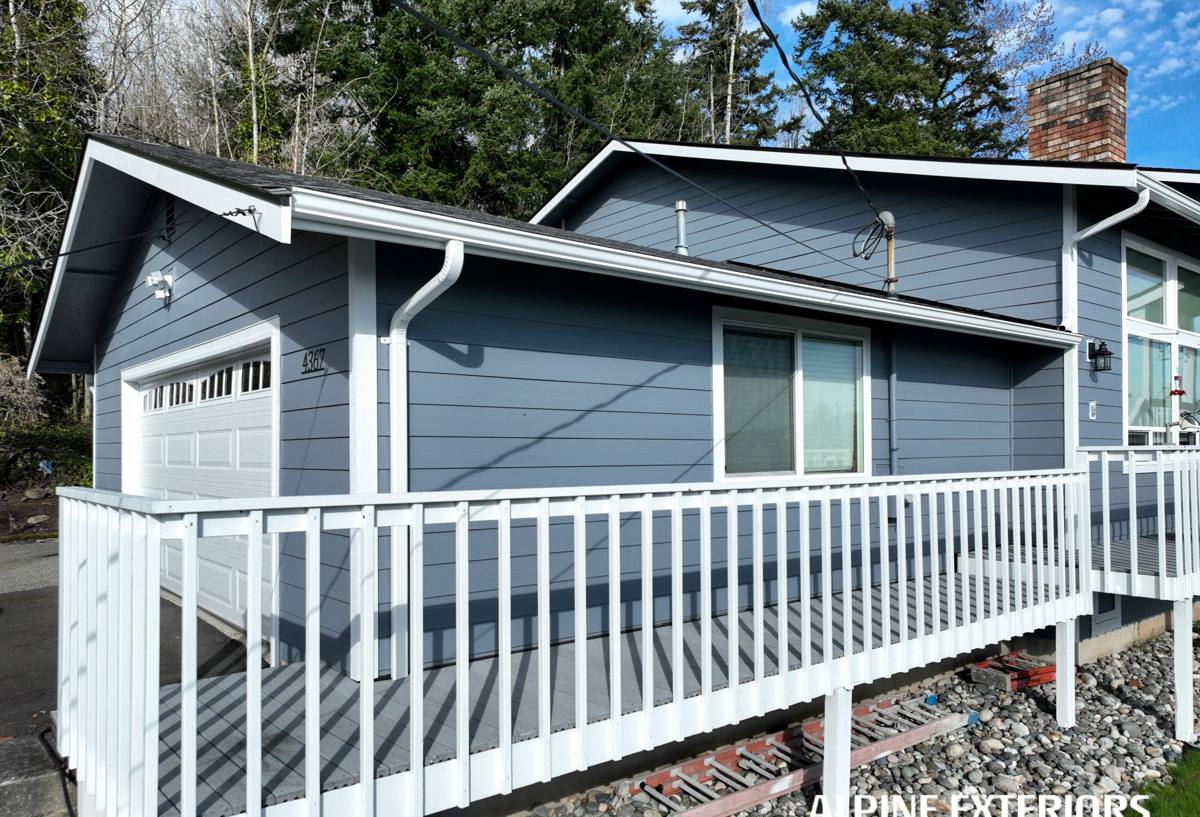
What Storm Damage Actually Looks Like on a Whatcom County Roof
Storm damage isn't always obvious from the ground. Some of it is dramatic — a limb through the roof deck, a section of shingles peeled back like a page. Most of it is quieter and easier to miss until it's already caused a leak.
- Wind-lifted or missing shingles — edges and ridge lines take the brunt of gusts and are often the first to lift or go missing entirely.
- Cracked or dislodged ridge and hip caps — these seal the highest, most exposed points on the roof and fail quietly.
- Bent, torn, or separated flashing — around chimneys, skylights, vents, and roof-to-wall transitions, where wind-driven rain gets pushed sideways under the covering.
- Granule loss — heavy wind-blown rain and hail-like debris can strip the protective granule layer off asphalt shingles, accelerating wear even where nothing looks visibly broken.
- Limb and debris strikes — fir and cedar limbs are common storm casualties in this part of the county, and even a glancing hit can crack a shingle or fracture decking underneath.
- Gutter and downspout damage — bent or torn-loose gutters don't just look bad, they dump water against the fascia and siding instead of away from the house.
- Interior signs — a stain on a ceiling, a musty smell in an attic, or a damp patch near a chimney chase are often the first real evidence that something failed during the last storm.
Why It Pays to Get a Roof Checked After Any Significant Storm
A lot of storm damage doesn't leak right away. Water can travel along the underlayment or decking for weeks before it shows up as a stain inside the house, by which point it's not just a shingle repair anymore — it's rot, insulation replacement, and possibly drywall work. Catching it early, right after the storm, is almost always the cheaper path.
Why Salt Air and Moss Make Storm Damage Worse Here
Moss Holds Water Against the Roof
Whatcom County's moss season runs long, especially on north-facing slopes and roofs shaded by mature trees, which describes a lot of properties around Custer. Moss doesn't just look bad — it holds moisture against the shingle surface and under the tabs, keeping that section of roof damp far longer than the rest. A roof that's already saturated under a moss mat has less capacity to shed a heavy storm, and wind is more likely to lift shingles that are already softened and lifted slightly by moss growth underneath.
Salt Air Accelerates Metal Fatigue
Being close enough to Birch Bay and the Strait to catch salt-carrying wind means the metal components on a roof — flashing, fasteners, gutter hardware, vent caps — corrode faster than they would further inland. Corroded fasteners lose their grip, and corroded flashing develops pinholes and seam failures. Storm winds exploit exactly those weak points first.
Our Storm Damage Repair Process
We keep this process straightforward because homeowners dealing with storm damage usually don't want a sales pitch — they want the roof stopped from leaking and a clear answer about what it'll take to fix it right.
- Inspection. We get on the roof (or use a pole camera where footing or pitch makes that unsafe) and document every point of damage, not just the obvious one that prompted the call.
- Temporary protection. If there's active water intrusion, we tarp or seal the exposed area the same visit to stop further damage while repairs are planned.
- Written scope and estimate. You get a clear breakdown of what's damaged, what needs to be repaired versus replaced, and honest ranges — no vague "we'll figure it out once we're up there."
- Insurance documentation, if needed. If you're filing a claim, we provide photos and a damage report your adjuster can work from.
- Repair. Matching materials where possible, proper flashing and underlayment work (not just shingle swaps), and a check of surrounding areas that took secondary stress from the same storm.
- Final walkthrough. We show you what was done and flag anything worth watching, like an aging section nearby that held up this time but may not next storm.
Repair or Replace? What Actually Drives That Decision
Not every storm-damaged roof needs a full replacement, and not every roof is worth patching indefinitely either. The honest answer depends on a few concrete factors, not on which service is easier to sell.
| Factor | Favors Repair | Favors Replacement |
|---|---|---|
| Age of existing roof | Under 10-12 years, otherwise sound | Nearing or past expected lifespan for the material |
| Extent of damage | Isolated to one slope or section | Spread across multiple slopes or the whole roof |
| Decking condition | Solid, no rot found on inspection | Soft spots, rot, or repeated past water intrusion |
| Moss/moisture history | Minor, recently treated | Long-term moss damage with saturated underlayment |
| Material availability | Matching shingles or panels still obtainable | Discontinued product, visible mismatch unavoidable |
| Insurance scope | Adjuster approves repair-level scope | Adjuster approves full slope or roof replacement |
We'll always give you our honest read on which side of that table your roof falls on, including when a repair is genuinely the right call and a full replacement isn't necessary.
Insurance Claims: What Custer Homeowners Should Know
Wind and storm damage is one of the more straightforward categories for homeowners insurance, but the claim still needs to be documented well to avoid a lowball settlement. A few things that consistently help:
- Photograph visible damage from the ground yourself as soon as it's safe, before any repairs or tarping happens.
- Note the date and approximate time of the storm — insurers often cross-reference weather data for the area.
- Get a contractor inspection promptly; damage that's fresh is easier to attribute to a specific storm event than damage discovered months later.
- Keep any temporary repair or tarping receipts — most policies cover reasonable steps taken to prevent further damage.
- Ask your adjuster for the full scope in writing, and don't be afraid to have your contractor review it against what they found on the roof.
What a Correct Storm Repair Actually Involves
A rushed storm repair — a few shingles nailed back down and a tube of sealant around a flashing edge — can look fine for a season and still fail the next time wind and rain hit that same spot hard. A repair that actually holds covers more ground:
- Replacing damaged underlayment, not just the visible shingles, if water reached that layer.
- Reflashing rather than just resealing around chimneys, vents, and skylights when the metal itself is bent or corroded.
- Checking and repairing roof decking before new material goes down over it.
- Matching shingle or panel type, weight, and where possible color, so the repair doesn't become the next weak point.
- Clearing moss and treating the surrounding area, not just the damaged section, so the same conditions don't cause a repeat failure nearby.
- Confirming gutters and downspouts are intact and directing water away from the repaired area and the foundation.
Why It Matters to Hire a Crew That Already Works Custer
Storm damage repair isn't a generic skill — it's shaped by what the local weather actually does to roofs. A crew that regularly works Custer and the surrounding parts of Whatcom County has already seen how salt air eats through flashing fasteners in this specific area, how moss builds up differently on shaded, tree-lined properties versus open ones, and which roof details tend to fail first when wind comes off the water. That's not something a crew unfamiliar with the area picks up on the first visit. It also means faster response after a storm, when a lot of contractors from outside the area are backed up or unwilling to make the drive for a single job.
If your roof took damage in a recent storm, or you're not sure whether what you're seeing is storm-related or just wear, we're happy to take a look and give you a straight answer — repair, monitor, or replace — with no pressure either way. Reach out through the form below for a free, no-obligation estimate.