 Ferndale Siding
 Storm Damage Roofing in Semiahmoo Takes a Different Kind of Repair
Semiahmoo sits close enough to open water that roofs here take a beating most inland Whatcom County homes never see. Wind off the bay drives rain sideways into flashing and fascia that a roof further inland would never have to deal with. Add in the salt-laden air and a moss season that can run half the year, and you've got a recipe for a roof that ages faster than its shingles suggest it should. A storm repair here isn't just "patch the hole and move on" — it has to account for what the next storm is going to do to that same spot.
We work on roofs throughout Ferndale and the surrounding Whatcom County coastline, and Semiahmoo homes get their own approach because the conditions are genuinely different. A repair that would hold up fine on a sheltered inland roof can fail within a season out here if it isn't built for wind-driven rain and salt exposure from the start.
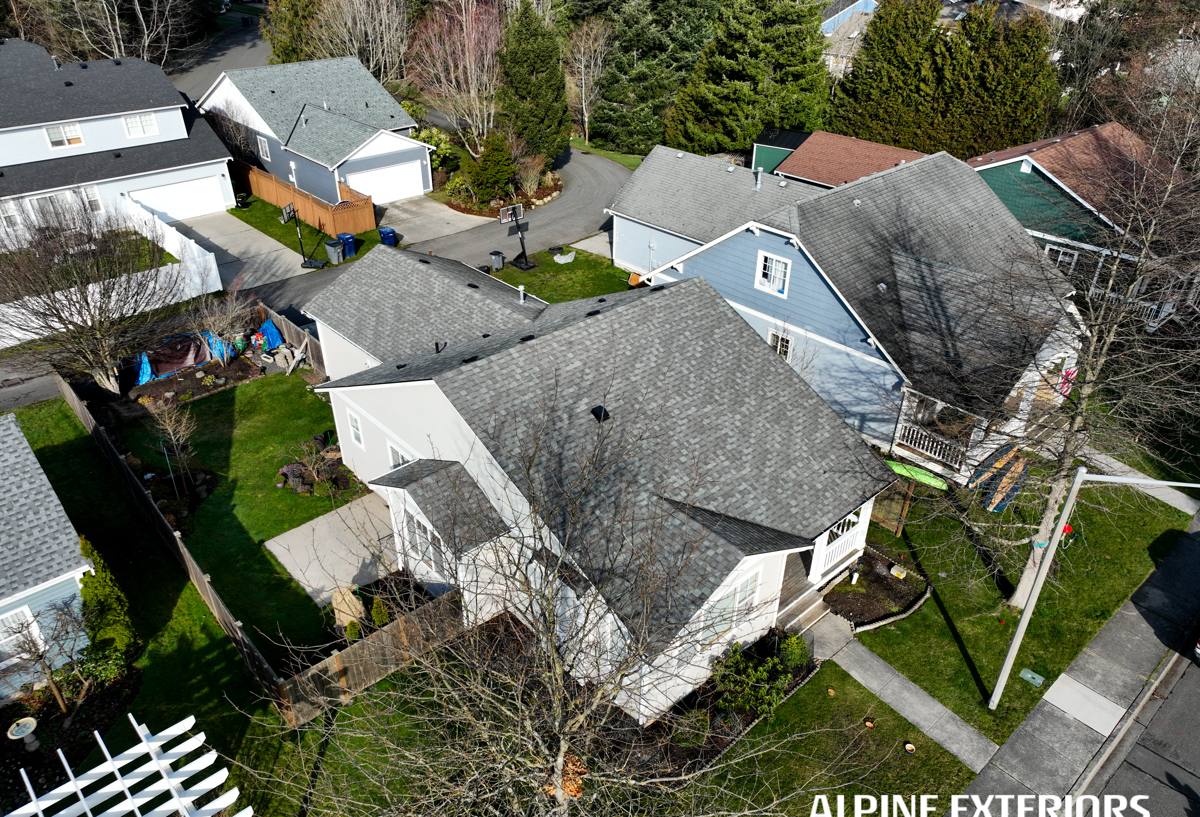
What Storm Damage Actually Looks Like Here
Storm damage rarely shows up as one dramatic hole in the roof. More often it's a combination of smaller failures that add up:
- Shingles lifted or creased at the tab by sustained wind, even if none blew off completely
- Flashing around chimneys, vents, and roof-to-wall transitions pulled loose or bent
- Granule loss on shingles from wind-driven rain and debris, leaving the asphalt underneath exposed to UV and moisture
- Fascia and gutter damage from branches or debris carried by the wind
- Underlayment failure at seams where wind has repeatedly worked water sideways under the shingle line
Any one of these on its own might not seem urgent. Together, or left unaddressed through a second or third storm, they're what turns a roof repair into a roof replacement.
Why Salt Air Speeds This Up
Salt in the air corrodes exposed metal faster than it would inland — nails, flashing, and gutter hardware all take more wear near the water. A fastener or flashing piece that would last for years elsewhere can start showing corrosion sooner in a Semiahmoo location. That's one reason we pay close attention to the hardware we use on coastal repairs, not just the shingles.
Why Moss Season Complicates Storm Repair
Whatcom County's wet season gives moss and algae a long window to establish themselves, and storm-damaged shingles give them an even easier foothold. Lifted or cracked shingles trap moisture longer, and moss growing at a break point holds water against the roof deck instead of letting it shed. A storm repair that doesn't clear moss and debris from the repair area first is starting from a compromised base.
The Damage Homeowners Usually Miss
Most storm damage we get called out for started smaller than the homeowner realized. A few things worth knowing:
Granule loss doesn't always look dramatic. A shingle that's lost its protective granule layer from wind-driven rain can look almost normal from the ground, but it's aging much faster than the shingles around it and won't hold up to the next storm the same way.
Attic moisture shows up before ceiling stains do. If wind has worked water under a seam, it often reaches the attic space well before it shows as a stain on a ceiling below. A musty smell or damp insulation in the attic after a storm is worth checking even if nothing looks wrong from outside.
Flashing failures are quiet until they aren't. A flashing piece bent or pulled a quarter-inch out of place doesn't leak in a light rain. It leaks in the next wind-driven downpour, which is exactly the kind of storm Semiahmoo gets.
What a Correct Storm Repair Involves
A repair done right starts with a full inspection, not just a look at the obvious damage point. We check the deck underneath any damaged shingles for soft spots or water staining, because covering a compromised deck with new shingles just hides the problem for another season.
Matching Materials, Not Just Covering the Gap
When we replace shingles, we match the existing profile and, as closely as the product line allows, the color — a patch that doesn't match stands out and can affect how well the repair sheds water at the seams if the profiles don't align cleanly.
Flashing and Underlayment First
Before any new shingle goes down, we re-set or replace flashing at vulnerable points — chimneys, vents, walls, valleys — and check the underlayment at the repair boundary. This is the part of the job that determines whether the repair holds through the next storm or fails at the same seam again.
Fastener and Hardware Choices for Coastal Exposure
Given the salt air near Semiahmoo, we use fasteners and flashing hardware suited to that exposure rather than defaulting to whatever's standard inland. It costs a little more up front and saves a callback down the line.
Our Process, Start to Finish
- Initial inspection. We walk the roof (or use a lift/drone when access or safety requires it) and document the full extent of damage, not just what's visible from the ground.
- Honest assessment. We tell you plainly whether this is a repair or whether the damage points to a bigger issue worth addressing now rather than patching around.
- Written estimate. You get a clear scope of work and price before anything starts — no surprise add-ons once we're up on the roof.
- Repair work. Deck check, flashing and underlayment correction, matched shingle replacement, and cleanup of moss or debris in the repair area.
- Final walk-through. We show you what was done and what to watch for going forward, especially anything storm-related that could recur.
Repair or Replace? What Actually Drives That Decision
Not every storm-damaged roof needs a full replacement, and not every roof that "just needs a patch" should get one. Here's how we think through it:
| Factor | Leans Toward Repair | Leans Toward Replacement |
|---|---|---|
| Extent of damage | Isolated to one section or slope | Spread across multiple sections or slopes |
| Roof deck condition | Solid, no rot or soft spots found | Soft decking or staining found under damage |
| Age of existing roof | Well within its expected service life | Already near the end of its expected life |
| Shingle match availability | Existing product/color still available | Discontinued, leaving a visible patch |
| Storm history | First significant damage event | Repeated storm damage in the same areas |
We'll walk you through where your roof falls on these points rather than defaulting to the more expensive option. A well-executed repair on a sound roof is money well spent; sinking repair costs into a roof that's already failing underneath is not.
Storm Damage and Insurance Claims
Many storm repairs get handled through a homeowner's insurance policy. We're happy to document damage clearly — photos, notes on cause, scope of repair — so you have what you need for a claim conversation with your insurer. We don't handle the claim itself or make promises about what an adjuster will approve, but a clear, honest damage assessment on our end makes that conversation easier on yours.
Why a Crew That Already Works Semiahmoo Matters
A roofer who mainly works inland jobs doesn't necessarily think about salt-air fastener corrosion or how moss holds moisture against a storm-damaged seam near the water. We work this stretch of Whatcom County regularly, so those are standard parts of how we scope and price a repair here, not an afterthought.
There's also a practical response-time benefit. After a significant windstorm, roofing crews get busy fast, and homes near the water tend to take the brunt of it. Being local means we're not driving in from across the county to get to you, and we already understand the exposure your roof is dealing with before we've even pulled up.
What to Do Right After a Storm
If your roof took damage in a recent storm, a few steps help protect the property until repairs happen:
- Photograph visible damage from the ground — don't get on the roof yourself, especially in wet or windy conditions
- Check the attic for damp insulation, water staining, or unusual odors
- Note any interior ceiling stains, even faint ones, and when they first appeared
- Clear gutters and downspouts of storm debris so water can still drain properly while you wait for repair
- Cover any active interior leak with a bucket or tarp to limit damage, and call for an inspection promptly
If you're dealing with storm damage on a Semiahmoo home, or just want a roof checked after a rough stretch of weather, we're happy to take a look. Estimates are free and there's no pressure to move forward — just a straight answer on what your roof needs. The form below will get you started.