 Ferndale Siding
 Why Sudden Valley Roofs Wear Differently
A roof in Sudden Valley doesn't age the same way one does forty miles inland. Homes here sit close enough to the water that salt-laden air is a constant, low-grade stressor on metal flashing, fasteners, and shingle granules. Add in the driving, wind-pushed rain that comes through Whatcom County off the Strait, and a shingle roof has to shed water sideways as much as it does straight down. Then there's the moss and algae season, which in this part of Washington isn't really a season at all — it's most of the year, thanks to shade, moisture, and mild temperatures that never quite dry things out. Any one of those factors alone is manageable. Together, they're why a roof that would coast for decades in a drier climate can start showing real problems in half that time if it wasn't built for these conditions in the first place.
We're not describing this to sell fear — it's just the baseline any roofer working around Ferndale and the surrounding communities has to design around. A correctly installed asphalt shingle roof accounts for all three of these stressors from the start, not as an afterthought once moss is already growing or a fastener has started to corrode.
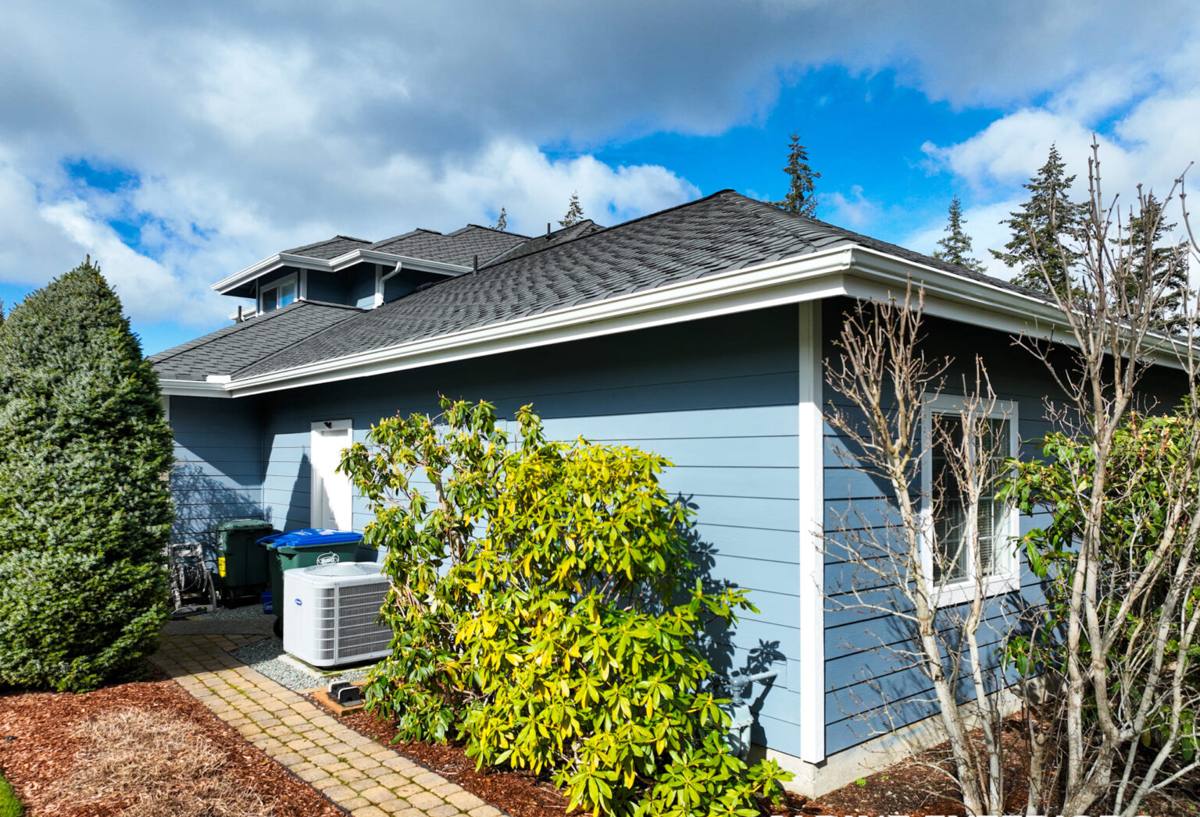
What "Correct" Asphalt Shingle Roofing Actually Means Here
Asphalt shingles are a proven, well-understood product. The failures we see almost never come from the shingle itself — they come from installation shortcuts that don't matter much in a mild, dry climate but matter a great deal in ours.
Underlayment and Ice-and-Water Protection
Eaves, valleys, and any roof-to-wall transition are where wind-driven rain finds its way under shingles. We treat those areas as the weak points they are, using self-adhered waterproof membrane rather than relying on standard felt alone. Synthetic underlayment across the rest of the field holds up better than old-style felt in a climate this damp, and it doesn't wrinkle or tear as easily during a multi-day install when weather doesn't cooperate.
Ventilation Balance
A roof that can't breathe traps moisture in the attic, which shortens the life of the decking and the shingles from underneath — the side you never see until there's a problem. Balanced intake at the soffits and exhaust at the ridge keeps that moisture moving out instead of condensing. This matters more here than in a dry climate, because the outside air is already carrying so much humidity that there's less margin for error.
Flashing Details
Chimneys, skylights, plumbing vents, and wall step-flashing are where most leaks actually originate, not the open field of shingles. We use corrosion-resistant flashing and proper step-and-counter-flashing technique at every penetration and wall intersection, because salt air is unforgiving toward the wrong grade of metal or a lazy caulk-only fix.
Signs Your Roof Is Telling You Something
Most roof problems in this area show themselves gradually. A quick visual check from the ground, plus a look in the attic on a rainy day, catches most of what matters:
- Granules collecting in gutters or at downspout outlets — a sign shingles are wearing down
- Dark streaking or green-black patches, especially on north-facing slopes that stay shaded and damp
- Thick moss growth, particularly where it's bridging shingle tabs and holding moisture against them
- Curling, cupping, or cracked shingle edges, most visible on slopes that get direct afternoon sun
- Rust staining or visible gaps at flashing around chimneys, vents, or where a roof meets a wall
- Daylight visible through the roof deck from inside the attic, or damp insulation after a storm
- Sagging in the roofline itself, which points to a deck or structural issue and shouldn't wait
Any one of these on its own isn't necessarily an emergency, but it's worth a real inspection rather than a guess. Catching flashing or underlayment failure early is a repair; ignoring it usually turns into a deck replacement.
Choosing Shingles for a Salt-Air, Moss-Prone Climate
Not every asphalt shingle is built the same, and in this climate the differences show up faster than they would somewhere drier. Here's how the common categories compare for a Sudden Valley home:
| Shingle Type | How It Handles This Climate | Where It Makes Sense |
|---|---|---|
| Standard 3-tab | Lower wind rating, less resistance to algae staining, thinner profile weathers faster in wet-shade conditions | Budget-driven projects on simpler, less-exposed roof planes |
| Architectural (laminate) | Heavier, better wind performance, more resistant to curling; the standard we recommend for most homes here | Most Sudden Valley homes, especially anything with exposed or windward slopes |
| Algae-resistant (AR) shingles | Copper- or zinc-infused granules slow the black-streak algae that thrives in our shade and moisture | North-facing slopes, tree-shaded lots, homes with a history of staining or moss |
| High wind-rated shingles | Enhanced sealant strips and fastening patterns rated for higher sustained wind and gusts | Exposed lots, ridgelines, or homes that have seen shingle lift in past storms |
For most Sudden Valley re-roofs, we lean toward architectural shingles with algae-resistant granules as the practical default — not because cheaper options are bad products, but because the extra cost buys years of reduced staining and better wind performance in a climate that tests both.
Our Process for a Sudden Valley Re-Roof
- On-site inspection. We walk the roof, check the attic for ventilation and moisture issues, and look at flashing, decking, and current shingle condition before quoting anything.
- Written, itemized estimate. You'll see exactly what's included — tear-off, underlayment type, flashing, ventilation work, and shingle selection — not a vague lump sum.
- Tear-off and deck inspection. Old material comes off down to the deck so we can actually see what's underneath rather than roofing over hidden rot or soft spots.
- Deck repair as needed. Any damaged sheathing gets replaced before anything new goes down — this is non-negotiable, since a new roof over a bad deck fails early.
- Ice-and-water membrane and underlayment. Installed at eaves, valleys, and penetrations first, then across the full roof field.
- Flashing and ventilation installation. New flashing at every penetration and wall transition, plus intake and exhaust ventilation sized to the attic.
- Shingle installation. Installed to manufacturer nailing specs and wind-rating requirements, not shortcuts that void the warranty later.
- Final walkthrough and cleanup. We check the work with you and clear the site, including a magnetic sweep for stray fasteners.
Moss and Algae: Prevention Beats Removal
Moss doesn't just sit on top of a roof — it holds moisture against the shingle surface and works its way under tabs, which is how a moss problem eventually becomes a leak. Removal after the fact, especially aggressive scraping or pressure washing, can do more damage to the granule surface than the moss itself. That's why prevention matters more here than almost anywhere: zinc or copper strips near the ridge let rain carry trace metal ions down the roof slope, which keeps moss and algae from re-establishing without harsh chemical treatment. Keeping trees trimmed back so more sun and airflow reach the roof surface helps too, though we understand that's not always practical on a wooded Sudden Valley lot. Where moss is already present, we handle removal carefully — soft-wash methods and hand removal rather than pressure washing, which can strip granules and shorten the shingle's remaining life.
Cost Factors Worth Understanding Before You Get Quotes
Two roofs the same size can cost noticeably different amounts once you account for the details below. Rather than quote a per-square number that doesn't mean much without context, here's what actually drives the price on a Sudden Valley project:
| Factor | Why It Matters |
|---|---|
| Roof pitch and complexity | Steep or cut-up roofs with many valleys, dormers, or planes take longer and require more flashing work |
| Number of existing layers | Tear-off of multiple old layers costs more than a single-layer roof and may reveal deck damage |
| Deck condition | Rot or soft sheathing found during tear-off adds material and labor that a surface inspection can't predict |
| Access and site conditions | Steep lots, limited driveway access, or tree cover common in this area affect setup and disposal logistics |
| Shingle class chosen | Standard, architectural, and algae-resistant or high-wind products all carry different material costs |
| Ventilation and flashing scope | Adding or upgrading ridge/soffit venting and replacing all flashing costs more than reusing what's serviceable and sound |
We'd rather walk your roof and give you real numbers than guess over the phone. A written estimate that spells out each of these factors is the only way to compare quotes accurately.
Why Local Experience in Sudden Valley Matters
A crew that already works this area knows which slopes tend to hold moss, which flashing details fail first in wind-driven rain, and how to schedule around the wetter stretches of the year so a tear-off doesn't sit exposed overnight. That's not something you can fully substitute with a generic install, even a technically competent one. We're a Ferndale-based crew working throughout Whatcom County, and Sudden Valley's mix of tree cover, water proximity, and exposure is a pattern we recognize on sight rather than something we're figuring out for the first time on your roof.
Local presence also matters after the job is done. If a question comes up during the first hard storm of the season, you're calling a crew that's a short drive away and already familiar with your roof — not chasing down a company that worked in the area once.
Ready for a Straightforward Estimate
If your roof is showing moss, staining, or wear, or you'd just like a second opinion before your next storm season, we're happy to take a look. The estimate is free, there's no pressure attached to it, and you'll get a clear, itemized picture of what your roof actually needs — use the form below to get started.