 Ferndale Siding
 Building Decks for Sudden Valley's Wooded, Lakeside Setting
Sudden Valley is a different kind of build site than a flat suburban lot. Homes here tend to sit on sloped ground, tucked under mature tree cover, often with a view worth building toward. That combination — shade, slope, and moisture — changes how a deck should be designed and built. A deck that would hold up fine on an open, sunny lot in town can struggle here if it's not built with this specific setting in mind.
Our crew works throughout Whatcom County, and jobs in and around Sudden Valley come with their own checklist: drainage planning for sloped grades, footing depths suited to the soil, and material choices that can handle shade and standing moisture without turning green by the second winter. This page covers what actually matters for a custom deck built for this area, not generic decking advice.
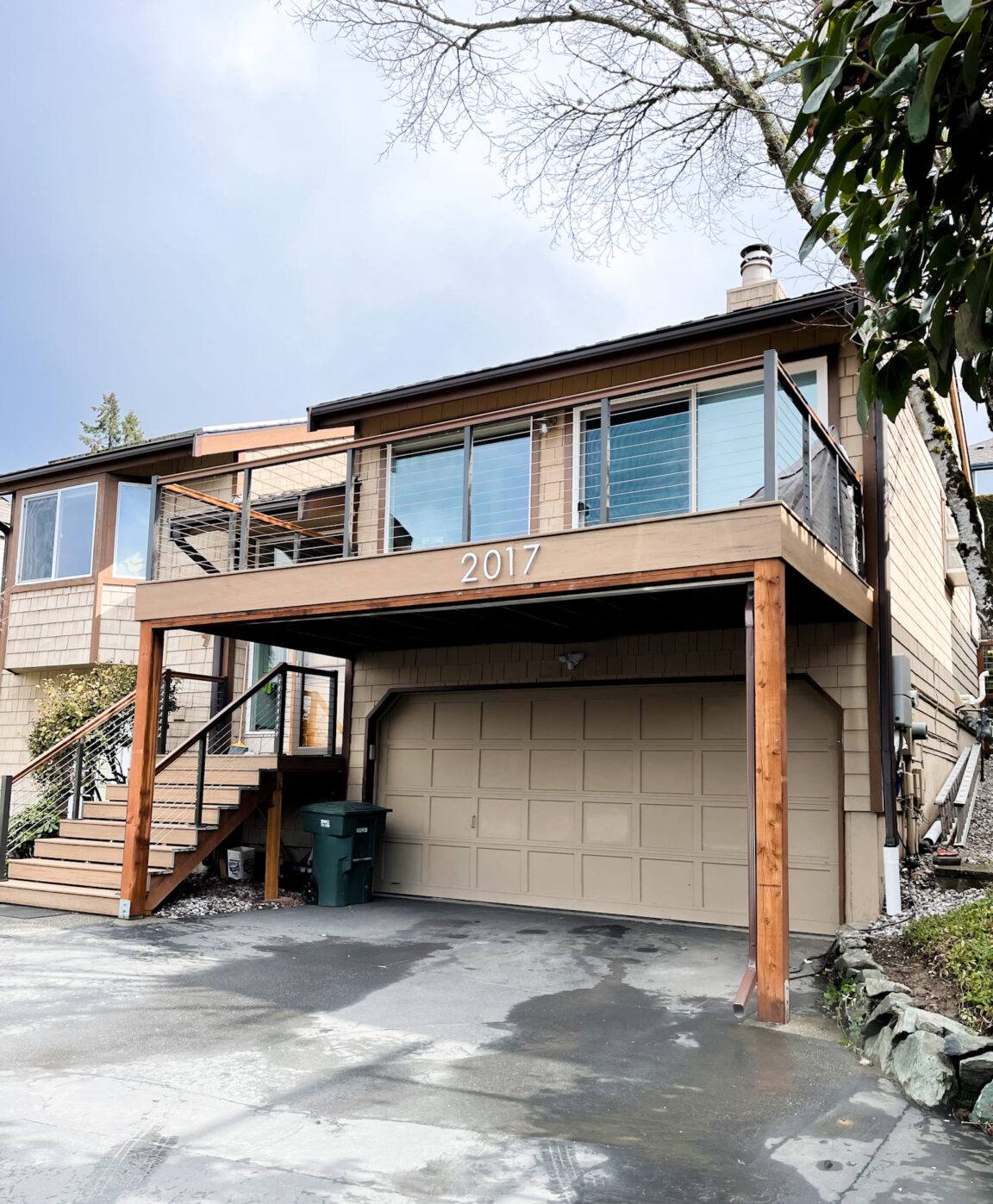
What Whatcom County Weather Does to an Unprotected Deck
Whatcom County's marine-influenced climate is hard on exterior wood and hardware. Even away from the immediate shoreline, damp air, driving rain, and a long stretch of overcast, low-drying-potential weather move through the whole county — Sudden Valley included. A few specific ways that shows up on a deck:
- Driving rain gets pushed sideways by wind and finds its way into ledger connections, stair stringers, and any gap where flashing was skipped or done poorly.
- Long moss season means anything shaded — and a lot of Sudden Valley is shaded — stays damp for extended stretches. Moss and algae aren't just cosmetic; they hold moisture against the decking surface and framing.
- Corrosion-prone hardware. Salt-laden air moving inland off the Sound and Strait, combined with constant humidity, accelerates rust on fasteners and connectors that aren't rated for it.
- Freeze-thaw cycling. Whatcom County doesn't get brutal winters, but repeated freeze-thaw on damp wood and around footings still stresses joints and concrete over the years.
None of this means a deck can't hold up here for decades. It means the design and materials have to account for these conditions from the start, rather than trying to fix them after the fact with more sealant.
Choosing the Right Decking Material for Sudden Valley Homes
There's no single "best" decking material — it depends on your budget, how much upkeep you want to do, and how shaded your lot is. Here's how the common options stack up for this specific climate:
| Material | Upfront Cost | Moss/Moisture Resistance | Maintenance |
|---|---|---|---|
| Pressure-treated wood | $ | Fair — needs regular cleaning and sealing to resist moss and rot | Annual cleaning, periodic re-sealing/staining |
| Cedar | $$ | Naturally rot-resistant but still needs care in shaded, damp spots | Regular cleaning, occasional oiling or staining |
| Capped composite | $$$ | Very good — resists moisture absorption and moss staining much better than wood | Periodic washing; no staining or sealing |
| PVC decking | $$$$ | Excellent — essentially non-porous, very moss-resistant | Occasional washing only |
On heavily shaded Sudden Valley lots, we lean toward recommending capped composite or PVC when the budget allows, simply because they hold up to constant dampness with far less homeowner maintenance. That said, plenty of homeowners want the look and feel of real wood and are willing to keep up with cleaning and sealing — that's a legitimate choice too, as long as you go in knowing the maintenance commitment. What we steer people away from is uncapped, budget composite decking in shaded spots — it can absorb moisture at cut edges and fastener points over time, which is a maintenance headache we'd rather you avoid than sell you on the cheaper upfront number.
Structural Basics That Matter More Than They Look
A deck's long-term performance in this climate is decided mostly by details you won't see once it's finished:
Ledger Board Flashing
Where the deck attaches to the house is the single most common failure point on older decks in wet climates. Proper flashing — installed so water sheds away from the house wall rather than behind the ledger board — is non-negotiable, especially with the amount of driving rain this region sees.
Footings Sized for the Slope
Sloped lots, common throughout Sudden Valley, often need deeper or additional footings to carry the structure properly and to keep the deck stable as soil moisture shifts seasonally. This isn't a place to cut corners to save on concrete.
Corrosion-Resistant Hardware
All fasteners, joist hangers, and structural connectors should be rated for exterior, coastal-influenced use. Mixing incompatible metals, or using standard interior-grade hardware, is a shortcut that shows up as rust streaks and weakened connections within a few years.
Airflow Underneath
Decks built low to the ground or over damp, shaded soil need enough clearance and, where possible, ventilation to let the framing dry out between rain events. Trapped moisture under a deck is one of the biggest drivers of premature rot in framing lumber.
Design Considerations for Sloped, Tree-Covered Lots
Drainage and Grading
Water needs somewhere to go that isn't back toward your foundation or pooling under the deck. On sloped Sudden Valley properties, that often means grading, gravel, or a drainage system planned alongside the deck itself — not an afterthought.
Managing Shade
Heavy tree cover is part of what makes this area attractive, but it also means less sun exposure to dry the deck surface after rain. We factor this into material choice, board spacing, and finish recommendations rather than assuming a one-size-fits-all approach.
Multi-Level Decks
Sloped lots are often better served by a multi-level deck than one flat platform — it works with the grade instead of requiring massive fill or an unusually tall single structure. It also tends to look more natural against the terrain.
Our Process, From Estimate to Finished Deck
1. Site Visit and Design
We look at your actual grade, tree cover, sun exposure, and how the deck will connect to your home before recommending materials or layout. Every Sudden Valley lot is a little different, and the design should reflect that.
2. Permitting
Many decks — particularly those attached to the house or built above a certain height — require a permit from Whatcom County. If your property falls under a community association's design review, that's worth factoring in early too, so there are no surprises mid-project. We handle the permit process as part of the job.
3. Build
Footings, framing, flashing, decking, and railing, in that order, with inspections at the structural stages that call for them. We don't skip steps to speed things up.
4. Final Walkthrough
Before we consider the job done, we walk the finished deck with you — checking fit, finish, and any questions about care going forward.
Maintenance Checklist to Protect Your Investment
Whatever material you choose, a little seasonal attention goes a long way in this climate. Use this as a rough yearly guide:
- Clear leaves and needles off the deck surface regularly, especially in fall and under tree cover
- Sweep or wash off moss and algae before it builds up, rather than after it's established
- Check ledger board flashing and any visible gaps at the house connection each year
- Inspect fasteners and hardware for rust or corrosion, particularly on older or budget hardware
- Re-seal or re-stain wood decking on the schedule your product calls for — don't wait for it to look bad
- Confirm footings and structural connections are solid, especially after a hard winter
- Keep the area underneath the deck clear of debris that traps moisture against the framing
Why a Crew That Already Works Sudden Valley Matters
A contractor who's worked this specific area already knows how the slopes drain, how much sun a given lot actually gets under tree cover, and what tends to fail first on decks built here without those factors in mind. That's not something you get from a generic decking crew working from a standard spec sheet. It also means we're familiar with the local permitting process and, where applicable, how to navigate a community association's design review without it derailing your timeline.
We're not the crew that shows up once and disappears. We work this county, we stand behind what we build, and we'd rather talk you out of the wrong material for your lot than sell you something that'll cause problems in three years.
If you're planning a new deck or replacing one that hasn't held up to Whatcom County weather, we're happy to take a look and put together a straightforward, no-pressure estimate — just fill out the form below.