 Ferndale Siding
 Why Sudden Valley Homes Need a Different Approach to Siding
Sudden Valley sits in a pocket of Whatcom County where the weather doesn't behave like it does on an open, sunny lot. Mature tree canopy holds in moisture, the lake-adjacent air stays damp longer into the day, and driving rain off the water finds every gap in a wall that wasn't detailed correctly. Add in the salt-laden air that regularly moves inland from the Puget Sound side of the county, and you have a combination that's genuinely harder on exterior materials than most homeowners realize until they're dealing with soft trim, peeling paint, or a green film creeping up the north wall every winter.
None of that means siding is a lost cause here. It means the product and the installation details matter more in Sudden Valley than they would on a dry, open lot across town. This page is about one thing specifically: what it takes to do fiber cement siding right on a Sudden Valley home, and why we only put James Hardie products on the wall when we do it.
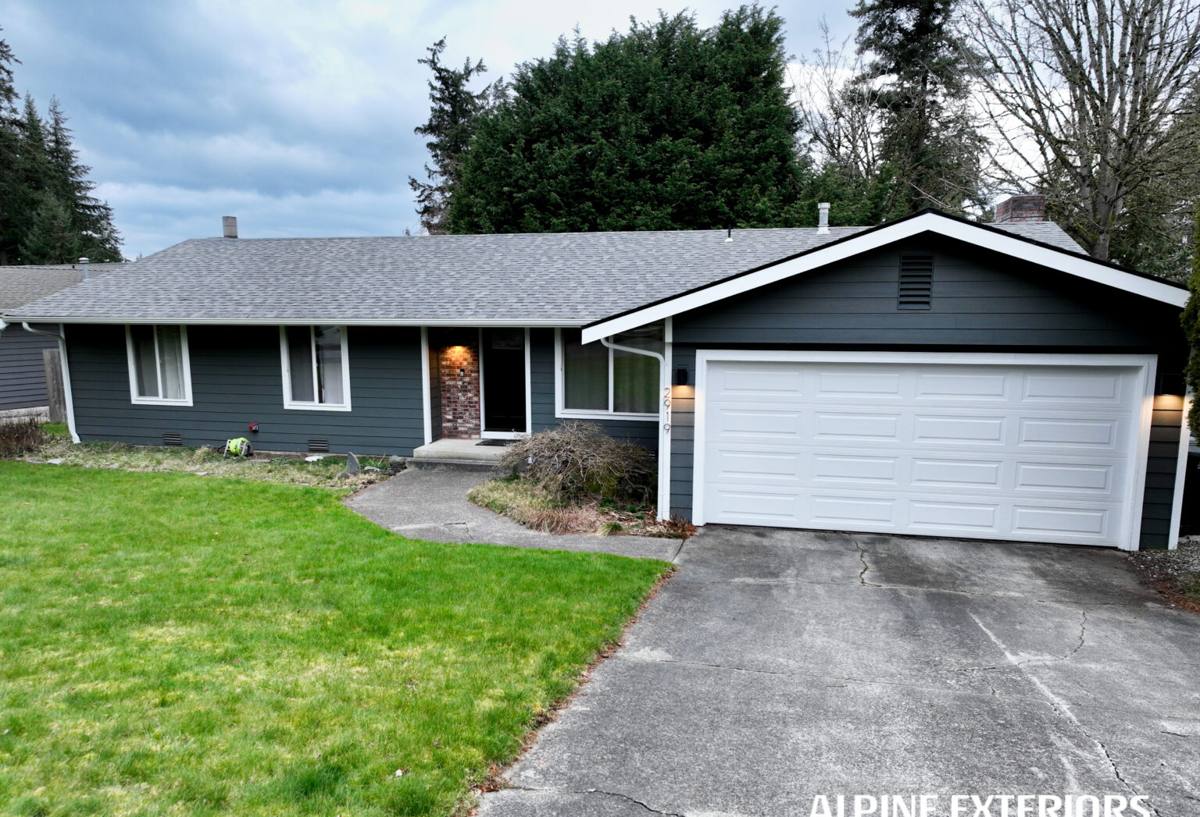
What This Climate Actually Does to a Wall
Moss Season Is Longer Than People Expect
Shaded, tree-lined lots like the ones common around Sudden Valley stay damp long after a storm has passed elsewhere in Whatcom County. That extended dampness is exactly what moss and algae need to take hold on siding, trim, and fascia. On a wood-based product, that moisture doesn't just sit on the surface — it can work into the material itself. On a properly finished fiber cement product, it stays where it belongs: on the surface, where it can be rinsed off.
Driving Rain and Wind-Driven Moisture
Storms that come through the county often bring rain sideways, not straight down. That matters because siding isn't just a rain shield sitting on a wall — it's one layer in a system that has to shed water that gets past the surface, drains it back out, and never lets it pool behind the cladding. A house with the wrong flashing details or a siding product that swells when it takes on water will show problems years before a correctly built wall does.
Salt Air Reaches Further Inland Than People Assume
Whatcom County's proximity to Puget Sound means salt-bearing air moves further inland than homeowners expect, especially during winter storm patterns. Salt accelerates corrosion on fasteners and metal flashing, and it degrades certain paint and coating systems faster than manufacturers' lab tests based on inland climates would suggest. This is one more reason the fastener and flashing choices on a Sudden Valley install matter as much as the siding panel itself.
Why We Install Only James Hardie Fiber Cement
We made a decision as a company to stop offering vinyl, LP SmartSide, Cemplank, Allura, and bare wood siding like primed spruce or cedar. That wasn't a marketing move — it came out of years of seeing which products held up in Whatcom County's specific combination of moisture, shade, and salt air, and which ones needed more maintenance and earlier repair than homeowners were told to expect.
James Hardie fiber cement is a cement-and-cellulose composite that doesn't rot, doesn't support insect activity, and doesn't swell or delaminate the way wood-based and some engineered wood products can when they take on repeated moisture. It's also non-combustible, which matters given how many Whatcom County properties border trees and brush. Hardie's factory-applied ColorPlus finish is baked on under controlled conditions, which gives it more consistent adhesion and UV resistance than field-applied paint, and it carries a real, transferable warranty backing the product.
We're not going to tell you every other product on the market is worthless — vinyl is cheap and low-maintenance in the right climate, cedar has a look some homeowners genuinely prefer, and engineered wood products have real fans. What we will say is that after weighing moisture behavior, maintenance burden, and long-term performance in this specific climate, Hardie is the only product we're willing to put our name behind and install on a Sudden Valley home.
The Hardie Product Lines That Make Sense Here
James Hardie engineers its siding in climate-specific formulations called HZ5 and HZ10, matched to different moisture and freeze patterns around the country. Western Washington, including Whatcom County, falls into the HZ5 zone, which is engineered for a wetter, more humid climate profile than the drier HZ10 formulation used in other regions. That distinction matters — it's part of why we spec the correct HZ designation rather than treating "Hardie siding" as a single generic product.
- HardiePlank lap siding — the most common choice for Sudden Valley homes, available in several exposure widths and textures, forms the primary weather-shedding surface on the wall.
- HardiePanel vertical siding — used for accent sections, gable ends, or a more modern look, often paired with battens.
- HardieTrim boards — used around windows, doors, corners, and fascia; matching trim material to the field siding prevents the mismatched weathering you get when wood trim is paired with fiber cement panels.
- HardieSoffit panels — relevant on homes with deep overhangs, common in this area specifically to manage rain — since soffits sit in near-constant shade and moisture exposure.
What a Correct Installation Actually Involves
The Weather-Resistive Barrier and Drainage Plane
Fiber cement siding is not itself a waterproofing membrane — it's a rain screen sitting in front of a weather-resistive barrier that does the real waterproofing work. On a Sudden Valley home, we pay particular attention to how that barrier is lapped, taped, and integrated with flashing at every window, door, and penetration, because the volume of wind-driven rain this area sees will find any shortcut in that layer.
Fastening and Clearances
Hardie's installation instructions specify fastener type, spacing, and penetration depth, and following them isn't optional if you want the warranty to hold. In a salt-influenced, high-moisture climate, we also pay close attention to ground clearance and clearance from roof lines and decks — those minimum gaps exist specifically to keep splash-back moisture and standing snow or debris off the bottom edge of the siding.
Caulking, Flashing, and Trim Details
Most siding failures we get called out to inspect aren't failures of the panel material — they're failures at the joints, corners, and penetrations where water was allowed to get behind the cladding. Correct kick-out flashing at roof-to-wall intersections, properly lapped house wrap, and the right sealant at trim joints are what actually keep a Sudden Valley wall dry through a wet winter.
Comparing Siding Options for This Climate
| Factor | James Hardie Fiber Cement (HZ5) | Vinyl | Wood / LP SmartSide / Cedar |
|---|---|---|---|
| Moisture and moss resistance | Does not rot or swell; surface can be cleaned | Won't rot, but can trap moisture behind panels if installed loosely | Vulnerable to moisture absorption and moss growth over time |
| Fire resistance | Non-combustible | Melts/deforms under heat | Combustible |
| Finish durability | Factory-baked ColorPlus finish | Color molded through material, fades over decades | Field-applied paint/stain needs recoating on a shorter cycle |
| Maintenance | Periodic wash; repaint only when the owner wants a color change | Low, but panels can warp or crack in impact/heat | Regular repainting, re-staining, and moisture inspection |
| Typical lifespan when correctly installed | Multiple decades | Multiple decades, variable in appearance | Shorter repaint/replacement cycle in wet climates |
Our Process for a Sudden Valley Project
Every home in Sudden Valley has its own exposure — how much tree cover shades it, which direction it faces relative to the wind, how close it sits to grade. Our process starts with actually looking at those specifics rather than quoting a generic package.
- On-site assessment. We walk the exterior, check existing siding and trim for moisture damage, and note grading, roofline, and shading conditions that affect the install.
- Tear-off and sheathing inspection. Old siding comes off and we inspect the sheathing underneath for rot before anything new goes on — covering up existing damage is how small problems become expensive ones.
- Weather barrier and flashing installation. This is the step that determines whether the wall stays dry for the next several decades, and we don't rush it.
- HardiePlank, panel, and trim installation to manufacturer fastening specifications, sized to the home's exposure and design.
- Final detailing and walk-through covering caulking, touch-up, and cleanup, with the homeowner walking the job with us before we call it done.
If your home is part of a homeowners' association or community with design review requirements, we're used to working within those guidelines and can help prepare whatever documentation the process calls for.
Maintaining Fiber Cement Siding in a Moss-Prone Climate
One advantage of switching to fiber cement in this environment is how little ongoing work it actually takes compared to wood siding — but "little" isn't "none." A short annual routine goes a long way:
- Rinse siding with a garden hose or low-pressure wash once a year, focusing on shaded, north-facing walls where moss and algae take hold first.
- Check and clear gutters before the fall rains so overflow doesn't run down the siding face.
- Trim back tree branches and shrubs that keep sections of the wall in constant shade and slow drying.
- Inspect caulking at trim joints and penetrations every couple of years and re-caulk where it's cracked or pulled away.
- Watch for any dark staining at the bottom edge of siding near grade, which usually points to a splash-back or clearance issue worth addressing early.
Why Local Installation Experience Matters
Fiber cement siding is only as good as the crew installing it. The product itself is engineered to perform, but flashing details, fastener choice, and clearance decisions are judgment calls made on site, and a crew that hasn't worked through a Whatcom County winter doesn't always know which details matter most here. A crew that's put siding on homes dealing with this area's moss, rain, and salt exposure knows where water actually tries to get in, not just where the manual says to caulk.
That's the case for hiring locally and hiring a crew that specializes in one product rather than offering five different systems: fewer variables, more accountability, and installation details tuned to what this climate actually does to a house.
If you're weighing a siding replacement for a Sudden Valley home, we're glad to come take a look and talk through what your specific exposure calls for. The estimate is free, there's no pressure, and you'll get a straight answer about what the job actually needs — just fill out the form below to get started.