 Ferndale Siding
 Why Sudden Valley Is a Tough Place for Siding
Sudden Valley sits back in the trees, and that tree cover is both the appeal of the neighborhood and the reason siding here works harder than it does on an open lot. Heavy canopy keeps yards shaded through most of the year, which means walls dry out slowly after rain instead of getting a few hours of direct sun to shed moisture. Add in the driving rain that rolls through Whatcom County off Pacific storm systems, the salt-tinged air that drifts inland from the Puget Sound region, and you get a siding environment that punishes anything not built to handle sustained dampness.
The result is a long moss season. Moss and algae don't just look bad — they hold water against the wall, and wherever water sits, wood rots, paint fails, and seams open up. On a shaded, tree-lined lot like the ones common in Sudden Valley, that cycle starts earlier in the fall and runs later into spring than it does on more exposed properties around Ferndale.
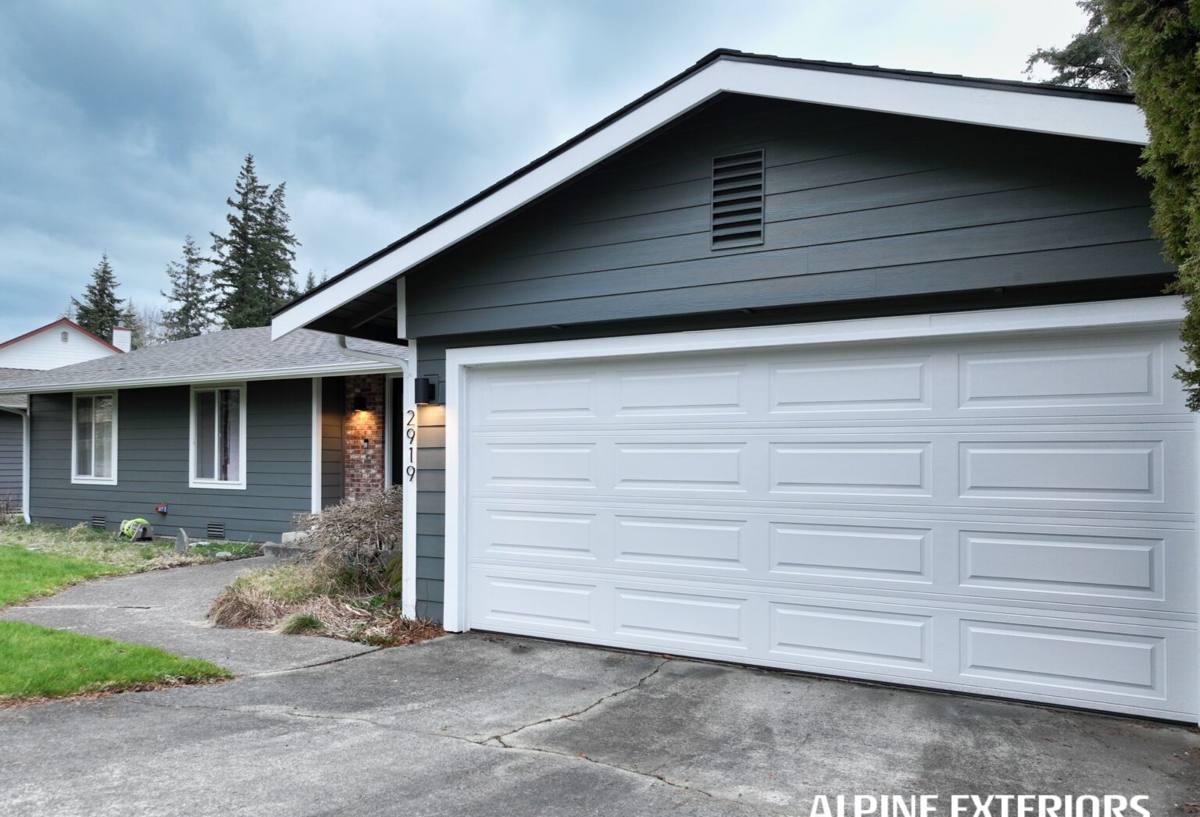
What Actually Fails on Homes Like These
We see the same failure patterns on shaded Whatcom County homes over and over. Wood siding develops soft spots and rot where moss has been sitting against a board for a season or two, especially on north-facing walls that never really dry. Vinyl siding warps and gaps at the seams as it expands and contracts, and those gaps become an entry point for moisture and a place for algae to streak. Primed wood or engineered wood products need repainting or resealing on a shorter cycle than the label suggests, because the shaded, humid conditions here accelerate everything the manufacturer's climate assumptions didn't account for.
None of that is a defect in those products so much as a mismatch — they're built to a general standard, not to a lake-adjacent, tree-covered, high-moisture pocket of the Pacific Northwest. That mismatch is exactly why we standardized on one material instead of offering several.
Why We Only Install James Hardie Fiber Cement
We install James Hardie siding exclusively — no vinyl, no LP SmartSide, no Cemplank or Allura, no primed spruce or cedar. That's not a marketing position, it's a maintenance and durability call based on what actually holds up in conditions like Sudden Valley's.
HZ5 Engineering for This Region
James Hardie manufactures its siding in climate-specific formulations called HZ (HardieZone) products. The HZ5 line is engineered for the wetter, colder parts of the country, including the Pacific Northwest — it's formulated to resist moisture absorption and hold up to freeze-thaw cycling better than a one-size-fits-all product. That matters directly on a shaded lot where boards stay damp longer between dry spells.
ColorPlus Factory Finish
Most James Hardie siding we install carries the ColorPlus finish — baked on at the factory under controlled conditions rather than brushed or sprayed on-site. That finish resists fading, chipping, and peeling far longer than field-applied paint, and it doesn't give moss and algae the same rough, porous surface to grip that raw or lightly primed wood does. Fiber cement is also dimensionally stable — it doesn't swell, warp, or shrink with moisture the way wood and vinyl can, so seams and fastener lines stay tight over time instead of opening up and inviting water in.
What a Correct Installation Looks Like Here
Fiber cement performs the way it's supposed to only when it's installed to spec — and on a shaded, moisture-heavy lot, small installation shortcuts turn into real problems faster than they would somewhere drier. A correct job involves:
- Proper starter strip and flashing at every horizontal and vertical transition, not just the visible joints
- A continuous weather-resistive barrier behind the siding, lapped correctly so water sheds outward rather than behind the panel
- Fasteners set to the manufacturer's depth and spacing — overdriven nails crack the board's edge and create a moisture entry point that's invisible until it's already causing damage
- Correct clearance at grade, roof lines, and decks so siding isn't sitting in standing water or trapped debris
- Kick-out flashing at every roof-to-wall intersection, which is one of the most common places we find hidden rot on older homes in wooded settings
- Sealant used only where it belongs — oversealing joints that are supposed to allow drainage traps moisture instead of keeping it out
On a lot with heavy tree cover, we also pay close attention to where gutters and downspouts are directing water relative to the siding. Driving rain plus a clogged or undersized gutter system is a fast way to overwhelm even a well-installed wall.
How Climate Stressors and James Hardie Line Up
| Local Stressor | Effect on Wood, Vinyl, or Engineered Wood | How James Hardie Responds |
|---|---|---|
| Prolonged shade and moisture | Slow drying promotes rot, mold, and moss growth against the surface | Fiber cement doesn't feed rot fungus and resists moisture absorption, especially in HZ5 formulations |
| Driving rain | Water pushed into seams and laps causes warping, staining, and hidden sheathing damage | Rigid, dimensionally stable boards hold tight tolerances at laps and seams over time |
| Salt-tinged coastal air | Accelerates finish breakdown, fading, and corrosion of fasteners and trim | ColorPlus factory finish and non-combustible, non-corroding fiber cement composition hold up longer |
| Freeze-thaw cycling | Repeated swelling and contracting stresses seams and paint film | Engineered dimensional stability limits expansion and contraction stress |
Our Process for Sudden Valley Projects
We start with a site walk that looks specifically at how shade, tree cover, and moisture move across the lot — north-facing walls, areas under heavy canopy, and low-airflow corners get flagged early because those are where problems concentrate. From there we measure and order the correct HZ5 panels, trim, and accessories for the home.
Tear-off is also an inspection step. On homes that have carried wood or vinyl siding through several wet Whatcom County winters, we routinely find sheathing damage that isn't visible from the outside — soft spots, old moisture staining, or rot around window and door openings. We address that before anything new goes up, because covering a hidden problem with new siding doesn't solve it. Installation follows James Hardie's fastening, clearance, and flashing specifications, and we keep the job site clean and organized throughout, which matters on the tighter, tree-lined lots that are common in this neighborhood.
Maintenance Once It's Installed
James Hardie siding is low-maintenance compared to wood or vinyl, but "low-maintenance" isn't "no-maintenance" — especially in a shaded, moss-prone setting. A simple annual routine keeps it performing the way it should:
- Rinse siding gently once or twice a year to keep moss and algae from establishing, especially on shaded and north-facing walls
- Keep gutters clear so water isn't overflowing onto the siding below during heavy rain
- Trim back branches and vegetation that are holding shade and moisture directly against the wall
- Check caulking at trim, window, and door joints periodically and have any cracked or missing sealant addressed
- Have roof-to-wall intersections and deck ledger areas checked occasionally, since these are the spots most likely to hide moisture problems on wooded lots
What Affects the Cost of a Project
Every Sudden Valley home is different, and pricing depends on more than just square footage:
| Factor | Why It Matters |
|---|---|
| Home size and number of stories | More surface area and height affect material and labor time |
| Site access | Tree-heavy or sloped lots, private roads, and limited staging space can affect logistics |
| Condition of existing sheathing | Hidden moisture or rot repair adds scope that isn't visible until tear-off |
| Siding profile and finish | Lap width, trim detail, and ColorPlus color selection affect material cost |
| Amount of trim and detail work | Homes with more windows, corners, and architectural detail require more trim work |
Because those factors vary so much from one property to the next, we don't quote broad numbers online — an on-site look at the home gives a far more accurate picture than a generic estimate would.
Why It Matters That We Already Work This Neighborhood
A crew that's already worked on wooded, lake-adjacent lots in this part of Whatcom County knows what to look for before they even start tear-off. They know which orientations tend to hide the worst moisture damage, how to stage material and equipment on a tighter, tree-lined lot, and what a correctly flashed roof-wall intersection needs to look like to hold up through another wet season. That familiarity shows up in fewer surprises mid-project and a finished job that's actually built for the conditions it has to survive, not just for a general specification sheet.
If you're weighing a siding replacement or repair in Sudden Valley, we're happy to walk the property, look at what's actually happening with your current siding, and talk through what James Hardie would involve for your home — no pressure, no obligation. Use the form below to request a free estimate.