 Ferndale Siding
 Windows Built for Sudden Valley's Weather, Not Just Its View
Sudden Valley homes sit close enough to the water and the tree line that the windows take a different kind of beating than a house a few miles inland in downtown Ferndale. Salt-laden air off the Sound works into aluminum frames and metal hardware over time. Driving rain off Lake Whatcom and the surrounding hills finds every gap in old flashing and worn weatherstripping. And the long, damp moss season here doesn't just grow on your roof — it creeps into window sills, tracks, and any wood trim that isn't sealed well. A window that was installed correctly for a drier climate often isn't installed correctly for this one.
We work on homes throughout Whatcom County, and Sudden Valley comes with its own set of habits we've learned to expect: older single-pane or early dual-pane windows original to the home, wood-clad frames that have taken on moisture damage, and sliders and hoppers that have swollen shut from years of humidity. None of that is unusual for the area. What matters is replacing those windows with a system and an installation method that actually accounts for the conditions they'll sit in for the next twenty-plus years.
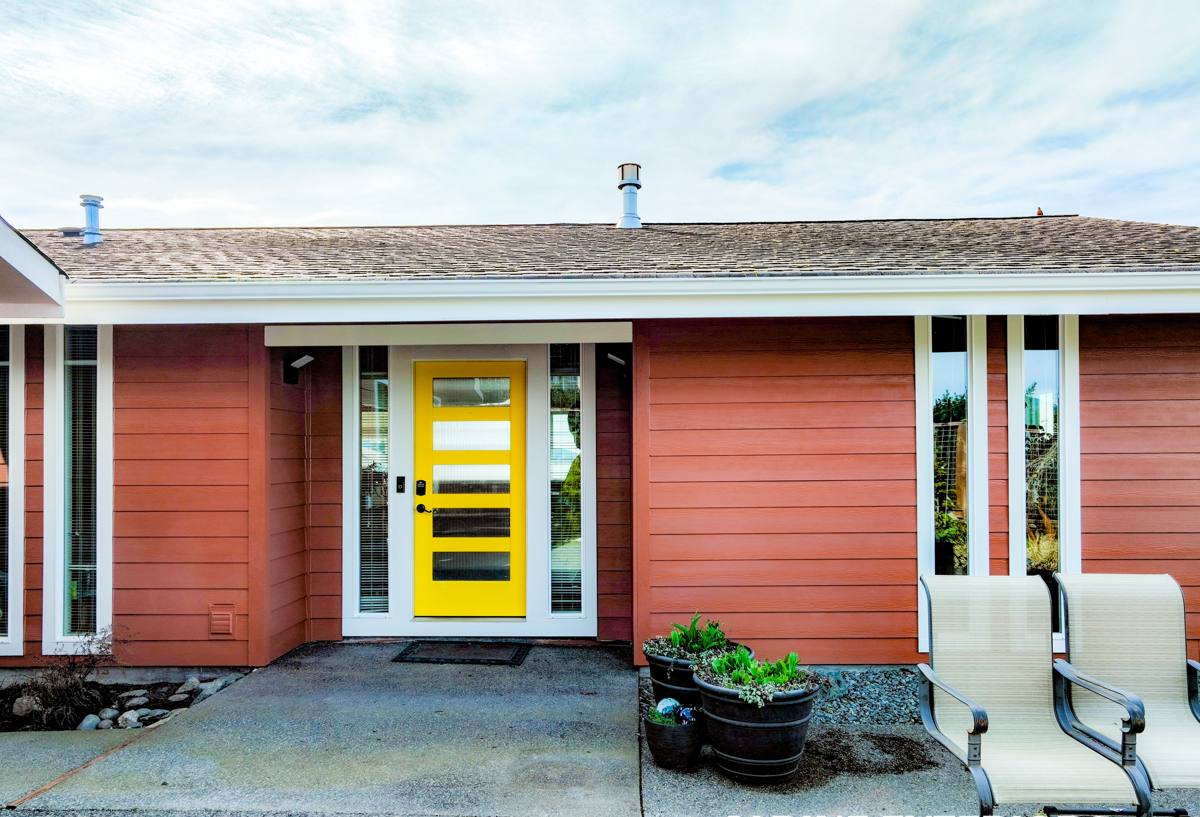
What "Correct" Window Replacement Actually Involves
A lot of window replacement problems in this region trace back to installation shortcuts, not the window product itself. Getting it right isn't complicated, but it does take doing every step in order and not skipping the parts that don't show once the trim is back on.
The Steps That Matter Most
- Full removal, not a retrofit shortcut. We pull the old frame down to the rough opening rather than capping over it, so we can actually see what condition the sheathing and framing are in.
- Rough opening inspection. This is where hidden rot or old water staining shows up. In a climate this wet, we'd rather find a problem now than have the homeowner find it in five years when trim starts staining again.
- Flashing done in the correct order. Sill pan first, then side flashing, then head flashing lapped over the top — water has to be directed out and down at every layer, never trapped behind the window.
- Backer rod and sealant, not sealant alone. A bead of caulk over a wide gap is not a moisture barrier; it's a temporary patch that fails in a season or two.
- Interior air sealing. Foam or sealant between the frame and the rough opening on the inside stops condensation from forming inside the wall cavity, which is a common cause of hidden rot behind new windows.
- Proper shimming and squaring. A window that isn't plumb and square won't operate correctly and puts uneven stress on the seals, shortening their life.
Skip any one of these and the window can look fine for a year or two before a leak shows up — usually as staining on interior trim, a musty smell, or soft drywall below the sill. By then the damage is often behind the wall, not just at the window.
Reading a Salt-Air, High-Moisture Climate
Whatcom County's marine climate is mild, which is part of why people love living out here — but mild and dry are not the same thing. Sudden Valley's proximity to Lake Whatcom and the broader exposure to Pacific weather systems means homes see a lot of wind-driven rain, meaning water doesn't just fall on windows, it gets pushed sideways into any seam that isn't properly flashed. Add in salt content carried on coastal air currents, and you get accelerated corrosion on lower-grade aluminum components — screws, hinges, and cranks in particular.
Moss season is the other factor that's easy to underestimate. From roughly late fall through spring, damp shade keeps organic growth active on north-facing walls, sills, and anywhere water sits instead of draining. Wood window components without a durable, well-maintained finish are especially vulnerable — moss and algae hold moisture against the surface, which accelerates rot in ways that don't happen in drier parts of the state.
What This Means for Material Choice
We steer most Sudden Valley homeowners toward vinyl or fiberglass frames with corrosion-resistant hardware, and we're cautious about recommending bare or minimally clad wood exteriors in this specific microclimate. That's not a knock on wood as a material — it has real advantages indoors and in drier regions — it's a judgment about maintenance burden. A wood exterior here needs more frequent refinishing to keep water out, and if that maintenance schedule slips even one season, moisture gets a foothold. For homeowners who want a wood interior look, wood-interior/vinyl or fiberglass-exterior composite windows give you that without exposing wood grain to the weather side.
Comparing Frame Materials for This Climate
| Frame Material | Moisture Resistance | Salt-Air Durability | Maintenance |
|---|---|---|---|
| Vinyl | Excellent — won't rot or absorb water | Good; hardware quality matters most | Low — occasional cleaning |
| Fiberglass | Excellent — dimensionally stable when wet | Very good | Low |
| Aluminum (standard) | Good, but conducts cold and can condense | Fair — prone to pitting/corrosion over time near salt air | Moderate |
| Wood (exterior exposed) | Fair — needs sealed/maintained finish | Fair — humidity plus salt accelerates wear | High — periodic refinishing required |
| Wood interior / clad exterior | Very good — exterior shell protects the wood | Good | Low to moderate |
None of these are wrong choices in the abstract. The point of the table is trade-offs, not a verdict — a homeowner who's committed to refinishing wood trim every few years can absolutely make that work. Most Sudden Valley homeowners we talk to would rather not add that to the maintenance list, which is why vinyl, fiberglass, and clad options make up most of what we install out there.
Glass Packages Worth Paying For — and What's Optional
Double-pane, low-E glass with argon fill is the baseline we'd recommend for anyone in this part of Whatcom County — it's not an upsell, it's the standard that actually performs against our winters and keeps energy bills sane. Beyond that baseline, a few upgrades are worth understanding rather than defaulting into:
- Triple-pane glass: better insulation and sound dampening, but heavier and more expensive; worth it for rooms facing prevailing wind or road noise, less necessary on a sheltered elevation.
- Warm-edge spacers: reduce condensation at the glass edge, which matters in a humid climate where you'll notice fogging on cold mornings if this is skipped.
- Impact-resistant glass: more relevant in hurricane zones than here; for Sudden Valley, we generally don't recommend paying for it unless there's a specific concern like nearby tree limbs.
- Tinted or reflective coatings: can help with west-facing summer glare but isn't something every home needs — worth discussing room by room rather than applying whole-house.
Our Process for a Sudden Valley Replacement
1. On-Site Assessment
We look at each window individually, not just the house as a whole. Sun exposure, wind exposure, and moisture history vary window to window — a north-facing bedroom window and a south-facing living room slider often need different attention even on the same house.
2. Honest Scope and Pricing
We'll tell you plainly if some windows need full replacement now and others can reasonably wait a season or two. Full-home window replacement is a meaningful investment, and there's no reason to push work that isn't yet necessary.
3. Installation
One crew, one day per typical batch of windows in most cases, following the flashing and sealing sequence outlined above — no retrofit shortcuts, no caulk-only fixes.
4. Cleanup and Walkthrough
We walk every window with you before we consider the job finished — operation, locks, screens, and sightlines from both inside and outside.
Signs Sudden Valley Homeowners Shouldn't Ignore
Because of the climate here, window problems tend to announce themselves earlier than in drier regions — if you know what to look for.
- Fogging or a milky haze between panes (failed seal, not a cleaning issue)
- Soft or discolored trim/sill wood, especially on north- or west-facing windows
- Windows that stick, won't stay open, or won't latch fully
- Visible corrosion or chalky white buildup on aluminum hardware
- A persistent musty smell near a window even when it's closed
- Moss or dark staining building up in the sill track
- Noticeable draft or cold spot near the frame in winter
Any one of these on its own isn't an emergency. Several at once, or any sign of soft wood, usually means it's time for an actual assessment rather than another round of caulk.
Cost Factors Worth Understanding Before You Get Quotes
| Factor | Why It Affects Price |
|---|---|
| Full-frame vs. insert replacement | Full-frame costs more but is often necessary here if there's any rot or flashing failure behind the old frame |
| Frame material | Vinyl is typically most economical; fiberglass and clad-wood run higher |
| Glass package | Triple-pane and specialty coatings add cost per window |
| Window size and configuration | Large picture windows, bays, and custom shapes cost more than standard operable sizes |
| Access and site conditions | Upper-story or hard-to-reach windows take more labor time |
| Hidden repair needs | Rot or damaged sheathing found during removal adds to scope — this is common enough in this climate that it's worth budgeting a contingency |
We'd rather walk through these factors with you in person than throw out a number that doesn't hold up once we're actually into the wall. Every house is different, and in Sudden Valley specifically, the condition behind the old window matters as much as the window itself.
Why Local Experience with This Specific Area Matters
Whatcom County covers a lot of different microclimates, and Sudden Valley's combination of lake proximity, tree cover, and elevation changes creates conditions that don't always match what you'd plan for based on Ferndale proper or Bellingham. A crew that's worked this specific area knows which elevations tend to hold moisture longest, which older builds in the neighborhood commonly have particular window types installed, and what a properly sealed installation needs to hold up through a full moss season without callbacks. That's not something you get from a manufacturer's install manual alone — it comes from doing the work here, repeatedly, and paying attention to what actually holds up.
Ready to Talk Through Your Windows?
If your Sudden Valley home has windows that are fogging, sticking, drafting, or just original to a house that's been through a few decades of Whatcom County winters, we're happy to take a look. There's no pressure and no obligation — just an honest read on what your windows actually need. Use the form below to request a free estimate.