 Ferndale Siding
 Roof Repair Built for Sumas Conditions
Sumas sits out at the far edge of Whatcom County, hard against the Canadian border on the flat, low-lying farmland of the Sumas Prairie. It's a different setting than the coastal towns closer to Bellingham Bay, but the weather pattern that wears on a roof out here is the same regional combination that shapes exterior work across this part of the Pacific Northwest: salt-tinged marine air, rain that gets driven sideways more often than it falls straight down, and a moss season that runs longer than most homeowners expect. On top of that, Sumas sees more cold outflow wind in winter than towns further west toward the water, which adds real wind load to a roof that a calmer inland site wouldn't face as often.
Roof repair is a different job than roof replacement, and it's worth treating that way. A repair has to solve the actual problem, tie in cleanly with the roofing that's already there, and hold up under the same conditions that caused the failure in the first place. This page covers what that looks like for a Sumas home specifically, from diagnosing the real source of a leak to how our repair process works from first call to final walkthrough.
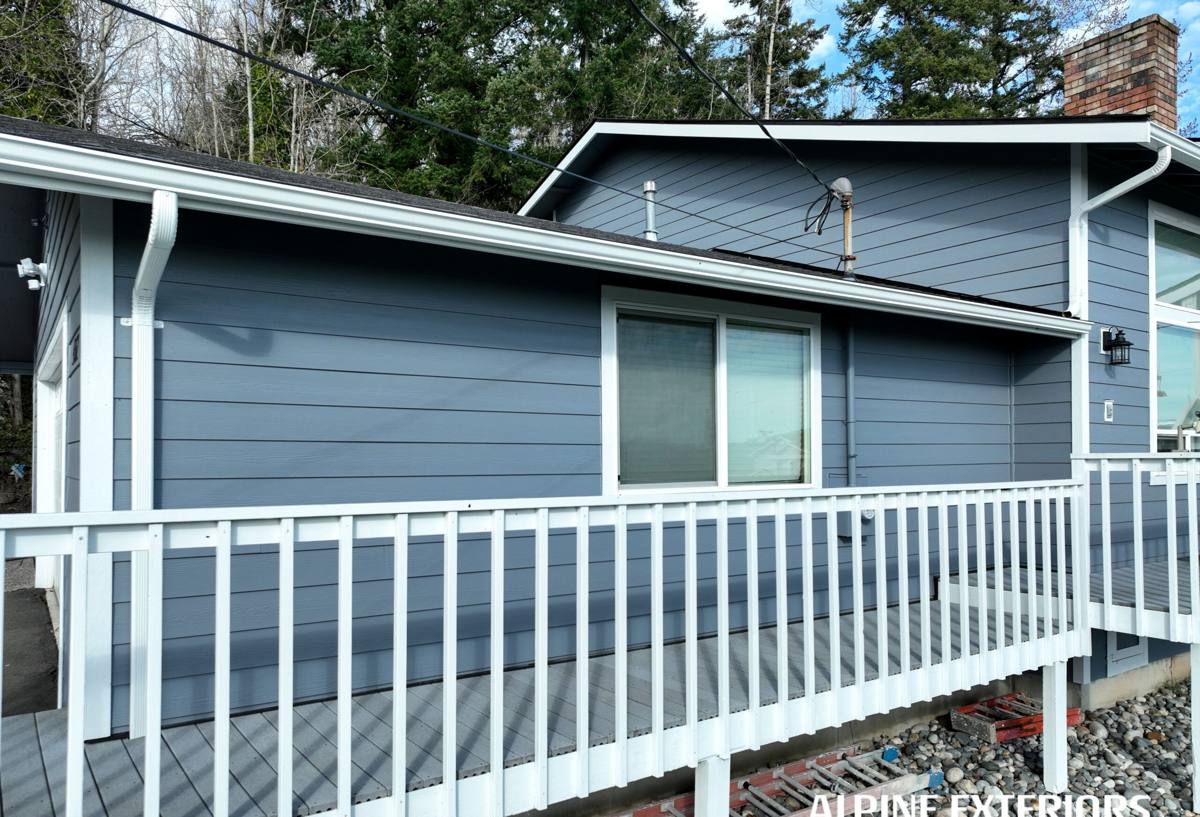
Why Roof Repair Looks Different in a Border-Valley Climate
A roof repair anywhere has to stop water from getting in. In Sumas, that job is harder than it looks from the ground, because the water isn't always arriving the way most people picture it. Driving rain gets pushed under shingle edges and behind flashing rather than running straight off a sloped surface. Low, flat valley terrain means moisture that does get in doesn't drain or evaporate as quickly as it would on a hillside lot, so a small intrusion point has more time to do damage before anyone notices a stain on the ceiling. And the region's long damp season means a roof rarely gets the extended dry stretch that would let a marginal repair fully cure and seal before the next round of weather tests it.
That combination is why a repair that would hold up fine in a drier climate can fail here within a season or two. Caulk-and-patch fixes that only address the visible symptom, rather than the actual path water is taking through flashing, underlayment, or a fastener pattern, tend to come back as callbacks. We approach every repair as a diagnostic job first and a patching job second.
What Sumas Weather Actually Does to a Roof Over Time
- Wind-driven rain intrusion: Water forced sideways and upward finds gaps at flashing laps, shingle edges, and fastener penetrations that vertical rain would never reach.
- Slow-draining valley moisture: Once water gets past the roofing surface, low-lying terrain and heavy regional humidity mean it lingers longer in the deck and underlayment before drying out.
- Cold outflow wind events: Sharp winter wind gusts particular to the Sumas area stress fastening and can lift or work loose shingles and flashing that a calmer site wouldn't test as hard.
- Extended moss and algae growth: Shaded and north-facing roof planes hold moisture long enough for moss to establish, and moss roots work their way under shingle tabs and lift them over time.
- Corrosion on exposed metal: Salt-tinged marine air across this part of Whatcom County accelerates rust on undersized or lower-grade flashing and fasteners, which is often where a slow leak actually starts.
Common Roof Problems We See on Sumas Homes
Most roof repair calls in this area trace back to a handful of recurring issues. Knowing what they typically look like helps a homeowner describe the problem accurately and know what to expect once a roofer is on-site.
Flashing Failures at Valleys, Chimneys, and Walls
Flashing is where two roof planes meet, or where a roof meets a chimney, skylight, or wall. These transitions are the single most common source of leaks on any roof, and in a climate with sustained wind-driven rain, marginal flashing work shows its weaknesses faster than it would somewhere drier. A flashing repair has to re-lap and re-integrate the metal with the surrounding roofing correctly, not just seal a visible gap with caulk.
Lifted, Cracked, or Missing Shingles
Wind events, age, and moss growth all contribute to shingles that lift, crack, or go missing outright. A single damaged shingle is a simple fix, but it's worth checking the surrounding field for wind uplift damage that hasn't fully failed yet, since a repair limited to only the obviously broken shingle can mean a second service call within a year.
Moss and Organic Growth Damage
Moss doesn't just sit on top of a roof looking unsightly. Its root structure works into shingle granule surfaces and lifts tab edges, creating small gaps where water then gets a foothold. Roof planes that hold moss longest, usually shaded or north-facing sections, are frequently where repair calls originate.
Deck-Level Rot from Long-Term Moisture
When a leak has been active for a while before anyone notices it, moisture can reach the roof deck itself and begin softening or rotting the plywood or board sheathing underneath. This is the difference between a straightforward shingle-and-flashing repair and a repair that also requires deck section replacement, and it's exactly the kind of damage that a flat, slow-draining valley climate makes more likely if a leak goes unaddressed.
Fastener and Underlayment Failure
Underspecified or corroding fasteners can work loose over time, especially under repeated wind load from outflow events. Underlayment that's degraded, torn, or was never rated for wind-driven rain in the first place stops doing its job as a secondary water barrier, even while the shingles above it still look intact.
How We Diagnose a Roof Problem Before We Touch It
A repair is only as good as the diagnosis behind it. We don't quote roof repair work from a description over the phone or a photo texted in, because the visible sign of a leak, a ceiling stain, a damp attic corner, is frequently not directly above the actual entry point. Water travels along rafters, decking, and underlayment before it shows itself indoors, sometimes several feet from where it entered the roof.
What an In-Person Inspection Covers
- Walking the full roof surface, not just the area near the reported symptom, to check for related or secondary damage
- Inspecting flashing at every valley, chimney, skylight, and wall intersection for lapping and sealing problems
- Checking the attic from inside for moisture staining, mold, or deck softness that indicates how long a leak has been active
- Assessing shingle condition, granule loss, and moss coverage across all roof planes, including shaded sections
- Evaluating whether the issue is isolated or a sign of broader age-related or installation-related roofing problems
That inspection is what tells us whether a job is a targeted flashing or shingle repair, a larger section replacement, or in some cases a sign that full roof replacement is a smarter investment than continuing to chase individual repairs on an aging roof.
What a Correct Repair Involves
Once the actual source of the problem is identified, the repair itself needs to be built to the same standard as new installation work, not treated as a lesser job because it's smaller in scope.
Matching and Integrating Materials
New shingles, flashing, and underlayment need to tie in properly with what's already on the roof, both in terms of physical integration and reasonable appearance match where that's practical. A repair that leaves a poor transition between old and new roofing material can create its own new water entry point.
Correct Flashing Work
Flashing gets re-lapped and integrated with the surrounding roofing system in the correct shingle-over-flashing sequence, not caulked over the top as a shortcut. Given how often flashing is the actual source of a Sumas roof leak, this is usually the step that determines whether a repair holds.
Deck Repair When Needed
If the inspection finds soft or rotted decking, that section gets replaced before any new roofing goes back down. Skipping this step to save time or cost just means the new roofing surface is going down over a compromised base that will continue to fail underneath it.
Fastening to Withstand Local Wind Load
Given the outflow wind events this area sees in winter, repair work follows manufacturer fastening specification rather than a shortcut pattern, so the repaired section holds up under the same wind conditions that likely contributed to the original damage.
Repair vs. Replacement: How We Help You Decide
| Situation | Repair Usually Makes Sense | Replacement Worth Considering |
|---|---|---|
| Age of roof | Under roughly 15 years, isolated issue | Approaching or past typical shingle lifespan |
| Extent of damage | Localized to one section or detail | Recurring leaks in multiple areas |
| Deck condition | Sound, no widespread rot | Rot found in multiple locations |
| Repair history | First or infrequent repair call | Repeated repairs to the same or nearby areas |
| Underlying material | Underlayment and shingles still in reasonable condition | Underlayment failing broadly, granule loss across most of the roof |
We'll always give you an honest read on which side of that line your roof falls on. A repair that's likely to need another repair within a year or two isn't a favor to a homeowner, even if it's the cheaper number up front.
Cost Factors for Sumas Roof Repair
Roof repair pricing varies more than replacement pricing does, because the scope of the actual problem drives the cost far more than square footage does. A few factors tend to move the number most.
| Factor | What It Affects |
|---|---|
| Root cause vs. symptom | Whether the fix addresses the actual leak path or just the visible damage |
| Flashing scope | How much valley, chimney, or wall flashing needs to be re-lapped or replaced |
| Deck condition | Whether rotted sheathing needs to be cut out and replaced before re-roofing the section |
| Roof pitch and access | Staging, safety equipment, and labor time on steeper or harder-to-reach roofs |
| Material matching | Availability of shingles that reasonably match existing roofing in color and profile |
| Extent of moss or organic growth | Additional cleaning and treatment time before repair work can begin |
Because repair scope can shift once a roofer is actually up on the roof and can see what a ceiling stain doesn't show, an honest estimate is a range with clear notes on what could change it, not a single firm number given sight unseen.
How Our Repair Process Works
- Phone conversation: We ask what you're seeing and where, which helps us understand urgency before we're on-site.
- In-person inspection: We walk the roof and check the attic in person, documenting the actual source of the problem rather than assuming it's directly under the visible symptom.
- Written estimate: You get a clear explanation of what we found, what the repair involves, and pricing, including what could change the scope once work is underway.
- Scheduling around weather: Roof repair work needs a reasonably dry window, and we build that into scheduling honestly rather than promising a fixed date regardless of conditions.
- The repair itself: Damaged materials come out, any deck repair happens first, and new flashing, underlayment, and shingles go in to manufacturer specification.
- Final walkthrough: We review the completed repair with you, explain what was done, and do a site cleanup before calling the job finished.
Why Hiring a Crew That Already Works in Sumas Matters
A crew that regularly repairs roofs in and around Sumas has already seen how outflow wind events lift shingles that would hold fine in a calmer location, how flat valley terrain slows drying time after a leak starts, and which roof orientations hold moss the longest through the wet season. That's practical, specific knowledge that shapes real decisions during a repair, not something a crew unfamiliar with this particular border-valley climate would necessarily think to account for.
It also matters after the job is done. A repair warranty is only as good as the company standing behind it, and a contractor with an ongoing, established presence in the area is the one you can actually reach if a question comes up down the road.
A Practical Checklist Before You Hire a Roof Repair Contractor
- Do they inspect in person, including the attic, rather than quoting from a description or photo?
- Does the estimate explain the actual cause of the problem, not just the visible symptom?
- Is flashing work explicitly addressed, or does the quote only mention shingles?
- Do they check for deck-level rot before closing up a repaired section?
- Do they carry current WA contractor licensing, liability insurance, and workers' compensation?
- Can they point to an honest opinion on repair versus replacement, rather than defaulting to whichever is more profitable?
Signs a Sumas Roof Needs Repair Now
Roof problems in this climate tend to give warning before they become a full interior leak, and catching them early is usually the difference between a modest repair and a much larger one.
- Water staining on a ceiling or in the attic, especially after a wind-driven rain event
- Visible moss buildup on shaded or north-facing roof planes
- Granules collecting in gutters or at the base of downspouts
- Lifted, curling, or missing shingles, particularly after a winter wind event
- Rust streaking or visibly deteriorating flashing at valleys, chimneys, or vents
- A musty smell in the attic, which can indicate moisture that hasn't reached the ceiling yet
If any of that sounds familiar, it's worth having the roof looked at before the next stretch of driving rain rather than waiting for a ceiling stain to force the decision.
If you'd like an honest, no-pressure look at your Sumas home's roof and a written estimate for the repair it actually needs, we're glad to come take a look. Use the form below to request a free estimate.