 Ferndale Siding
 Roof Repair Built for Bellingham's Weather
Bellingham sits close enough to the water and far enough into the Pacific Northwest storm track that its roofs take a different kind of beating than roofs a hundred miles inland. Salt-tinged air off Bellingham Bay works into fasteners and flashing over time. Long stretches of driving rain, common through fall and winter in Whatcom County, find every gap in a roof system that isn't sealed correctly. And the mild, damp shoulder seasons that make this area pleasant to live in are exactly the conditions moss needs to take hold on a north-facing slope or a shaded valley. A roof repair here isn't just patching a leak — it's addressing the specific combination of moisture, salt exposure, and organic growth that this climate throws at a home year after year.
We work out of Ferndale and know Bellingham's older neighborhoods, newer developments, and everything shingled or metal-roofed in between. That local familiarity matters more with roofing than with almost any other exterior trade, because so much of what causes roof failure here is regional, not generic.
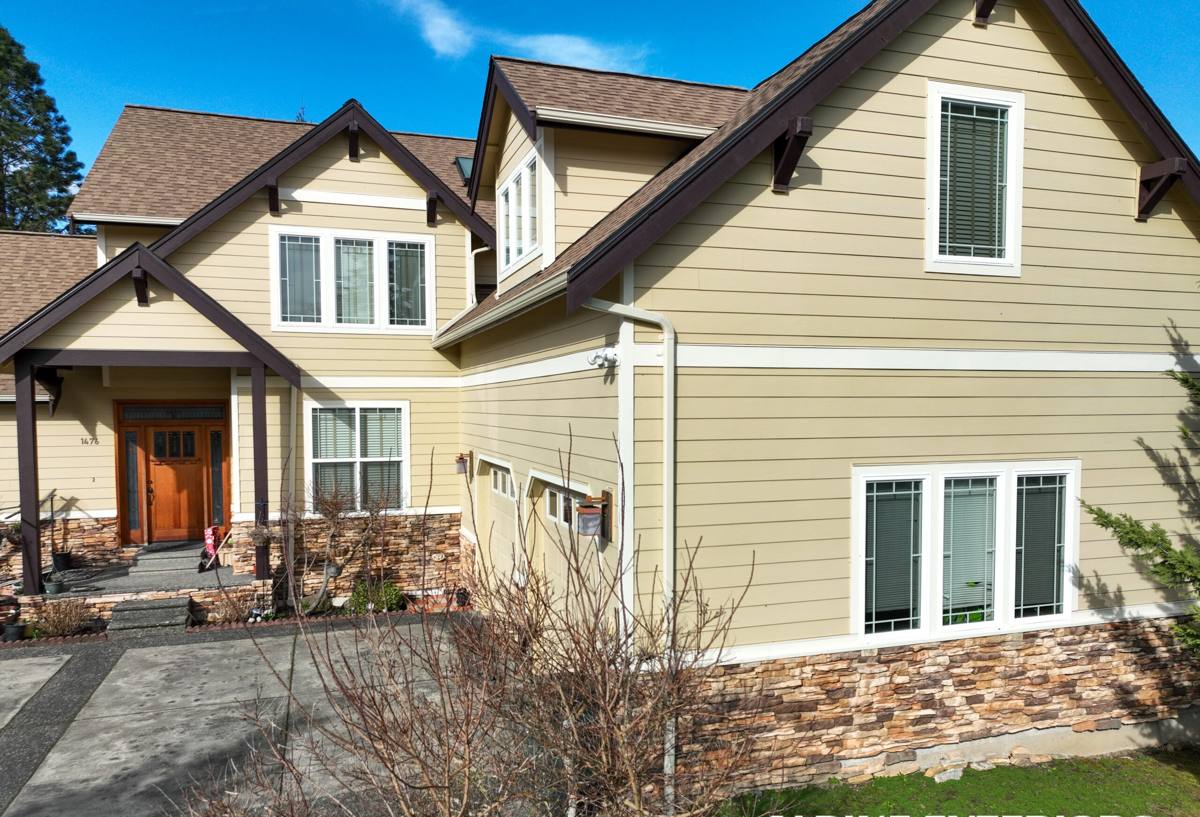
Signs Your Bellingham Home May Need Roof Repair
Roof problems rarely start as a dramatic leak. They usually start small and get worse through a wet winter. Catching the early signs saves money and prevents damage to the decking, insulation, and interior finishes underneath.
- Granules collecting in gutters or at downspout outlets, which signals asphalt shingles are wearing thin
- Dark streaking or thick moss growth on shaded or north-facing roof sections
- Curling, cracked, or missing shingles, especially after a windstorm
- Soft or spongy spots when walking the roof, indicating decking damage underneath
- Water stains on interior ceilings or along the top of exterior walls
- Daylight visible through the attic roof deck or soffit
- Rusted, lifted, or separated flashing around chimneys, skylights, and vent pipes
- Sagging in the roofline, which usually points to a structural or long-term moisture issue
Any one of these on its own might not be urgent. Several together, or anything involving the roof deck itself, is worth a professional look before the next round of Whatcom County rain finds its way in.
What a Correct Roof Repair Actually Involves
It Starts Below the Surface
A repair that only replaces visible shingles without checking the underlayment and decking underneath is a temporary fix at best. Water that has already worked past damaged shingles often leaves the underlayment saturated or the plywood decking soft, even if the surface looks fine once new shingles go down. We pull back damaged material far enough to see what's actually happening underneath before we close anything up.
Flashing Is Where Most Leaks Actually Start
In our experience, more Bellingham roof leaks trace back to failed flashing than to failed shingles. Flashing around chimneys, skylights, dormers, and roof-to-wall transitions takes the brunt of driving, wind-blown rain, and it's often the first thing to fail on an older roof. A correct repair re-flashes these transitions properly rather than just caulking over a gap, which is a short-term patch that rarely survives more than a season or two of coastal weather.
Moss and Debris Removal Is Part of the Job, Not an Extra
Moss doesn't just look bad — it holds moisture against the roof surface and lifts shingle edges as it grows, creating entry points for water. Any repair on a moss-affected section should include careful moss removal and a clean roof surface before new material goes down, along with a look at whether zinc or copper strips make sense to slow regrowth on that section going forward.
Common Roof Repair Issues We See Around Bellingham
| Issue | Typical Cause | What the Repair Involves |
|---|---|---|
| Moss buildup and shingle lifting | Shaded, north-facing slopes with poor airflow | Moss removal, damaged shingle replacement, preventive strip installation |
| Leaking around chimneys or skylights | Aged or improperly installed flashing | Full flashing replacement, not just sealant |
| Granule loss and thinning shingles | UV exposure combined with age and wind-driven rain | Section replacement matched to existing roof age and material |
| Soft or stained roof decking | Long-term hidden leak before repair was made | Decking replacement before new roofing material is installed |
| Corroded fasteners or metal flashing | Salt air exposure near the bay | Replacement with corrosion-resistant materials |
| Ice or wind damage after a storm | Sudden weather event on an already aging roof | Targeted patch repair or emergency tarping followed by permanent fix |
Repair or Replace? How We Help You Decide
Not every roof problem needs a full replacement, and we don't push one when a solid repair will genuinely hold up. But we also won't recommend a repair on a roof that's past the point where patching makes financial sense. Here's how we think through it.
| Factor | Leans Toward Repair | Leans Toward Replacement |
|---|---|---|
| Roof age | Under 15-20 years, depending on material | Approaching or past manufacturer's expected lifespan |
| Extent of damage | Localized to one section or a few penetrations | Widespread across multiple slopes |
| Decking condition | Solid, dry decking under the damaged area | Multiple areas of soft or rotted decking |
| Repair history | First significant repair on the roof | Third or fourth repair in a few years |
| Moss and staining | Surface-level, recently developed | Deep, long-term staining affecting large areas |
We'll give you a straight answer on which side of that line your roof falls on, along with the reasoning, so you're deciding with real information rather than guessing.
Our Roof Repair Process
- Inspection. We assess the full roof, not just the area you noticed the problem, since one leak often points to a second developing issue nearby.
- Honest assessment. We explain what we found, what's causing it, and whether repair or replacement makes sense — including what happens if you wait.
- Written scope and estimate. You'll know what work is included before anything starts, with no surprise add-ons mid-job.
- Repair work. This includes decking checks, proper flashing work, matched shingle or roofing material, and moss or debris removal as needed.
- Final check and cleanup. We confirm the repair is watertight and leave the property clean, with all debris and old material hauled off.
Materials We Use and Why
For most Bellingham homes we're matching or replacing asphalt shingle sections, though we also work on metal roofing repairs. We use materials rated for Pacific Northwest moisture exposure rather than the cheapest option available, because a repair that fails again in two years costs more than doing it right the first time.
For underlayment, we favor synthetic options over traditional felt paper on most repairs. Synthetic underlayment handles prolonged moisture exposure better and doesn't degrade the way felt can when a roof section stays wet for extended periods — a real consideration given how much of the year this region spends under cloud cover and rain. Felt still has its place on certain jobs, but for standing up to the wet season here, synthetic is the more reliable baseline.
For flashing, we use corrosion-resistant metal appropriate to the roof's location and exposure, which matters more near the bay where salt air accelerates corrosion on lower-grade materials over time.
A Note on Preventive Add-Ons
During a repair, it sometimes makes sense to add zinc or copper moss-control strips, improve attic ventilation, or upgrade flashing beyond just the failed section. We'll point these out when they apply, but we won't sell you on upgrades your roof doesn't need. If the repair itself solves the problem, that's what we'll recommend.
Why Hire a Crew That Already Works in Bellingham
Roofing contractors who don't work this specific area regularly can miss things that are second nature to a crew that does. Knowing which neighborhoods sit in heavier shade and moss pressure, which roof types are common on older Bellingham homes versus newer builds, and how the salt air off the bay tends to affect flashing and fasteners over time all shape how a repair should be done, not just what it costs.
There's also the practical side: a local crew can typically get to your property faster after a storm, is easier to reach for a follow-up question, and has a reputation in the community to stand behind. We treat every Bellingham repair as work we'll be asked about by a neighbor down the street, because that's often exactly what happens.
Maintenance That Extends the Life of a Repair
A well-done repair still needs basic upkeep to last, especially in a climate this wet.
- Clear gutters and downspouts at least twice a year so water isn't backing up under roof edges
- Trim back overhanging branches that keep roof sections shaded and slow to dry
- Have moss treated before it spreads, not after it's established across a whole slope
- Schedule a roof check after any major windstorm, even if nothing looks obviously wrong
- Keep an eye on attic ventilation, since poor airflow speeds up moisture damage from the inside
If you're noticing signs of trouble on your Bellingham roof, or just want an honest opinion on its condition, we're happy to take a look. Fill out the form below for a free, no-pressure estimate — we'll tell you what we find and what it would take to fix it right.