 Ferndale Siding
 Building Decks for Sudden Valley's Wooded, Wet Conditions
Sudden Valley sits differently than a typical in-town lot. Mature tree canopy, sloped terrain, and long stretches of shade are part of daily life here, and they change what a deck needs to survive. A design that works fine on an open, sunny lot closer to town can struggle in a yard that stays damp and shaded for weeks at a time. We build decks around the site we're actually standing on, not a generic template.
As a crew that works this part of Whatcom County regularly, we've seen what holds up under these conditions and what doesn't. That local pattern recognition — knowing which framing details matter more here than they would on a drier lot — is a big part of what separates a deck that lasts fifteen-plus years from one that starts showing rot at year six.
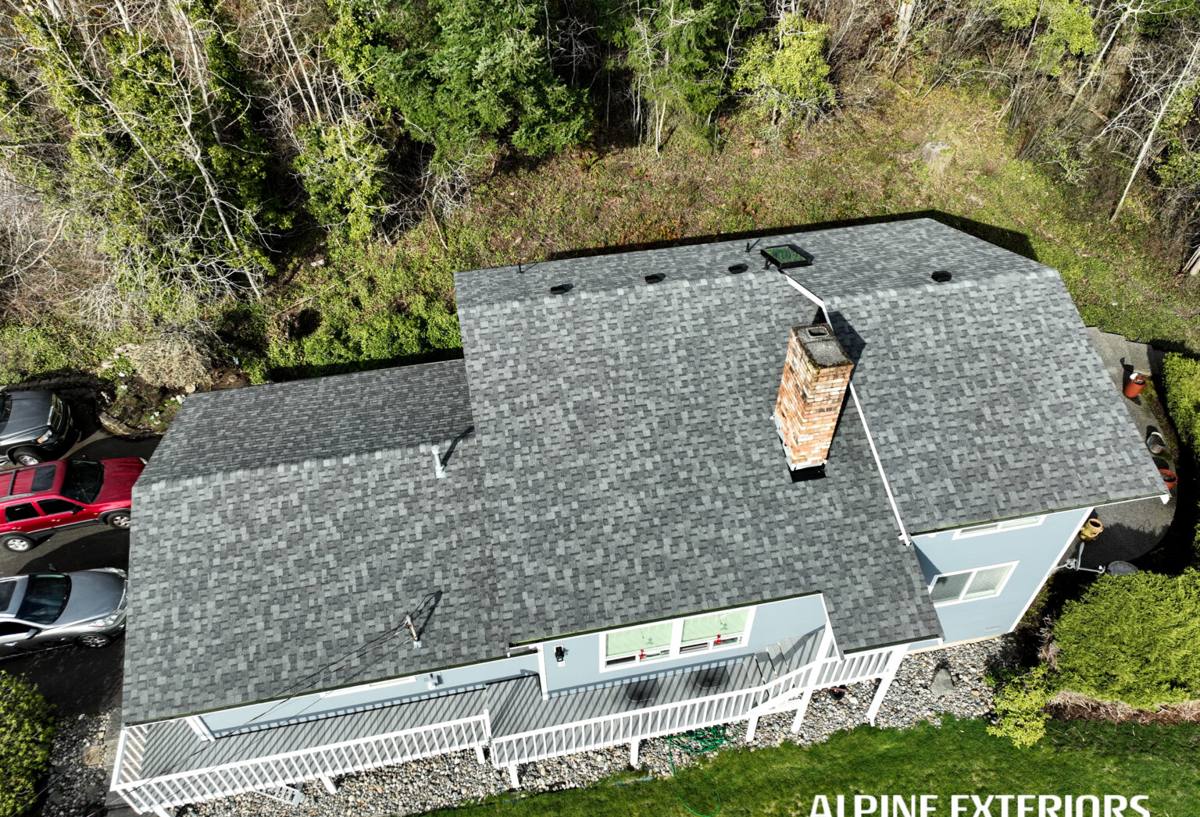
What This Climate Does to a Deck Over Time
Whatcom County's marine-influenced climate means rain that isn't just frequent, it's driving — pushed sideways by wind often enough that water gets into joints and connections a purely vertical rain wouldn't reach. Combine that with the shade and moisture retention common on wooded, sloped lots like the ones around Sudden Valley, and you get a longer moss season than you'd see on an open, sun-exposed property. Moss doesn't just look bad on decking boards; it holds moisture against the wood surface and turns stair treads and walking surfaces slippery and dangerous.
The same regional weather pattern that brings salt-laden marine air along the Whatcom County coastline also drives the humidity and prolonged dampness that reach inland, wooded communities — just expressed differently. Out here, it shows up less as salt corrosion and more as extended wet-dry cycling in shaded areas, algae and moss growth on horizontal surfaces, and ground moisture that lingers longer under a deck footprint shaded by trees. A deck built without accounting for that will age faster than the calendar suggests it should.
The specific failure points we watch for
- Ledger board attachment to the house — the single most common source of hidden rot and structural failure if flashed incorrectly
- Footings and post bases in shaded, poorly-draining soil that stays saturated longer after storms
- Fastener corrosion where standard hardware wasn't rated for sustained moisture exposure
- Moss and algae buildup on north-facing or heavily shaded deck sections
- Joist tops and beam surfaces where water pools instead of shedding
What a Correctly Built Deck Requires Here
Ledger flashing done right
The ledger board — where the deck attaches to the house — is where most serious deck failures start, and it's also the detail most likely to get shortcut on a low-bid job. Proper flashing (not just caulk) between the ledger and the house siding or sheathing keeps water from working its way behind the band board and into the structure. On a lot that stays damp longer because of tree cover, this detail matters even more than it would on an open, sun-exposed site.
Footings sized for the actual soil
Sloped, wooded lots often have soil that drains differently than open ground nearby — sometimes more clay content, sometimes more organic material from years of leaf and needle drop. Footings need to be sized and set to current code depth for our frost line and bear on soil that can actually support them long-term, not just soil that looks solid on the day we dig.
Hardware rated for sustained moisture
We use fasteners and structural connectors rated for the exposure they'll actually see — not the minimum that happens to be on the shelf. On a shaded, damp lot, the gap between standard and corrosion-resistant hardware shows up years sooner than it would on a drier site.
Airflow underneath and between boards
Proper joist spacing, board gapping, and where possible keeping vegetation and debris clear from underneath the deck all help it dry out between rain events instead of staying wet for days. A deck that can't breathe is a deck that grows moss and rots faster, no matter what material it's built from.
Decking Material Options for This Climate
There's no single "best" decking material — there's a best material for a specific lot, budget, and how much upkeep the homeowner actually wants to do. Here's how the common options compare for a shaded, moisture-heavy property like the ones we see around Sudden Valley.
| Material | Moss/algae resistance | Maintenance | Typical lifespan |
|---|---|---|---|
| Pressure-treated wood | Low in shade — needs regular cleaning and sealing | Annual cleaning, periodic staining/sealing | 10–15 years with upkeep |
| Cedar/natural wood | Low to moderate — attractive but requires diligence in shade | Regular sealing, more sensitive to neglect | 10–20 years with consistent care |
| Traditional composite | Moderate — surface can hold moisture without a capped layer | Occasional washing, no staining/sealing | 20–25 years |
| Capped composite/PVC | High — sealed outer layer sheds moisture and resists staining | Occasional washing only | 25+ years |
For heavily shaded, damp sections of a property, we tend to steer homeowners toward capped composite or PVC boards, simply because the sealed surface doesn't give moss and algae the same foothold that raw wood grain does. That's a maintenance-and-moisture judgment call, not a claim that wood decking is a bad product — plenty of homeowners are happy to do the yearly upkeep a wood deck asks for. Our job is to lay out the real trade-offs so you can pick based on how much maintenance you actually want in your schedule.
Our Deck Building Process
- Site walk and design conversation. We look at sun exposure, slope, drainage, and how the deck will connect to the house before talking materials.
- Engineering and permitting. Whatcom County requires permits for most deck construction; we handle the plan details and inspections so nothing gets built out of code.
- Framing with climate-appropriate hardware. Ledger flashing, footings, and fasteners are chosen for this site's actual moisture exposure, not a generic spec.
- Decking installation. Board selection, spacing, and fastening are set up to encourage drainage and airflow, especially in shaded sections.
- Railings, stairs, and finish details. Built to current code for guard height and baluster spacing, with attention to slip resistance on stair treads.
- Final walkthrough. We go over care and maintenance expectations specific to the materials and shade conditions on your lot.
Permits, Slopes, and Site Access
Deck construction in Whatcom County generally requires a building permit, and decks attached to a house or elevated more than a modest height above grade almost always do. We pull the permits and coordinate inspections as part of the job rather than leaving that step to the homeowner.
Sloped lots common in wooded, hillside neighborhoods also raise practical questions worth asking early: how tall will the deck stand above grade at the low end, what does the support structure need to look like on uneven ground, and how will equipment and materials actually get to the build site. A crew unfamiliar with this kind of terrain can underestimate access and staging time, which shows up later as delays or corners cut on-site prep. Knowing what to expect on a wooded, sloped lot before the crew shows up keeps the job on schedule.
Keeping a Deck in Good Shape Once It's Built
Regardless of material, a few habits go a long way toward getting the full lifespan out of a deck in a shaded, moss-prone yard:
- Sweep leaves and debris off the deck surface regularly, especially in fall
- Keep nearby vegetation trimmed back so the deck gets more light and airflow
- Wash the surface at least once a year to remove early moss and algae growth before it takes hold
- Check and clear gutters and downspouts that drain near or onto the deck area
- Inspect fasteners, ledger flashing, and stair connections annually for early signs of rust or movement
- Reseal wood decking on the schedule the product actually calls for, not just when it looks dry
Why Hiring a Crew That Already Works Sudden Valley Matters
A contractor who already builds decks in this part of Whatcom County isn't guessing about how shade, slope, and moisture will interact with a given design — they've already seen it play out on other properties nearby. That familiarity shows up in small decisions: where to size up a footing, which sections of a deck need extra attention to drainage, and how to sequence a build around a site that's harder to access than a flat, open lot.
It also matters for follow-through. A local crew is easier to reach for a warranty question or a maintenance check a few years down the road, and has a reputation in the community worth protecting. That's a meaningfully different relationship than hiring a crew that treats the job as a one-time drive-in, drive-out project.
If you're thinking about a new deck or replacing an aging one on a Sudden Valley property, we're happy to walk the site with you and talk through what makes sense for your specific lot — no pressure, no obligation. Use the form below to request a free estimate.