 Ferndale Siding
 Building a Deck in Birch Bay Is Not the Same as Building One Inland
Birch Bay sits right on the water, and that changes what a deck has to deal with every single day. A few miles inland in Ferndale, a deck mostly has to shed rain and survive our wet winters. On the water in Birch Bay, you add salt-laden wind coming off the strait, more direct exposure to driving rain during fall and winter storms, and shaded, damp yards that grow moss on almost any horizontal surface left untreated. None of that is dramatic on its own, but stacked together over a few Whatcom County winters, it's enough to turn a decent deck into a soft, slippery, rusting problem if it wasn't built with those specific conditions in mind.
We build and repair decks throughout the Ferndale area, and Birch Bay projects get treated differently from the start — different hardware, different attention to drainage, and different maintenance advice — because the site conditions genuinely call for it.
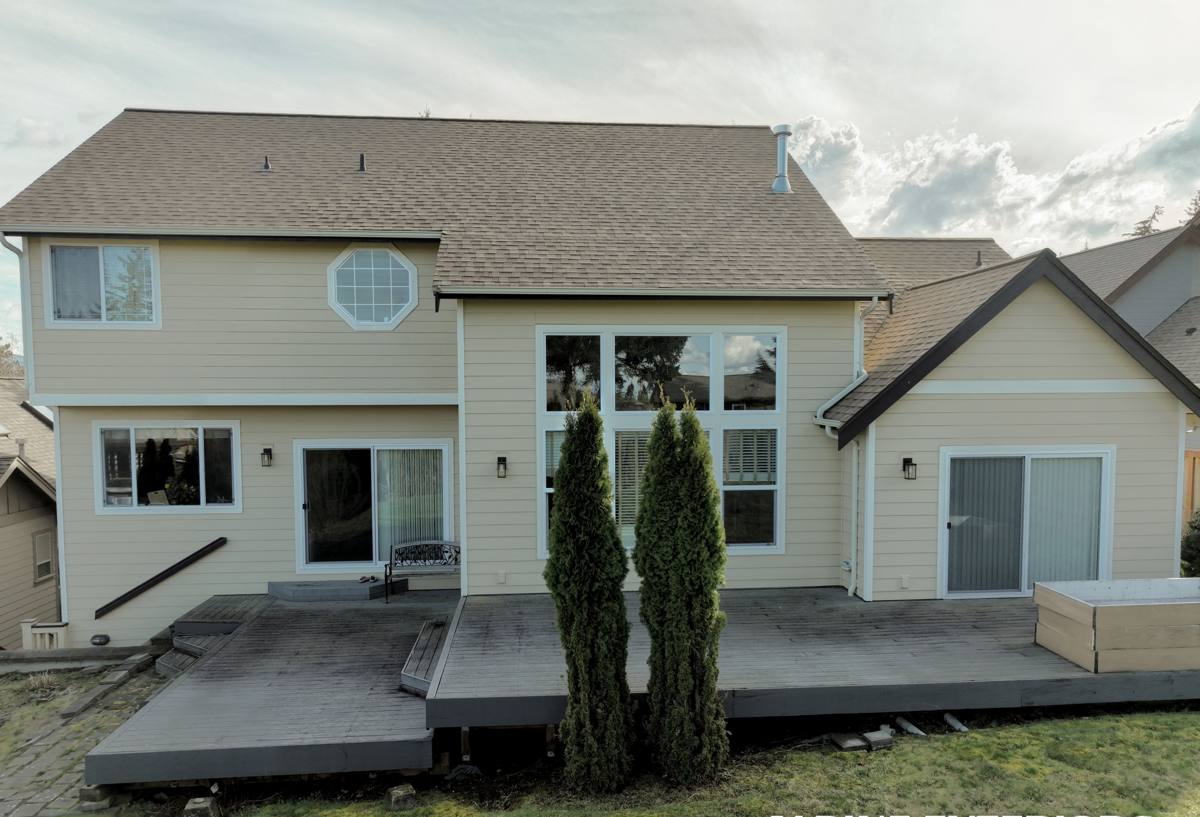
What Birch Bay's Climate Actually Does to a Deck
Salt Air and Corrosion
Airborne salt from the bay settles on everything nearby, including metal. Standard zinc-coated fasteners and connectors that would be fine twenty miles inland can start showing rust streaks on a waterfront or near-waterfront deck within a couple of seasons. Once a fastener starts corroding, it loses holding strength long before it looks obviously bad, which is part of why we don't treat hardware selection as a minor detail on these builds.
Wind-Driven Rain
Rain that comes in sideways off the water finds every gap a calm-weather rain would miss — behind fascia boards, under poorly flashed ledger connections, into end grain that isn't sealed. Over time this is what causes ledger board rot, soft spots at stair stringers, and framing that fails from the inside while the surface still looks okay.
Moss, Algae, and Standing Moisture
Whatcom County's long wet season is bad enough for moss on its own. Add the shade from mature trees common around Birch Bay properties and the extra ambient moisture near the water, and you get a longer moss season than most inland Ferndale yards see. Moss and algae on decking aren't just cosmetic — a mossy board is a wet board, and a wet board held against another wet surface for months at a time is how rot gets started.
Choosing the Right Decking Material for This Location
There's no single "best" decking material for every home — it depends on budget, how much upkeep you want to do, and how close you are to the water. Here's how the common options actually perform under Birch Bay conditions:
| Material | Salt Air Resistance | Moss/Algae Resistance | Maintenance | Typical Lifespan |
|---|---|---|---|---|
| Pressure-treated wood | Fair — needs sealing to protect cut ends and fasteners | Low — absorbs moisture, grows moss quickly if not maintained | Annual cleaning and periodic sealing/staining | 10–15 years with upkeep |
| Cedar | Good natural resistance, but still benefits from finish | Moderate — better shedding than PT wood but still needs cleaning | Regular cleaning, refinishing every few years | 15–20 years with upkeep |
| Composite decking | Very good — won't rust or corrode itself | Good — capped composites resist staining and are easy to rinse off | Occasional washing, no sealing or staining | 25–30+ years |
| PVC decking | Excellent — fully synthetic, no organic material to feed growth | Very good — smooth, dense surface sheds moss and algae well | Occasional washing | 25–30+ years |
Wood is still a fine choice for homeowners who like the look and don't mind the upkeep, but we're honest with Birch Bay clients up front: near the water, wood decking asks for more consistent maintenance than it would inland, because moss and moisture have more to work with. Composite and PVC cost more up front but trade a lot of that maintenance burden away, which is why we see more of them requested for waterfront and near-waterfront lots.
What a Correctly Built Deck Requires in This Location
Framing and Fasteners
For anything near Birch Bay's salt air, we use stainless steel or heavy hot-dip galvanized fasteners and structural connectors rather than standard coated hardware. It costs more, but standard hardware is exactly where we see premature rust and loosening on older decks we're asked to repair in this area.
Ledger Flashing and Water Management
Where the deck attaches to the house, proper flashing is what keeps wind-driven rain from working its way behind the ledger board and into the wall framing. This is one of the most common failure points we find on older decks in wet coastal spots, and it's not something to shortcut or guess at.
Footings Sized for Wind Exposure
Open, waterfront-adjacent lots in Birch Bay often see more sustained wind than a sheltered inland yard. Footings and post connections should be sized with that exposure in mind, not just built to the minimum a calmer site would need.
Design Choices That Fight Moss and Standing Water
A lot of long-term deck performance comes down to decisions made before a single board is installed:
- Proper board spacing so water drains through instead of pooling on the surface
- A slight slope away from the house to move water off the deck rather than toward it
- Adequate ventilation underneath the deck so the framing can dry out between rains
- Grooved or ridged board profiles chosen carefully, since deep grooves can trap moss-feeding debris in shaded areas
- Keeping planters, rugs, and furniture legs from sitting directly on decking long-term, which traps moisture underneath
None of these add much to the cost of a project, but skipping them is exactly how a deck ends up needing moss treatment twice a year instead of once, or developing soft spots years before it should.
Permits and Local Requirements
Most attached decks in Whatcom County require a building permit, and decks built above a certain height off grade need code-compliant guardrails and stair details. Requirements can vary depending on the specifics of your lot and how the deck attaches to your home, so we handle the permitting conversation as part of the project rather than leaving it for the homeowner to sort out. Working in this area regularly means we already know what the local permitting process expects, which keeps projects from stalling out waiting on paperwork.
How We Approach a Birch Bay Deck Project
Every project starts with an on-site visit, not a phone estimate. We look at how exposed the lot is to wind and salt air, how much shade the yard gets, where water naturally drains, and what condition any existing structure is in if we're replacing or repairing rather than building new. From there we talk through material options honestly, including the maintenance trade-offs, before putting together a design and quote. Once the plan is set, we handle permitting, build the deck with hardware and flashing appropriate to the site, and walk the finished project with you before we consider the job done.
Maintaining a Deck Near the Water
Whatever material you choose, a little regular attention goes a long way in this climate:
- Rinse or sweep debris off the deck regularly, especially in fall when leaves and needles collect
- Clean moss and algae as soon as it appears rather than letting it establish
- Check fastener heads and connectors annually for early signs of rust or loosening
- Reseal or restain wood decking on schedule rather than waiting until it looks obviously worn
- Keep gutters and downspouts clear so roof runoff isn't dumping extra water onto the deck
- Make sure planters and furniture aren't sitting in one spot long enough to trap moisture underneath
Why Hire a Crew That Already Works in Birch Bay
A deck built to a generic, inland spec will usually still stand up in Birch Bay — for a while. The difference shows up years later, in rusted hardware, soft ledger boards, and moss that keeps coming back no matter how often it's cleaned. A crew that already works this specific stretch of coastline knows to spec marine-grade fasteners without being asked, knows which yards need extra attention to drainage and ventilation, and has already seen how the local combination of salt air, driving rain, and moss season wears on different materials. That local knowledge is what keeps a Birch Bay deck looking and performing the way it should for its full lifespan, not just its first few years.
If you're planning a new deck or replacing one that's showing its age, we're happy to come take a look and put together a free, no-pressure estimate — just fill out the form below.