 Ferndale Siding
 Birch Bay Sits Right on the Line Between "Coastal" and "Everyday" Weather
Birch Bay faces open water, and that changes what a house needs from its exterior. Homes a few miles inland in Ferndale still deal with Whatcom County's wet winters, but Birch Bay properties get the added load of salt-laden air blowing off the water, wind-driven rain that hits siding at an angle instead of falling straight down, and a moss and algae season that can run most of the year on shaded or north-facing walls. None of that is unusual for this stretch of coastline. It just means the siding on a Birch Bay home is working harder than siding on a similar house twenty minutes east.
This page is specifically about fiber cement siding for Birch Bay homes — what the material needs to handle here, what a correct installation looks like in this environment, and why we install James Hardie fiber cement exclusively rather than offering a menu of siding brands and materials.
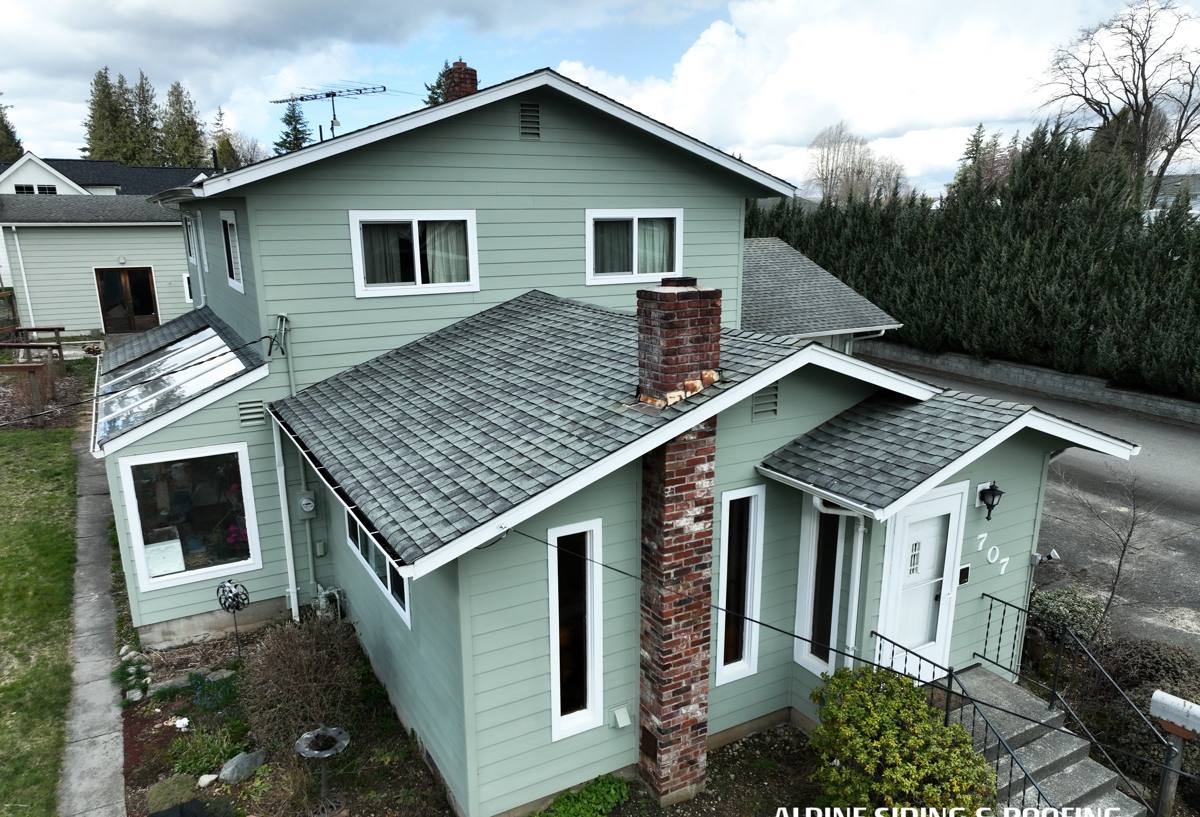
What Birch Bay's Climate Actually Does to a House
Salt Air
Airborne salt is corrosive to a lot of building materials and hardware, and it accelerates the breakdown of finishes that aren't formulated to resist it. Over years, salt exposure can dull paint, corrode unprotected fasteners, and speed up wear on materials that absorb moisture readily.
Driving Rain
Wind off the water pushes rain sideways into wall assemblies, not just down onto roofs. That means water finds its way into seams, laps, and penetrations that would stay dry in a calmer inland location. Siding systems here need tight, correctly lapped joints and properly detailed flashing at every window, door, and utility penetration — there's less margin for a sloppy install.
Moss and Algae
Shaded walls, north exposures, and anywhere airflow is limited stay damp longer in this climate, which is exactly what moss and algae need to establish. On some materials that shows up as green or black staining within a few seasons. On others it barely shows at all. The difference usually comes down to how the material and its finish handle sustained moisture.
Why We Install James Hardie Fiber Cement — and Nothing Else
We standardized on James Hardie fiber cement for every home we side, including in Birch Bay, for a simple reason: it's non-combustible, it's engineered specifically for high-moisture climates like ours, and its factory-applied ColorPlus finish is built to hold up against exactly the conditions described above — salt air, sustained damp, and UV exposure — without the homeowner needing to repaint every few years.
James Hardie makes climate-specific product formulations, including a line engineered for the Pacific Northwest's wetter, milder coastal conditions. That's not a marketing detail — it's the reason we don't treat every siding job the same way regardless of where the house sits. A home in eastern Washington and a home in Birch Bay are dealing with different moisture loads, and the material should be matched to that reality.
We don't install LP SmartSide, vinyl, Cemplank, Allura, or bare wood siding. Each of those products has legitimate uses somewhere, but for the specific combination of salt air, driving rain, and moss exposure that Birch Bay homes deal with, we've made fiber cement from James Hardie our standard and we stand behind that choice rather than offering a lower-cost alternative we wouldn't want on our own homes.
How Fiber Cement Compares in a Marine Environment
| Factor | Fiber Cement (James Hardie) | Vinyl | Engineered Wood (LP-type) |
|---|---|---|---|
| Combustibility | Non-combustible | Combustible, can warp near heat | Combustible |
| Moisture resistance | Engineered for wet climates when installed to spec | Doesn't absorb water but seams/panels can trap moisture behind them | Wood-based core is vulnerable if the finish or seals fail |
| Salt air / coastal exposure | Factory finish designed to resist fading and moisture damage | Can become brittle and discolor faster in coastal UV/salt exposure | More sensitive to prolonged moisture exposure |
| Moss/algae resistance | Dense, factory-finished surface resists staining better than porous materials | Generally resists staining but seams collect grime | More porous surface can hold moisture and organic growth |
| Typical repaint interval | Factory finish rated for many years before repainting is needed | Never painted, but fades and can't be easily refreshed | Field-applied finishes often need attention sooner |
This table reflects general material characteristics, not guarantees — actual performance always depends on installation quality, maintenance, and how exposed a given wall is to sun, wind, and rain.
What Correct Installation Looks Like on a Birch Bay Home
Fiber cement performs well in this climate, but only if it's installed correctly. Most siding failures we see in coastal Whatcom County homes trace back to installation shortcuts, not the material itself. On a Birch Bay job, that means:
- Proper weather-resistive barrier behind the siding, lapped correctly to shed water downward and outward
- Rigid, correctly flashed details at every window, door, deck ledger, and penetration — the places wind-driven rain finds first
- Manufacturer-specified clearances at the ground, roofline, and any horizontal trim, so water has somewhere to go instead of wicking into the board
- Correct fastener type, spacing, and depth — under- or over-driven nails are one of the most common causes of early siding problems
- Factory-cut edges primed and sealed at every field cut, since a raw cut edge is the most vulnerable point on any fiber cement board
- Caulking and sealants rated for exterior, high-moisture use at joints and terminations
None of this is unique to fancy or expensive installs — it's the baseline for doing the job right in a climate that doesn't forgive corner-cutting the way a drier region might.
Our Process for Birch Bay Siding Projects
1. On-Site Assessment
We look at wall orientation, shade patterns, existing moisture or moss damage, and how exposed the house is to wind off the water. Not every wall on a Birch Bay home takes the same weather, and the assessment reflects that.
2. Tear-Off and Substrate Check
Once old siding is removed, we check the sheathing underneath for rot or hidden moisture damage — common in coastal homes where water has been getting in slowly for years without an obvious sign on the surface.
3. Weather Barrier and Flashing
This step matters more here than almost anywhere else in the county. We install and detail the weather-resistive barrier and flashing before a single piece of siding goes up, because this layer — not the siding itself — is the real first line of defense against driving rain.
4. Siding Installation
James Hardie boards are installed to manufacturer specifications for fastening, spacing, and clearances, with attention to the coastal-specific details above.
5. Finish and Walkthrough
Trim, caulking, and touch-up work are completed, and we walk the exterior with the homeowner to review the finished job before calling it done.
Living With Fiber Cement Siding in a Moss-Prone Climate
No siding material makes moss and algae impossible — anywhere shaded and damp enough will eventually host some growth. What correctly installed James Hardie siding does is make that growth easier to manage: the factory finish resists staining better than porous or field-painted surfaces, and periodic gentle washing (a garden hose and soft brush, never a pressure washer aimed directly at the siding) is usually enough to keep shaded walls looking clean. Trimming back vegetation that keeps walls shaded and damp also goes a long way in a climate like this one.
Why Hiring a Crew That Already Works in Birch Bay Matters
A siding contractor who mostly works inland can still do a technically fine install and still get a Birch Bay job wrong, simply because they're not used to designing for salt air and driving rain as the default condition rather than the exception. A crew that regularly works this specific coastline knows which walls take the worst weather, how local permitting and inspection tends to go, and what detailing has actually held up over time in this exact environment — not just in a manufacturer's install guide written for the whole country.
Before hiring anyone for siding work in Birch Bay, it's worth asking:
- Do you regularly work on homes in Birch Bay or similarly exposed coastal areas, not just Ferndale generally?
- What siding material and product line do you recommend for this specific site, and why?
- Who is doing the flashing and moisture-barrier detailing, and are they James Hardie-trained or certified installers?
- What does the manufacturer's warranty actually cover, and does it require a certified installer to stay valid?
- Can you walk me through what happens if hidden sheathing damage is found once the old siding comes off?
A contractor who answers those questions specifically and confidently — rather than generically — is one who actually understands the environment your house sits in.
Get a Straightforward Estimate
If you're planning a siding project in Birch Bay, we're happy to take a look at your home, talk through what your walls are actually dealing with, and give you a clear, no-pressure estimate for James Hardie fiber cement siding done right for this climate. Use the form below to get started.