 Ferndale Siding
 Birch Bay Windows Work Harder Than Most
Birch Bay sits right on the water, and that changes what a window has to survive day to day. Homes a few miles inland in Ferndale deal with plenty of Whatcom County rain, but Birch Bay adds salt-laden air off the bay, wind-driven rain that hits window walls almost sideways during winter storms, and a moss season that runs long and damp for much of the year. None of that is dramatic on its own. It's the steady, year-round exposure that wears out seals, corrodes hardware, and finds the one weak spot in a poorly installed window.
We install windows throughout Ferndale and the surrounding communities, and Birch Bay jobs get treated differently from the start. The window unit matters, but the installation details — flashing, sealant choice, hardware finish, and how water is managed around the opening — matter more here than almost anywhere else we work.
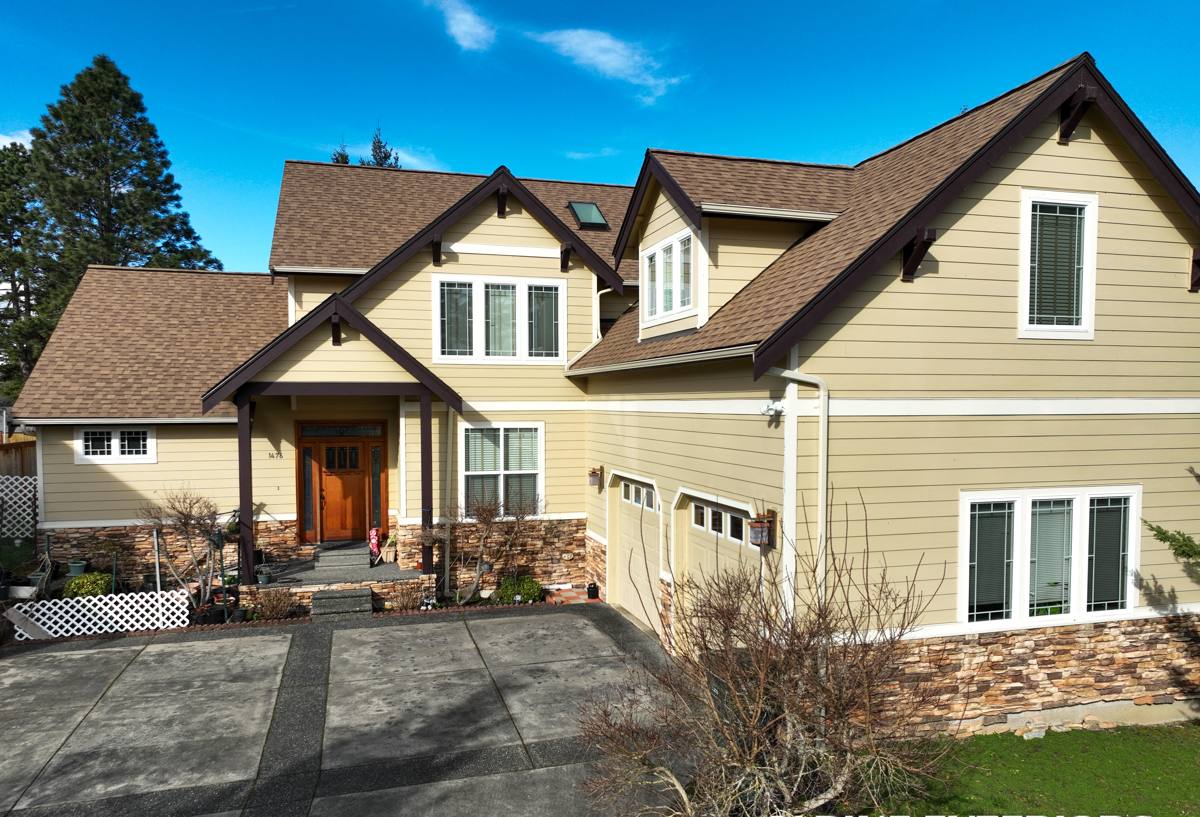
What Salt Air, Driving Rain, and Moss Do to a Window Over Time
Salt Air
Salt in the air settles on everything, including window hardware, screen frames, and exposed fasteners. Over years, it accelerates corrosion on anything that isn't rated for coastal exposure — cheap zinc-coated screws, mild-steel cladding fasteners, and lower-grade aluminum components. The window itself might be fine while the hardware holding it in place slowly fails.
Driving Rain
Birch Bay's exposure to wind coming off the water means rain doesn't just fall on windows, it's pushed into them. A window that would stay dry on a sheltered inland wall can take on water at the sill or head on a west- or north-facing Birch Bay elevation. This is almost entirely an installation issue, not a product issue — the window's own weatherstripping is the last line of defense, not the first.
Moss and Sustained Moisture
Long damp stretches keep wood trim, sills, and any exposed sealant joints wet for extended periods. Moss and algae take hold in shaded, north-facing spots and hold moisture against the surface even after the rain stops. Around a window, that means trim boards and sill areas need real drainage and the right materials, not just paint and caulk.
What a Correct Installation Involves in This Climate
A window installation is really a water-management job with a window in the middle of it. In Birch Bay conditions, a handful of details separate a window that performs for decades from one that starts leaking within a few winters.
- Full flashing system: sill pan flashing, jamb flashing, and head flashing integrated with the house wrap or building paper — not just caulk around the trim.
- Correct sealant chemistry: exterior-grade sealants rated for UV and salt exposure, applied at the right joints, not everywhere as a substitute for flashing.
- Back-dam or sloped sill pan: so any water that gets past the window drains back outside instead of pooling at the sill.
- Corrosion-resistant fasteners and hardware: stainless or coated fasteners near the coast, matched to the cladding and window frame material.
- Proper shimming and squaring: an out-of-square window stresses its own weatherstripping and hardware, which shortens its service life regardless of climate.
- Weep path clearance: weep holes and drainage channels kept clear during and after install, not sealed shut by well-meaning caulking.
Skip any one of these and the window can still look fine for a year or two. The failures we get called out to fix in coastal Whatcom County homes almost always trace back to one of these steps being shortcut, not to the window brand itself.
Our Process for a Birch Bay Window Installation
1. On-Site Assessment
We look at each opening individually — orientation, exposure to prevailing wind and rain, existing water damage, and the condition of the framing behind the current window. Birch Bay homes often have different exposure levels on different sides of the same house, and that changes what each opening needs.
2. Product Selection
We talk through frame material, glass package, and hardware finish based on that opening's exposure, not a one-size-fits-all recommendation. A sheltered opening and a west-facing one that takes direct wind and rain don't always need the same spec.
3. Removal and Opening Inspection
Once the old window is out, we check the framing, sheathing, and any existing flashing for rot or moisture damage before anything new goes in. Covering up a wet or compromised opening with a new window just hides the problem.
4. Flashing and Air/Water Sealing
Sill pan, jamb flashing, and head flashing go in as a system, integrated with the existing water-resistive barrier so water is directed out, not trapped behind the trim.
5. Installation, Shimming, and Fastening
The window is set, shimmed square and plumb, and fastened with hardware appropriate for the coastal exposure at that location.
6. Interior and Exterior Finish
Trim, sealant, and touch-up work are finished on both sides, with attention to the joints that matter most for keeping wind-driven rain out over the long run.
7. Walkthrough
We walk the finished opening with the homeowner, operate the window, and explain anything specific to that unit — lock mechanisms, screen removal, or maintenance points worth knowing about.
Choosing Frame Materials for a Coastal Whatcom County Home
There's no single "best" frame material for every Birch Bay home — it depends on exposure, budget, and how much upkeep you want to take on. Here's how the common options actually compare in salt-air, high-rain conditions:
| Frame Material | Coastal Performance | Maintenance | Trade-offs |
|---|---|---|---|
| Vinyl | Good — won't corrode or rot; UV-stable modern formulations hold up well | Low — occasional cleaning | Limited color/finish options versus other materials |
| Fiberglass | Very good — dimensionally stable, resists moisture and corrosion | Low | Higher upfront cost than vinyl |
| Aluminum-clad wood | Good exterior protection if cladding and flashing are done right | Moderate — interior wood still needs occasional attention | Cladding seams and fasteners are the weak point in salt air if not detailed correctly |
| Bare wood | Weakest in this climate without diligent upkeep | High — regular painting/sealing needed | Long moss season keeps exposed wood damp longer, accelerating wear |
We install across this range depending on the home and the homeowner's priorities. What we steer people away from, as a matter of our own installation standard, is bare or poorly clad wood on directly exposed, west-facing Birch Bay elevations — not because wood windows are bad products, but because the maintenance burden in constant salt air and driving rain is a lot to keep up with, and a missed year of upkeep shows up fast in this environment.
Signs Your Birch Bay Home Needs New Windows
Coastal wear shows up gradually. A few signs worth acting on before they turn into bigger repairs:
- Fogging or moisture between panes of double-glazed units (a sign the seal has failed)
- Soft, discolored, or spongy trim or sill wood around the window
- Visible corrosion on hinges, cranks, or locking hardware
- Drafts or whistling during windy, wet weather
- Difficulty opening, closing, or locking that wasn't there before
- Paint or finish failing repeatedly in the same spot despite touch-ups
- Visible moss or algae growth on or directly around the window frame
Any one of these on its own isn't necessarily urgent. Several together, or any sign of water actually getting past the window into the wall cavity, is worth having looked at before another wet season passes.
What Affects the Cost of a Birch Bay Window Installation
Every project is different, but the main cost drivers on a coastal job are consistent enough to plan around:
| Factor | Why It Matters |
|---|---|
| Number and size of openings | Larger and more numerous windows mean more material and labor |
| Frame material chosen | Vinyl, fiberglass, and clad-wood carry different unit costs |
| Condition of existing framing | Rot or water damage found during removal adds repair scope |
| Exposure level of each opening | Directly exposed elevations may warrant upgraded flashing or hardware |
| Access and site conditions | Second-story or hard-to-reach openings affect labor time |
We give straightforward, itemized estimates rather than a single vague number, so you can see what's driving the cost on your specific home.
Why a Crew That Already Works Birch Bay Matters
Window installation isn't exotic work, but coastal installation done wrong doesn't fail right away — it fails two or three winters later, after the crew is long gone and the callback is someone else's problem. A crew that regularly works Birch Bay and the Ferndale coastline already knows which elevations take the worst of the wind-driven rain, which hardware holds up in salt air over the long run, and how long moss season actually lasts here versus what a general contractor from further inland might assume. That local pattern recognition shows up in the flashing details and material choices before a single leak ever has the chance to happen.
We're a Ferndale-based crew, and Birch Bay is part of our regular service area, not an occasional out-of-town job. That means the standards described above — flashing systems, sealant selection, corrosion-resistant hardware — aren't upsells; they're just how we install windows in this environment.
Get a Free, No-Pressure Estimate
If you're dealing with drafty, fogged, or aging windows in Birch Bay, or planning ahead for a remodel, we're happy to take a look and walk you through what your home actually needs — no pressure, no obligation. Use the form below to request a free estimate.