 Ferndale Siding
 Windows Built for the Custer Climate, Not a Catalog
Custer sits in that stretch of Whatcom County where the weather doesn't ask permission. Wind off the water pushes rain sideways for days at a time, salt air works into anything with exposed metal or bare wood, and the long gray stretch from fall through spring gives moss and mildew months to settle into anything that stays damp. Windows here take more abuse than a spec sheet from a big-box store ever accounts for. A window that's fine in a dry inland climate can start failing in Custer within a few years if it wasn't installed with this specific weather in mind.
We install and replace custom windows for homes throughout the Custer area as part of our regular service territory out of Ferndale. This page covers what that actually means: what local homes need, what a correct installation looks like, and how our process works from first look to final walk-through.
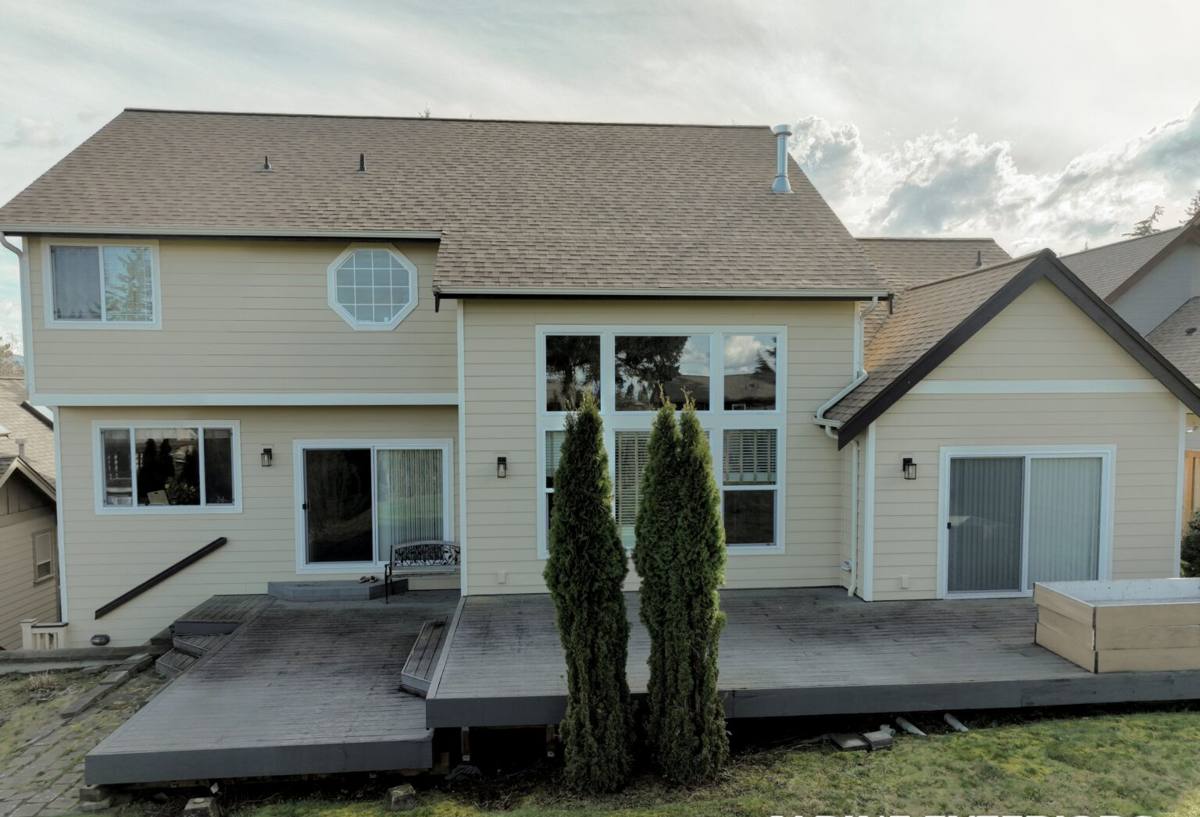
What Custer's Climate Does to Windows Over Time
Driving Rain and Wind-Driven Moisture
Rain that falls straight down is easy to shed. Rain that comes in sideways off open water tests every seam, flange, and sealant joint a window has. Custer's exposure means wind-driven rain is a regular event, not an occasional storm. Windows and their flashing details have to be built and installed assuming water will hit the frame at an angle, not just from above.
Salt Air and Corrosion
Salt in the air accelerates corrosion on hardware, screws, and any exposed metal components — hinges, cranks, balance systems, and fasteners. Cheaper hardware finishes and unprotected fasteners break down faster here than in inland parts of the county. It's a slow problem, which is exactly why it gets missed until a window won't latch or lock properly anymore.
Moss, Mildew, and the Long Wet Season
Whatcom County's wet season runs long, and anywhere moisture sits — sill corners, poorly sloped exterior trim, gaps between siding and window frame — moss and mildew get a foothold. On older wood-frame windows especially, that trapped moisture is what eventually causes rot at the corners and sill, long before the glass or hardware itself fails.
Signs a Custer Home's Windows Need Attention
Some of these show up gradually, which is why they're easy to write off as normal aging. In this climate, they usually point to a window that's no longer doing its job.
- Visible fogging or moisture between panes of double- or triple-glazed glass — a sign the seal has failed
- Soft, discolored, or spongy wood at the sill or lower corners
- Drafts you can feel with a hand near the frame on a windy day
- Difficulty opening, closing, or locking — often a first sign of hardware corrosion
- Visible moss, algae, or black staining collecting on the sill or exterior trim
- Paint or finish that's peeling or bubbling around the window rather than on the wall generally
- Noticeably higher heating bills without another clear explanation
- Condensation forming on the inside of the glass regularly during cold snaps
One or two of these on a single window usually means a repair or resealing job. Several of these across multiple windows, or on an older wood-frame install, usually means it's time to talk about replacement.
What a Correct Window Installation Involves
The window unit itself matters, but in a climate like this the installation is what actually determines whether the window performs for the next 20-plus years. A quality window installed with shortcuts on flashing or sealing will fail faster than a mid-range window installed correctly.
The Details That Matter Most Here
- Proper flashing integration — the window's flashing has to tie into the home's existing water-resistive barrier correctly, so water is directed out and down, never trapped behind the siding.
- Sill pan protection — a sloped, sealed sill pan under the window gives any water that does get past the frame a way out instead of a place to collect.
- Correct sealant, not just any caulk — the right exterior-grade sealant, applied at the right joints (and not over-sealed in ways that trap moisture instead of releasing it), makes a real difference in a wind-driven-rain climate.
- Corrosion-resistant hardware and fasteners — given the salt air exposure, we don't cut corners on fastener and hardware quality on exterior-facing components.
- Air-sealing around the rough opening — insulation and air-sealing between the window frame and the framing opening, not just at the visible trim, is what actually stops drafts and moisture intrusion.
Frame Material Options for This Climate
There's no single "best" window material for every home — it depends on the home's age, style, budget, and how exposed the specific windows are. Here's how the common options hold up under Custer's salt air and rain load, honestly:
| Frame Material | Performance in Salt Air / Driving Rain | Maintenance | Typical Fit |
|---|---|---|---|
| Vinyl | Good — won't corrode or rot, handles moisture well | Low — occasional cleaning | Most homes, best value |
| Fiberglass | Excellent — very stable, resists warping and corrosion | Low | Higher-exposure spots, larger openings, longer-term investment |
| Wood (unclad) | Poor if not maintained closely — vulnerable to rot and moss in this climate | High — regular repainting/sealing required | Historic or period-accurate homes where appearance matters most |
| Aluminum-clad wood | Better than bare wood, but clad seams and hardware still need salt-air-rated fasteners | Moderate | Homes wanting a wood interior look with better exterior protection |
For most Custer homes we work on, vinyl or fiberglass ends up being the practical choice given the exposure. We'll still install a wood or clad-wood window correctly if that's the look a homeowner wants — we just make sure they understand the maintenance commitment that comes with it before they commit.
Cost Factors for Custom Window Projects
Pricing varies a lot based on size, quantity, and material, so we don't quote broad numbers without seeing the job. What generally drives the cost up or down:
| Factor | Effect on Cost |
|---|---|
| Number of windows replaced at once | Per-window cost typically drops with larger jobs |
| Frame material | Vinyl is generally most affordable; fiberglass and clad-wood cost more upfront |
| Window size and configuration | Larger openings, bays, and custom shapes cost more than standard sizes |
| Extent of existing damage | Rotted framing or water damage found during removal adds repair scope |
| Full-frame vs. insert replacement | Full-frame (removing old frame entirely) costs more but is often necessary when moisture damage is present |
We give a straight answer on which approach — insert replacement or full-frame — actually fits a given window once we've looked at it in person, rather than assuming the cheaper option will hold up.
Our Process for Custer Window Projects
1. On-Site Assessment
We look at the actual condition of each window — frame, sill, surrounding siding and trim — not just the glass. This is where we catch hidden moisture damage before it becomes a surprise mid-project.
2. Honest Recommendation
We'll tell you plainly whether a window needs replacing now, can be repaired, or can wait. We're not interested in selling a full house of windows when three of them are the actual problem.
3. Material and Measurement
Custom sizing is measured to the actual opening, not assumed from standard dimensions — especially important on older Custer homes where openings have often shifted slightly over the decades.
4. Removal and Inspection
Old windows come out carefully so we can check the framing underneath for rot or moisture damage before anything new goes in. Any damage found gets addressed, not covered up.
5. Installation
Flashing, sill pan, sealant, insulation, and hardware are installed to the standard described above — the details that actually matter in this climate, not just the parts that are visible from the curb.
6. Final Walk-Through
We check operation, seals, and finish work with you before calling the job done.
Why a Crew That Already Works Custer Matters
A contractor who mostly works dry, sheltered inland areas doesn't naturally build habits around sill pans, wind-driven-rain flashing details, or salt-rated hardware — because they don't need to most of the time. Working regularly in Custer and the rest of coastal Whatcom County means those details aren't an upsell or an afterthought; they're just how the job gets done, every time. We also know how the local building conditions tend to run — the kind of framing common in homes of a certain age, the moisture patterns that show up in this specific part of the county — because we see it repeatedly, not occasionally.
Maintaining Your Windows After Installation
Even a correctly installed window benefits from basic upkeep in this climate:
- Rinse salt residue off frames and glass a few times a year, especially after storms
- Clear moss or debris from sills and tracks before it holds moisture against the frame
- Check and lubricate hardware annually so corrosion doesn't get a head start
- Inspect exterior caulk lines yearly and have any cracked sealant redone promptly
- Keep gutters and downspouts clear so runoff isn't sheeting down across window openings
None of this is complicated, but skipping it is how a well-installed window ends up with an avoidable problem five or ten years down the road.
Get a Straight Answer for Your Windows
If you're dealing with drafts, fogged glass, sticking hardware, or just want an honest read on whether your windows are holding up to what Custer's weather throws at them, we're glad to take a look. The estimate is free, there's no pressure, and you'll get a straightforward answer about what your windows actually need — use the form below to get started.