 Ferndale Siding
 Fiber Cement Siding in Custer: What the Job Actually Requires
Custer sits on flat, open farmland a few miles north of Ferndale, close enough to the Strait of Georgia and the Salish Sea that salt-carrying marine air reaches most properties out here, not just the ones near the water. Add driving rain that crosses open ground with little to slow it down, and a moss season that runs long across the mild, damp months, and you've got a climate that puts real, sustained stress on an exterior wall. This page isn't a general survey of siding options. It's specifically about James Hardie fiber cement siding, the one product we install, and what it actually takes to get that job right on a Custer home.
We're based in Ferndale, and Custer is regular territory for our crew, close enough that we're out here often enough to see how these houses age over time rather than just how a spec sheet says a product should perform. That pattern, seen job after job, is what shapes the decisions covered below: how we detail the install, what we check before we ever start tearing off old siding, and why the crew showing up matters as much as the material going on the wall.
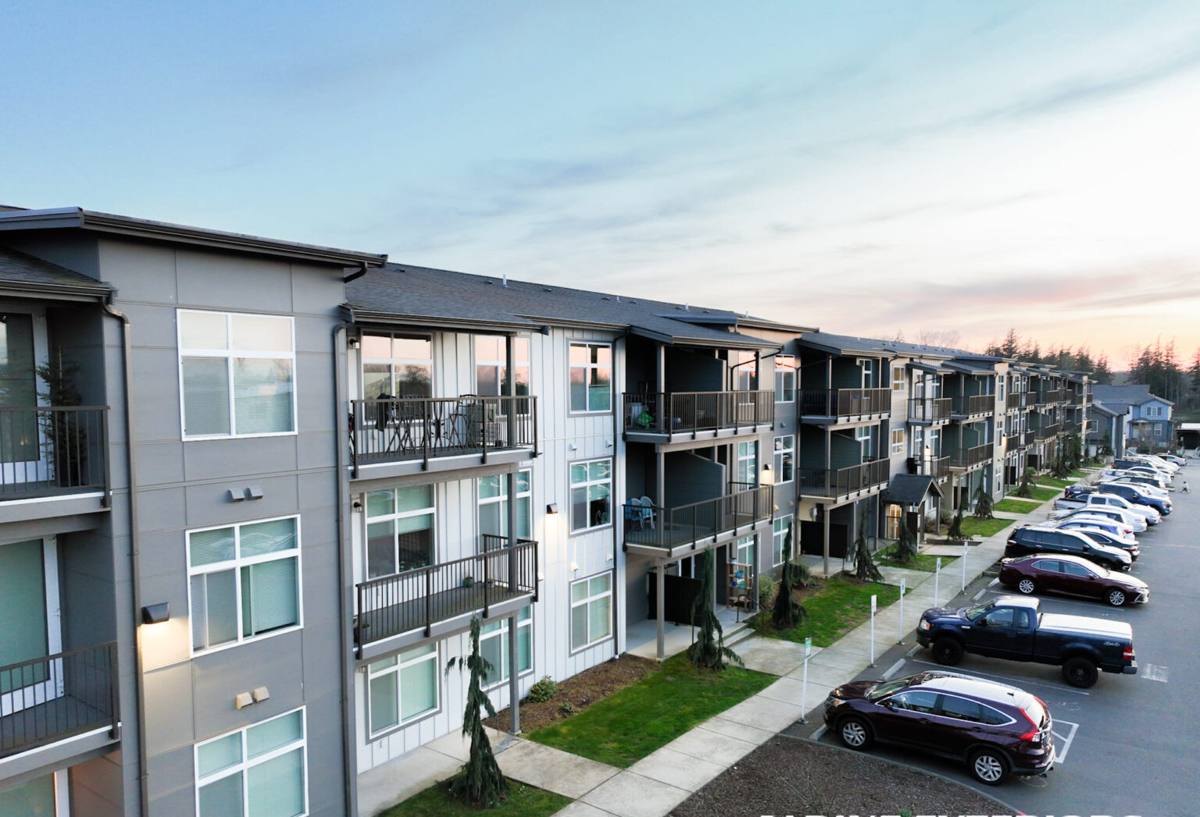
What Custer's Exposure Means for the Wall Assembly
Marine Air on Open Ground
Custer doesn't sit directly on the water, but the flat, largely unbroken terrain between town and the Strait gives salt-carrying air a clear path inland during winter storms. That matters less for the fiber cement panels themselves, which don't corrode, and more for everything installed around them: fasteners, flashing, and trim hardware. On a Custer job, fastener grade and flashing material aren't places to cut cost, because lower-grade hardware pitted or stiffened by salt exposure will fail well before the siding around it does.
Wind-Driven Rain on Open Terrain
Open, low-lying land also means less of a wind break than a tree-covered or more sheltered lot would offer, so rain tends to arrive at walls sideways instead of falling straight down. That's a harder test for lap joints, butt seams, and every spot where the water-resistive barrier behind the siding has to actually do its job rather than just be present as a formality. Siding that's engineered and detailed for calmer conditions gets tested here in a way it wouldn't be further inland or in a more sheltered part of the county.
A Moss Season That Runs Most of the Year
Mild temperatures and steady moisture keep moss and mildew active across most of the calendar on shaded and north-facing walls, which describes a fair share of Custer lots with mature trees or close-set outbuildings common on this kind of farmland. Fiber cement resists organic growth better than a wood-based product does, but growth can still take hold on a surface that isn't detailed to shed water and dry out, and once it does, it holds moisture against the wall behind it rather than letting the surface dry between rain events.
The James Hardie System We Install
Fiber cement is a blend of Portland cement, sand, and cellulose fiber, cured into rigid boards and panels. It's inorganic, so it doesn't have a wood-based core that can swell, rot, or feed insects the way organic siding materials can, and it doesn't expand and contract with temperature the way vinyl does. We install James Hardie specifically, not fiber cement as a generic category, because of how the product line is engineered and finished for a climate like this one.
HZ5, Engineered for This Region
Hardie builds different product formulations for different climate zones, and the HZ5 line is engineered for regions with sustained moisture exposure and freeze-thaw cycling, which fits Whatcom County's winters better than a formulation built primarily for hot, dry climates. Specifying the correct HZ line for the region is a real engineering decision, not a marketing distinction, and it's one of the concrete reasons we standardized on this manufacturer rather than fiber cement generically.
ColorPlus Factory Finish
Instead of a finish applied on site, ColorPlus is baked on in multiple coats under controlled factory conditions before the boards ever reach a Custer job site. That finish carries its own warranty, separate from the substrate warranty, and it's formulated to resist fading and hold color consistency against the combination of salt air and UV exposure better than a field-painted finish typically does.
Profiles and Trim
We install Hardie in lap (plank) siding, panel siding, and shingle-style profiles, along with matched trim boards and soffit material, depending on the home's architecture and what the existing structure calls for. Lap siding is the most common choice on Custer's farmhouse and traditional single-family homes; panel and shingle profiles come up more on accent walls, gables, and homes going for a different look. The profile is a design decision. The installation standard behind it doesn't change.
What a Correct Installation Involves on a Custer Home
Fiber cement's reputation depends heavily on installation quality, and we're upfront about that rather than letting the material's reputation do the talking for a rushed install. A well-engineered product with sloppy execution behind it can still fail in exactly the ways this climate is quick to expose.
- Manufacturer-specified clearances from grade, roofline, and deck surfaces, so splash-back and standing moisture don't sit against the board edge through a wet Whatcom County winter
- Correct fastener type, spacing, and depth, using corrosion-resistant fasteners given how far salt-carrying air reaches inland to Custer
- A rain screen or drainage plane behind the siding, so any moisture that does get past the surface can drain and dry instead of sitting against the sheathing
- Properly lapped flashing at every window, door, and penetration, directing wind-driven rain out and away from seams rather than trapping it behind them
- Factory-cut edges used wherever the layout allows, with every field cut sealed to spec so the factory finish's protection isn't compromised at the cut line
- Sealed, properly lapped butt joints, since an open or poorly sealed joint is one of the more common places moisture finds its way behind fiber cement siding
None of this is exotic. It's the manufacturer's own installation specification, followed consistently on every board rather than treated as optional on the parts of the job nobody checks once the walls are finished.
How Our Process Works, Start to Finish
- Site walk and assessment. We look at the existing siding, the substrate underneath if it's accessible, and how the specific lot sits relative to wind and sun exposure, since two Custer properties a half-mile apart can have noticeably different exposure depending on tree cover and orientation.
- Written scope and estimate. We put the actual plan in writing, including which profile and trim package fits the home, before any work begins, so there's no ambiguity about what's included.
- Tear-off and substrate check. Removing the old siding is also when hidden moisture damage in the sheathing or framing usually shows up. We flag it honestly rather than covering it and letting it keep working under the new siding.
- Weather-resistive barrier and rain screen. This layer goes on before a single piece of fiber cement, since it's what actually manages any moisture that gets past the exterior surface over the life of the siding.
- Installation to spec. Clearances, fastening, flashing, and joint sealing are handled per Hardie's installation requirements, not adapted to whatever a crew happens to be used to from other siding products.
- Trim, caulking, and final finish. Trim boards and soffit go in matched to the siding, joints get sealed with materials rated for sustained moisture exposure, not general-purpose caulk.
- Walkthrough. We go over the finished job with the homeowner before calling it done, and register the manufacturer warranty so the paperwork is handled, not left for a future homeowner to track down.
Repair, Overlay, or Full Tear-Off
Not every siding problem on a Custer home calls for a full re-side. Storm-damaged sections, a cracked panel, or trim that's failed around a window can often be repaired and matched into existing Hardie siding without touching the rest of the wall. Overlaying new siding directly over old material is a different question, and it's one we're cautious about in this climate specifically: if moisture has already been tracking behind the existing siding, covering it without addressing that first just traps the problem under a new layer instead of solving it. We'll tell you honestly which situation you're looking at rather than defaulting to whichever option costs more.
Cost Factors for a Custer Fiber Cement Project
| Factor | What It Affects | Why It Matters in Custer |
|---|---|---|
| Home size and trim complexity | Total material and labor | More corners and trim joints mean more seams where wind-driven rain can test the install |
| Tear-off vs. repair | Labor scope and substrate access | Tear-off is when hidden moisture damage under older siding typically comes to light |
| Profile choice (lap, panel, shingle) | Material cost and labor time | More complex profiles and reveals take more install time to detail correctly |
| Fastener and flashing grade | Material cost, long-term durability | Corrosion-resistant hardware matters more here given how far salt air reaches inland |
| Site access and exposure | Labor time and staging | Open, wind-exposed lots can add setup and weather-timing considerations |
These are general drivers, not a quote. We walk each property in person before putting a real number on the work, since two homes with similar square footage can need very different scopes once we're actually pulling old siding and looking at what's underneath.
Why a Crew That Already Works in Custer Matters
A crew that's out in Custer regularly sees how salt-carrying air, wind-driven rain, and a long moss season actually behave on real houses over a full year, not just how a product performs on a spec sheet. That shows up in the specific calls we make on a given job: which elevation gets the extra flashing attention, whether a lot's tree cover changes the moss-and-drying calculus, which fastener grade is worth the small added cost. A contractor unfamiliar with this stretch of Whatcom County can install fiber cement correctly by the book and still miss the details that matter most for this particular kind of exposure. Being based in Ferndale means Custer isn't a special trip for us; it's routine work, and that familiarity is part of what a homeowner is actually paying for when they hire local.
Get a Free, No-Pressure Estimate
If you're planning a re-side, a repair, or you just want an honest read on what's going on with the siding currently on your Custer home, we're glad to take a look. Reach out using the form below to schedule a free estimate, no pressure and no upsell script.