 Ferndale Siding
 Roofing in Everson Isn't the Same Job as Roofing Somewhere Dry
Everson sits inland from the coast but still inside the weather pattern that defines this part of Whatcom County: long wet winters, a marine air mass that carries salt and moisture well past the shoreline, and a growing season for moss that can run eight or nine months out of the year. A shingle roof here isn't decorative — it's a working system that has to shed water constantly, resist wind gusts off the valley, and keep organic growth from taking hold in the granules. Roofs installed with shortcuts show it within a few winters: soft spots at the eaves, black streaking, granule loss, and moss mats that hold water against the shingle long after the rain stops.
We install and repair asphalt shingle roofs across Ferndale and the surrounding Whatcom County communities, including Everson, and the approach doesn't change from one town to the next — the climate is the same driving rain, the same moss pressure, the same salt-tinged air moving up the river valleys off Bellingham Bay. What changes is attention to the details that actually matter in this climate, which is where a lot of asphalt shingle jobs go wrong.
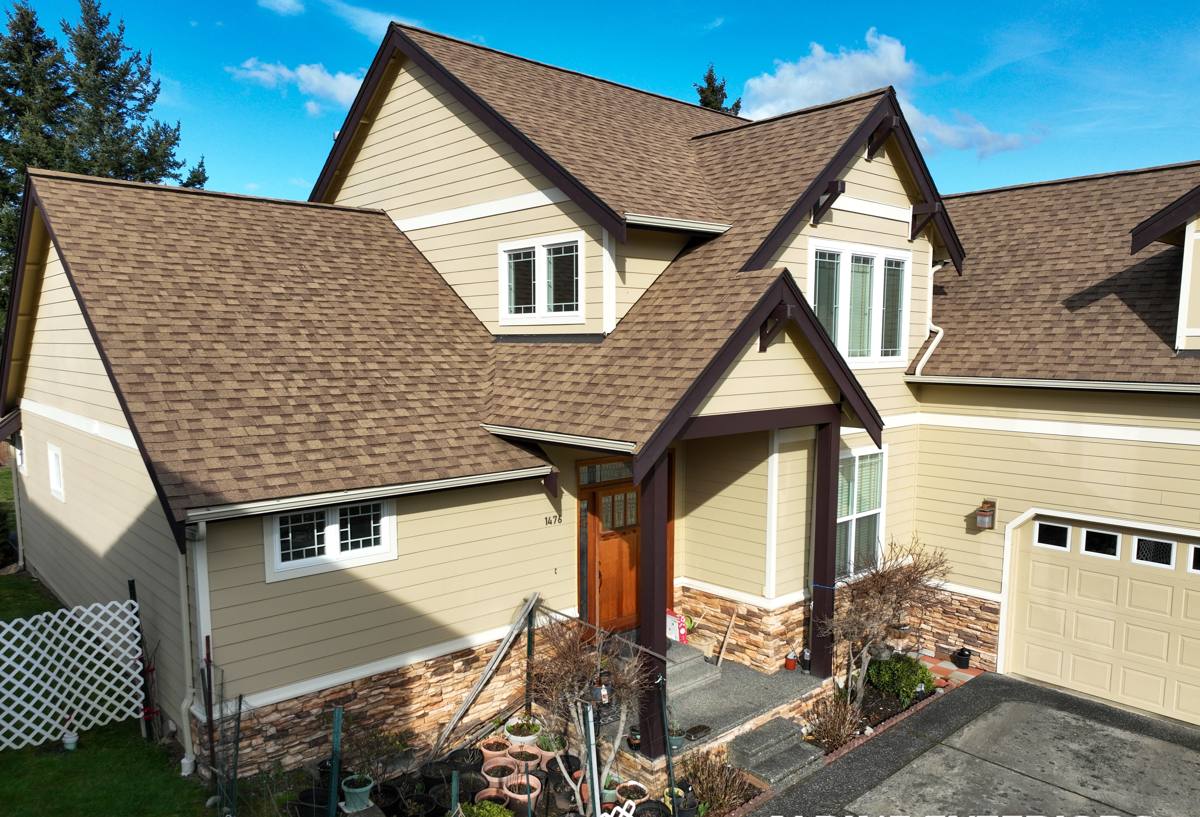
What the Regional Climate Actually Does to a Shingle Roof
Three things drive almost every asphalt shingle failure we see in this area, and none of them are exotic:
- Driving rain: Wind-driven rain doesn't just fall straight down — it pushes sideways under shingle tabs and around flashing, which is why underlayment and flashing detail work matter more here than in drier climates.
- Salt air: Even set back from the water, moisture carrying salt accelerates corrosion on exposed metal fasteners, flashing, and vent components if they aren't rated for it.
- Extended moss season: Shade, moisture, and mild temperatures let moss and algae establish on north-facing slopes and anywhere debris collects, and once it takes hold it lifts shingle edges and holds water against the roof deck.
None of these are dramatic on their own. The damage is cumulative — a roof that's "fine" for a few years can be quietly losing granule coverage, letting moisture into the deck at flashing points, or developing rot under a moss mat nobody's looked at closely. That's the pattern we're built to prevent.
What a Correct Asphalt Shingle Job Actually Involves
A shingle roof is only as good as the layers underneath it. A proper installation or full replacement in this climate includes:
Tear-Off and Deck Inspection
We remove the old roofing down to the deck rather than layering over it. This is the only way to actually see the plywood or OSB underneath, catch soft or delaminated sections from past leaks, and replace them before they're covered up again for another 20 years.
Ice and Water Shield at Vulnerable Points
Eaves, valleys, and any low-slope transitions get a self-adhering waterproof membrane underneath the shingles. This is the layer that stops wind-driven rain and any ice damming from ever reaching the deck, and it's the single most skipped detail on cut-rate roofing jobs.
Synthetic Underlayment Across the Full Field
Over the ice and water shield, the rest of the roof gets a synthetic underlayment rated for the wind and moisture exposure typical of this region — a secondary water barrier that keeps working even if a shingle is damaged or lifted.
Flashing at Every Penetration and Transition
Chimneys, skylights, sidewalls, and roof-to-wall transitions are where the vast majority of leaks actually start — not in the open field of shingles. Correct step flashing, counter-flashing, and pipe boots, installed with corrosion-resistant fasteners suited to salt-air exposure, are non-negotiable.
Shingle Installation to Manufacturer Wind Specs
Nail placement, pattern, and count all affect wind resistance. We install to the manufacturer's specified nailing pattern for the wind zone, not a generic pattern, because that's what keeps shingles attached during winter storms instead of voiding the warranty and ending up in the yard.
Choosing the Right Shingle for This Climate
Not every asphalt shingle product is a good fit for a moss-prone, wet-winter climate. The two categories homeowners typically choose between:
| Shingle Type | Typical Lifespan Here | Best Fit |
|---|---|---|
| 3-tab shingles | 15–20 years | Budget-focused projects, secondary structures, flatter architectural styles |
| Architectural (dimensional) shingles | 25–35 years | Primary residences, higher wind exposure, better resale value |
We generally steer homeowners toward architectural shingles for primary residences in this area. They're heavier, hold up better to wind uplift, and most manufacturers now offer algae-resistant (AR) versions with copper- or zinc-infused granules built specifically to slow the black streaking and moss growth that's constant background pressure in a climate this wet. It's not that 3-tab shingles are a bad product — it's that the added durability and moss resistance of architectural shingles tends to pay for itself here faster than in drier regions.
Ventilation and Moisture: The Part You Don't See
A shingle roof isn't just the surface layer — it's part of a system that includes how the attic breathes. Poor ventilation traps warm, moist air against the underside of the deck, which:
- Shortens shingle life from the inside by cooking the deck and adhesive from below
- Creates condensation that can rot sheathing even with a leak-free roof surface
- Feeds moss and algae growth on shaded slopes by keeping the roof surface damp longer after rain
Balanced intake (soffit) and exhaust (ridge) ventilation keeps air moving continuously, which dries the roof surface faster after our frequent rain events and reduces the moisture load that feeds moss. On replacement projects, we check existing ventilation and recommend corrections when the current setup is undersized or blocked — it's a small add during a full re-roof and a much bigger job to retrofit later.
How Our Process Works
- On-site inspection: We walk the roof (weather permitting) or do a close ground and attic inspection, checking deck condition, flashing points, ventilation, and moss/algae extent.
- Written estimate: A clear scope and price — what's being torn off, what underlayment and flashing package is included, shingle options, and any deck repair contingencies spelled out up front, not discovered mid-job.
- Scheduling around the weather: We plan installation windows with realistic buffer for the rain patterns typical of this region, and we protect exposed decking if weather turns mid-project.
- Tear-off and deck repair: Full removal, deck inspection, and replacement of any compromised sheathing before anything new goes down.
- Underlayment, flashing, and shingle installation: Installed in the sequence and to the specs described above, with corrosion-resistant fasteners throughout.
- Cleanup and walk-through: Magnetic sweep for nails, debris haul-off, and a final walk-through so you know exactly what was done and what to watch for going forward.
Maintenance and Moss Control After Installation
A well-installed shingle roof still needs basic upkeep in this climate. A simple annual checklist:
- Clear gutters and valleys of needles and debris before the fall rains set in
- Look for moss starting on shaded, north-facing slopes and address it early with a gentle, roof-safe treatment rather than pressure washing, which strips granules
- Trim back overhanging branches to reduce shade and debris buildup, which slows moss establishment
- Check flashing around chimneys and vents visually once a year for lifted edges or corrosion
- Have any leak investigated promptly — water tracking under shingles can travel well away from where it actually enters
Zinc or copper strips installed near the ridge can also help suppress moss regrowth on shingle roofs over time, using rainwater to carry trace metal ions down the roof surface — worth discussing at installation if moss has been a recurring issue on your property.
What Drives the Cost of a Shingle Roof Here
| Factor | Why It Matters |
|---|---|
| Roof size and pitch | More square footage and steeper pitches mean more material and labor time |
| Number of penetrations | Each chimney, skylight, and vent adds flashing labor and material |
| Deck condition | Rot or soft sheathing found at tear-off adds repair cost not visible from the ground |
| Shingle grade chosen | 3-tab vs. architectural vs. premium algae-resistant lines shift material cost |
| Ventilation upgrades | Adding or correcting soffit/ridge ventilation during a re-roof is far cheaper than retrofitting later |
| Access and site conditions | Steep sites, limited driveway access, or landscaping to protect can affect labor and disposal logistics |
We don't quote a number without seeing the roof — anyone who does is guessing, and on a project this size that guess usually costs the homeowner money one way or another. What we can promise is a written estimate that breaks down exactly what's included, so you're comparing real scope, not just a bottom-line figure.
Why Hire a Crew That Already Works This Area
Roofing crews that only pass through occasionally don't carry the same working knowledge of how Whatcom County weather actually behaves on a job site — when the rain windows close in, how moss establishes differently on a shaded rural lot than an open one, or which flashing details tend to fail first on homes exposed to wind moving up the river valleys. Working Ferndale, Everson, and the surrounding communities regularly means we're not learning the region's climate on your roof — we've already seen how it treats a shingle roof over years, not weeks.
It also means we're accountable locally. If a flashing detail needs a second look after the first hard rain of the season, we're not three counties away. That kind of accountability matters more on a roof than almost anything else you'll have installed on your home, because a roofing failure doesn't stay contained — it becomes a deck problem, an insulation problem, and eventually an interior problem if it's not caught early.
If you're weighing a repair versus a full replacement, or just want an honest read on how much life is left in your current shingle roof, we're happy to take a look and walk you through what we find — no pressure, no upsell script. Reach out for a free estimate using the form below, and we'll get you a clear, written scope of work for your Everson home.