 Ferndale Siding
 Building a Deck That Holds Up in Everson
Everson sits inland from the coast, but it doesn't escape what Whatcom County weather does to outdoor structures. Homes here still see long stretches of driving rain from fall through spring, humid air that never fully dries out between storms, and a moss season that can run six months or longer on anything shaded or north-facing. A deck built without those conditions in mind starts showing problems within a few seasons: cupped boards, soft spots at the ledger, green film on the walking surface, and fasteners that bleed rust into the wood around them.
A deck built correctly for this climate is a different project from the same deck built in a dry region. The framing, the flashing details, the gaps between boards, and even the fastener choice all change based on how much moisture the structure has to shed and how often it gets the chance to dry. That's the standard we build to on every custom deck we install in Everson and the surrounding Ferndale area.
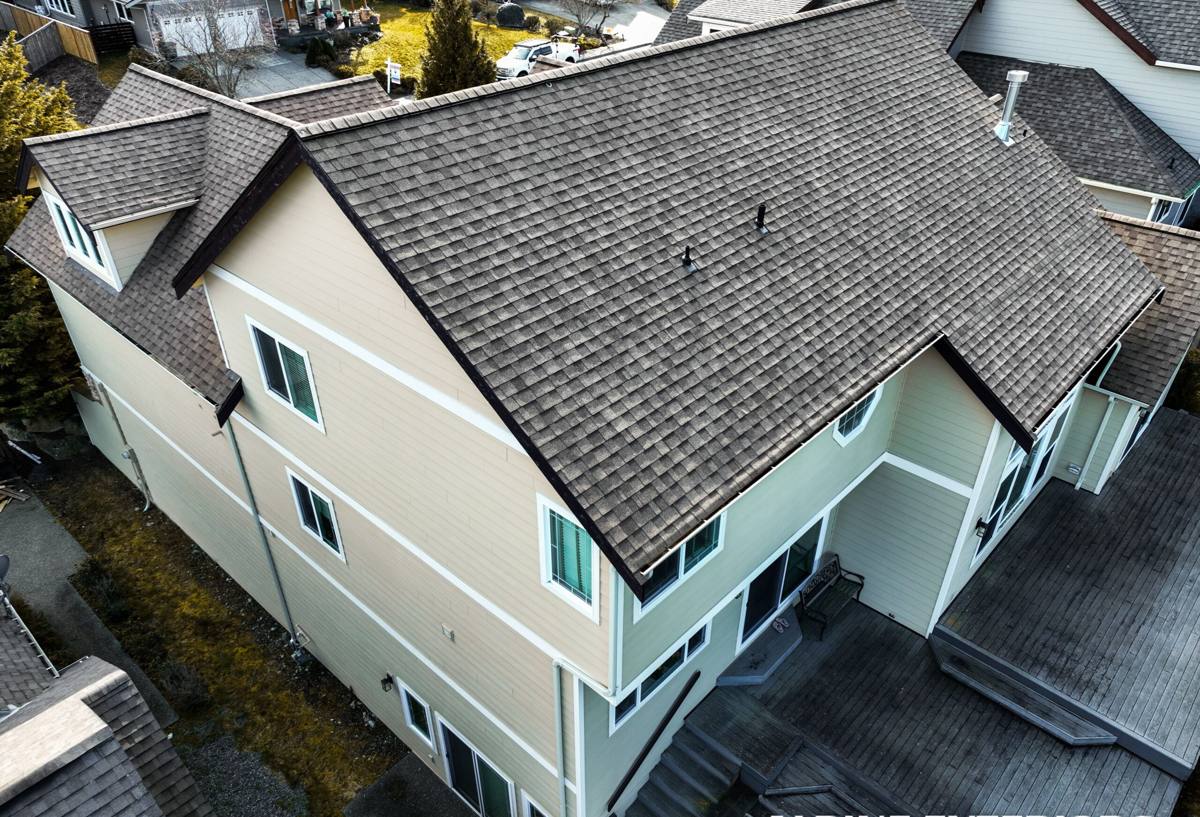
What Whatcom County Weather Does to a Deck Over Time
Moisture That Doesn't Fully Leave
Rain itself isn't the enemy — standing water and trapped moisture are. Decking that sits flat against joists, boards installed tight with no drainage gap, or a ledger board attached to the house without proper flashing all create spots where water sits instead of running off. Over a wet Whatcom County winter, that trapped moisture is what causes rot, not the rain falling on the surface.
Moss and Algae Growth
Shaded decks, decks under mature trees, and anything on the north or east side of a house will grow moss if the surface stays damp too long. Beyond looking bad, moss holds moisture against the decking material and creates a slip hazard on stairs and walking surfaces — a real concern given how many decks in this area get used year-round, not just in summer.
Salt Air and Fastener Corrosion
Whatcom County's proximity to the Salish Sea means even properties a few miles inland get some exposure to salt-laden air, especially during winter storms. Standard fasteners and hardware corrode faster under that exposure, which is why the fastener and hardware spec matters as much as the decking material itself.
Choosing a Decking Material for This Climate
There's no single "best" decking material — there's a best material for a given budget, a given amount of sun exposure, and how much upkeep a homeowner actually wants to do. Here's how the common options compare under Whatcom County conditions:
| Material | Moisture & Moss Resistance | Maintenance | Typical Lifespan |
|---|---|---|---|
| Pressure-treated fir/pine | Fair — needs sealing to perform well | Annual cleaning and re-sealing | 10–15 years |
| Cedar | Good natural resistance, but surface still grows moss if shaded | Periodic cleaning, occasional oil/stain | 15–20 years |
| Composite decking | Very good — doesn't absorb water like wood | Occasional washing to keep surface clear of moss film | 25–30 years |
| PVC decking | Excellent — fully moisture resistant | Lowest — soap and water rinse | 25–30+ years |
We don't push one product on every homeowner. A cedar deck with proper airflow underneath and a sensible finish schedule can look great for two decades in this climate. Composite and PVC cost more up front but make sense for shaded lots, rental properties, or anyone who wants to spend weekends doing something other than deck maintenance. We'll walk through the honest trade-offs for your specific site — sun exposure, budget, and how the deck will actually be used — rather than defaulting to whatever's easiest to sell.
Framing and Structure: The Part That Actually Determines Lifespan
The decking boards are what you see, but the framing underneath is what determines whether the deck is still solid in fifteen years. This is where most of the corner-cutting happens on cheaper deck jobs, and it's the part homeowners can't easily inspect themselves once the boards are down.
Ledger Board Flashing
The ledger — where the deck attaches to the house — is the single most common failure point on decks in wet climates. Without proper flashing that directs water away from the house sheathing, moisture gets trapped behind the ledger and rots both the deck framing and the wall structure behind it. We flash every ledger connection correctly, every time, regardless of whether it adds a step to the job.
Joist Protection
Untreated cuts and exposed joist tops are where rot starts on the framing itself. We treat cut ends and use joist tape or an equivalent protective barrier on joist tops before decking goes down, so water running off the boards doesn't sit directly on exposed wood.
Drainage Gaps and Airflow
Board spacing isn't cosmetic — it's how the deck sheds water and lets air move underneath to dry things out between storms. We set gaps based on the specific decking material's expansion behavior, and we make sure there's enough clearance under the structure for air to actually circulate rather than sitting stagnant and humid.
Hardware and Fasteners
Given the salt air exposure this region gets, we use fasteners and structural hardware rated for coastal or wet-climate use rather than standard-grade hardware. It costs a little more up front and prevents the rust streaking and fastener failure that shows up on lower-grade builds within a few years.
Design Considerations for Everson Properties
A lot of homes in and around Everson sit on larger, more rural lots than you'd find in denser parts of Ferndale, which changes some of the practical decisions on a deck project.
- Grading and drainage around the footings — rural lots don't always have the same graded drainage as newer subdivisions, so we check how water moves across the yard before finalizing footing placement.
- Distance from the house to utilities — larger lots sometimes mean longer runs for lighting or outlet additions on the deck, which we plan for during design rather than as an afterthought.
- Tree cover and shade — mature trees are common on rural and semi-rural properties here, and heavy shade is exactly the condition that accelerates moss growth, so we factor tree placement into material recommendations.
- Views and orientation — many Everson-area properties have more open sightlines than tighter in-town lots, and we design deck shape and railing choice to take advantage of that rather than boxing it in.
How We Build a Custom Deck, Start to Finish
1. On-Site Assessment
We walk the property, look at drainage, sun exposure, existing structure (if we're replacing a deck), and talk through how the space will actually be used before recommending materials or layout.
2. Design and Material Selection
We put together a design and give a straightforward comparison of material options with honest cost and maintenance trade-offs — no pressure toward the most expensive option.
3. Permitting
Most new decks and significant deck rebuilds in Whatcom County require a building permit, particularly if the deck is attached to the house or elevated above a certain height. We handle the permit process as part of the job so homeowners aren't left navigating county requirements on their own.
4. Framing and Flashing
This is where the climate-specific details described above get built in — proper ledger flashing, joist protection, correct fastener spec, and footings sized for the soil conditions on your lot.
5. Decking, Railing, and Finish Work
Boards, railings, stairs, and any built-in features go in last, with attention to board spacing and drainage as described earlier.
6. Final Walkthrough
We walk the finished deck with the homeowner, cover basic care for the specific material installed, and answer questions before calling the job done.
Maintenance That Actually Matters Here
Every decking material needs some upkeep in this climate — the difference is how much. Skipping basic maintenance is what turns a well-built deck into a moss-covered, soft-boarded problem well before its time.
- Clear leaves and debris out of gaps between boards before fall rains set in — trapped organic matter holds moisture and feeds moss growth.
- Rinse or lightly scrub shaded areas of the deck periodically during the wetter months to keep moss from establishing.
- Check and re-seal wood decking on the schedule appropriate for the finish used — this is the single biggest factor in how long a wood deck lasts here.
- Keep gutters and downspouts near the deck clear so water isn't dumping directly onto or under the structure.
- Inspect railings and stair connections annually for any looseness, which can indicate fastener corrosion starting.
Why It Matters That We Already Work in Everson
A crew that builds decks across Whatcom County — not just in one neighborhood — has already seen how differently the same design performs depending on sun exposure, tree cover, and soil conditions from one property to the next. We know what fails first on a deck exposed to this region's rain and salt air because we've been called out to fix decks that were built without those details in mind. Building it right the first time, with framing and material choices matched to the actual site conditions, is cheaper in the long run than repairing a deck that was built to a generic spec and never accounted for the climate it has to survive in.
If you're planning a new custom deck or replacing one that hasn't held up, we're happy to take a look at your property and put together a straightforward estimate — no pressure, no obligation. The form below is the easiest way to get started.