 Ferndale Siding
 Building a Deck That Actually Holds Up in Everson's Climate
Everson sits inland along the Nooksack River, but the weather that reaches it is still Whatcom County weather. Marine air off Puget Sound pushes driving rain through the valley for months at a stretch, and a moss season that can run from October well into April coats anything that stays damp and shaded. That combination is hard on outdoor structures in ways that don't show up in a showroom or a glossy brochure. Fasteners that aren't rated for moisture start to rust from the inside out. Wood that isn't properly sealed checks and cups. Decking laid without enough airflow underneath grows algae and moss faster than most homeowners expect, and even the salt-tinged humidity that moves through this part of Washington will work on unprotected metal over time. A deck built to a dry-climate spec, or built to the cheapest detail that still passes inspection, usually looks fine for the first year or two in Everson and then starts showing problems right around the time the builder is long gone.
We build decks throughout Ferndale and Whatcom County, and Everson jobs get the same approach: materials and construction details chosen for what this specific climate does to a structure over fifteen or twenty years, not just what gets it built fastest.
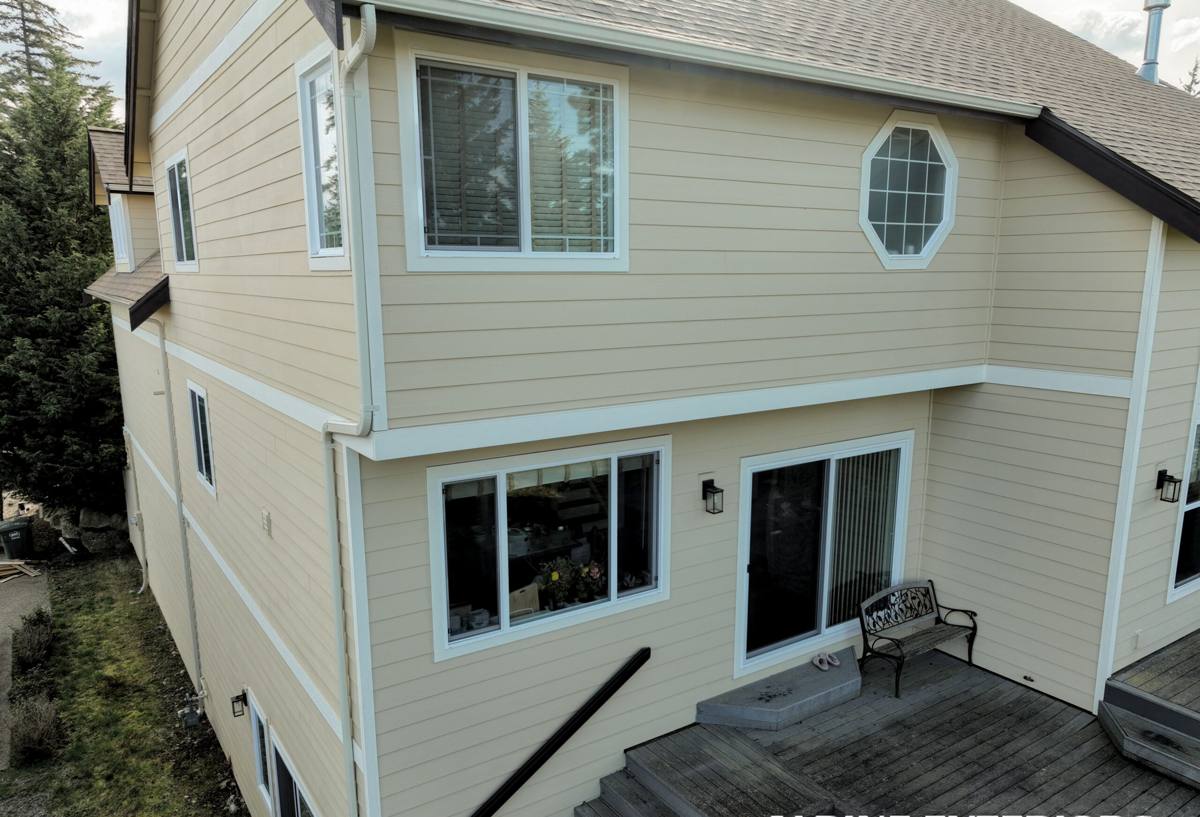
What Everson Homes Typically Need From a Deck
Lots in and around Everson tend to run larger and more rural than a tighter in-town Ferndale property — more mature tree cover, more exposure to standing moisture in the yard, and in some cases closer proximity to the river's floodplain soils. That changes a few things about how a deck should be built here.
Site and Drainage
Ground-level moisture matters more on a shaded, tree-heavy lot than it does on an open one. Before we build, we look at how water actually moves across the site — where it pools, where runoff from the roof lands, and whether the ground under the deck will stay wet long after a storm has passed. That affects footing placement, joist height off grade, and whether the space underneath needs any additional drainage work to keep it from becoming a permanent damp spot that feeds moss and mildew back up into the structure.
Sun, Shade, and Airflow
A deck tucked under fir or cedar cover, which is common on Everson properties, dries out slower after rain than one in full sun. That's not a reason to avoid a shaded deck — it's a reason to build in enough gapping between boards, enough clearance underneath, and enough attention to board orientation that the structure can actually dry between storms instead of staying wet for days.
Decking Material Options and How They Handle This Climate
There's no single right answer for every project — budget, maintenance appetite, and how the deck will be used all factor in. What matters is picking a material with your eyes open about how it behaves in a wet, moss-prone climate over the long run, not just how it looks at the lumber yard.
| Material | Upfront Cost | Maintenance | Moisture Behavior |
|---|---|---|---|
| Pressure-treated wood | Lowest | Needs re-staining or sealing every 2-3 years | Prone to checking and splintering if maintenance lapses |
| Cedar | Moderate | Regular sealing to hold color and resist rot | Naturally rot-resistant but still needs upkeep in constant rain |
| Capped composite | Higher | Occasional washing, no staining or sealing | Excellent — shrugs off rain, doesn't absorb moisture into the core |
| Uncapped/first-generation composite | Moderate | Low, but limited options once surface wears | Can absorb moisture at cut edges over time; we steer clients toward capped products for that reason |
For a lot of Everson homeowners, capped composite decking ends up being the better long-term value even with the higher sticker price, simply because it isn't fighting the climate the way wood does. That said, plenty of clients still want the look and feel of real wood, and cedar built and sealed correctly holds up fine here — it just asks more of the homeowner in ongoing maintenance.
What a Correctly Built Deck Actually Involves
The parts of a deck that fail first in this climate are almost never the visible decking boards. They're the connections and the framing underneath — the parts that are easy to build wrong and hard to inspect once the deck is finished.
Ledger Flashing
Where a deck attaches to the house is the single most common failure point we see in this region. If the ledger board isn't properly flashed to shed water away from the house's wall assembly, moisture works its way behind the siding and into the rim joist over years of driving rain — often invisibly, until there's rot damage that's expensive to fix. Correct flashing detail at that connection is not optional, and it's one of the first things we check on any deck we didn't build ourselves.
Footings and Frost Depth
Whatcom County's frost depth requirements and soil conditions determine how deep footings need to go and how they need to be poured. Skipping this step, or pouring shallow footings to save time, is how decks end up heaving, settling unevenly, or pulling away from the house over a few winters. We size and place footings to code for the specific soil on the lot, not a generic assumption.
Fasteners and Hardware
Every fastener, joist hanger, and structural connector on a deck we build is rated for exterior, moisture-heavy use — stainless steel or coated hardware matched to the decking material, since some composite and treated-wood chemistries corrode standard fasteners faster than homeowners expect. Cutting corners here is invisible on day one and expensive to fix once it fails.
Railings and Stairs
Guard height, baluster spacing, and stair geometry all follow Washington building code, and we build to that code as a floor, not a target to negotiate around. Beyond code compliance, railings and stair stringers see constant weather exposure and need the same fastener and moisture attention as the rest of the frame.
Our Deck Building Process
- Site visit and design conversation. We walk the property, talk through how the deck will be used, and look at drainage, sun exposure, and how the structure will tie into the house.
- Material selection. We go through wood and composite options honestly, including cost and maintenance trade-offs, so the decision fits your budget and how much upkeep you actually want to do.
- Permitting. Deck projects generally require a permit in Whatcom County depending on size and height above grade. We handle the permit process and make sure the design meets current code before anything is built.
- Construction. Footings, framing, ledger flashing, decking, and railings, built in that order with each stage checked before the next begins.
- Final walkthrough. We go over the finished deck with you, including what maintenance it needs and on what schedule, before we consider the job done.
Permits and Code for Deck Projects in the Area
Most new decks above a certain height, and many attached decks regardless of height, require a building permit in Whatcom County. Requirements can vary based on the deck's size, height above grade, and how it attaches to the house, so we confirm the specifics for your property rather than assuming. Skipping the permit process might save a little time upfront, but it can create real problems later — at resale, at insurance claim time, or if the structure needs to be inspected for any reason. We pull the permits and build to what's approved.
Maintaining a Deck Through Whatcom County Winters
Even a well-built deck needs some ongoing attention in a climate this wet. The good news is that the maintenance is straightforward if it's done on a schedule instead of after something's already gone wrong.
- Sweep leaves and debris off the deck surface regularly in fall — trapped organic matter is what feeds moss and holds moisture against the boards.
- Wash the deck surface at least once a year to remove algae and moss growth before it gets a foothold.
- Check and re-seal or re-stain wood decking on the schedule the manufacturer recommends, typically every two to three years.
- Keep gutters and downspouts clear so roof runoff isn't dumping extra water directly onto or under the deck.
- Walk the underside of the deck once a year to check for signs of moisture at the ledger connection or on framing members.
- Look at fasteners and hardware periodically for rust staining, which can be an early sign a connector needs replacing.
Why a Crew That Already Works in Everson Matters
Building decks around Ferndale and Everson day to day means knowing what the soil does on river-valley lots, what Whatcom County's inspectors look for, and which construction details actually matter in this climate versus which ones are just extra cost. It also means being familiar with the realities of rural and semi-rural properties — longer driveways, well and septic considerations, tree removal or trimming that might be needed before a deck footprint can be laid out. A contractor who only occasionally works this far from a city center is learning those things on your project. We'd rather bring that knowledge with us on day one.
If you're weighing a new deck or a rebuild in Everson, we're happy to come take a look, walk the site with you, and put together a straightforward, no-pressure estimate — just fill out the form below to get started.