 Ferndale Siding
 Everson's Climate Is Harder on Siding Than It Looks
Everson sits inland from Bellingham Bay, but that doesn't mean the house is spared from what Whatcom County weather does to exterior materials. Moisture-laden air moves in off the water and up the river valleys, and by the time it reaches Everson it's still carrying enough dampness to keep siding wet for days at a stretch during the fall and winter months. Add driving rain that comes in sideways during a windstorm, tree cover along the Nooksack corridor that shades north- and east-facing walls for most of the day, and a moss season that can run from October through April, and you have a climate that punishes any siding product with a weak moisture strategy.
Homes in Everson tend to sit on larger lots with more mature landscaping than in-town Ferndale properties, which is good for privacy and shade in summer but bad for airflow around the building envelope. Walls that don't dry out quickly between rain events are the walls where rot, mold, and paint failure show up first. That's the starting point for how we think about every siding installation we do out here — not what looks good on day one, but what survives ten Whatcom County winters without hidden damage building up behind it.
What "Long Moss Season" Actually Means for a Wall System
Moss doesn't just grow on roofs. Given a shaded wall, a slightly rough siding texture, and enough standing moisture, moss and algae will colonize horizontal laps and trim joints too. Once organic growth takes hold, it holds even more moisture against the substrate underneath it, which accelerates whatever degradation was already happening. A siding installation that ignores this — thin coatings, poor drainage gaps, caulk used as a substitute for proper flashing — is signing up for a much shorter service life in a spot like Everson than the same product would get in a drier part of the state.
What Correct Siding Installation Involves
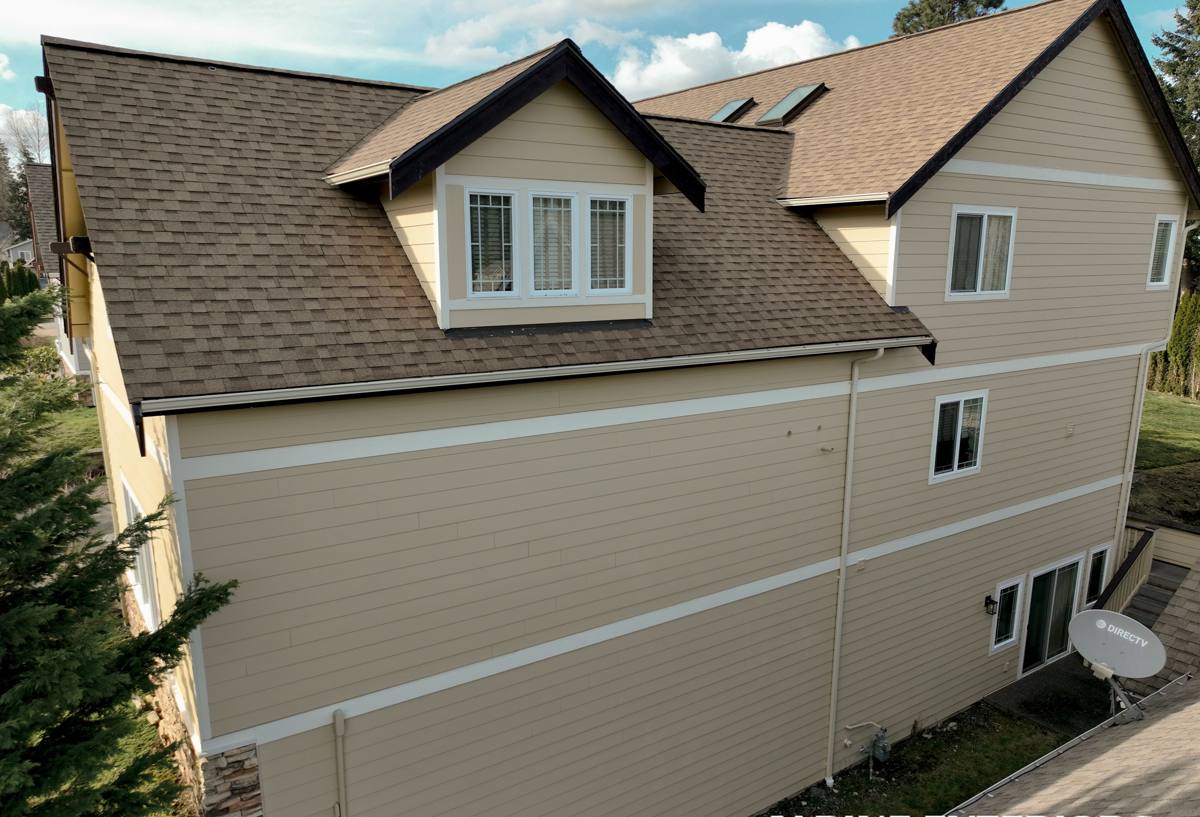
Siding is a system, not a single layer of material nailed to the wall. A correct installation on an Everson home has to manage water at every plane, not just shed it off the face of the boards. Here's what that actually looks like in practice:
- A weather-resistive barrier (WRB) installed over the sheathing, lapped correctly top-over-bottom so water always drains outward and down
- Proper flashing at every window, door, deck ledger, and roof-to-wall intersection — this is where the overwhelming majority of moisture intrusion actually starts
- A drainage gap or rainscreen behind the siding so any water that gets past the outer layer has somewhere to go instead of sitting against the sheathing
- Correct fastener type, spacing, and placement per the manufacturer's installation instructions, not just "close enough"
- Factory-cut or properly sealed field cuts, since an unsealed cut edge is one of the fastest ways moisture gets into fiber cement or any other siding material
- Adequate clearance at grade, decks, and roof lines so siding never sits in standing water or snow
Skip any one of these steps and the siding might still look fine for a year or two. The problems that show up later — soft trim, staining, paint bubbling, or rot found during a remodel — almost always trace back to a shortcut taken during installation, not a flaw in the material itself.
Why We Install Only James Hardie Fiber Cement
We made a deliberate decision to install James Hardie fiber cement siding exclusively, and we don't install vinyl, LP SmartSide, primed spruce, cedar, or other fiber cement brands. That's not a marketing position — it's a standard we hold because of what we've seen happen to other products in exactly the kind of damp, shaded, moss-prone conditions common around Everson.
Vinyl siding is inexpensive and easy to install, but it's a thin plastic product that expands and contracts significantly with temperature swings, can crack in cold snaps, and has seams and J-channels that give moisture a path behind the wall if they aren't detailed carefully. It also isn't repaintable to a durable factory-grade finish, so once the color fades or you want a different look, your only real option is replacement.
Engineered wood products like LP SmartSide use treated wood strand technology that's genuinely improved over older wood siding, but wood-based substrates still rely heavily on caulking, paint maintenance, and cut-edge sealing staying perfect for the life of the product. In a climate with an extended wet season, any lapse in that maintenance schedule opens the door to moisture absorption and eventual swelling or rot at joints and cut ends.
Fiber cement itself isn't a single product — there are several brands on the market including Allura and Cemplank. We narrowed to James Hardie specifically because of their ColorPlus factory-baked finish (which resists fading and chipping far better than field-applied paint), their HZ5 product line engineered for the Pacific Northwest's specific moisture and temperature profile, and a transferable warranty structure we're comfortable standing behind on every job. Fiber cement is non-combustible, doesn't attract insects, and holds paint and color far longer than wood-based alternatives — advantages that matter more, not less, in a climate like Whatcom County's.
James Hardie Product Lines for Everson Homes
Most Everson installations use one of two Hardie product families, sometimes combined for architectural interest:
| Product | Best Use | Why It Fits Everson |
|---|---|---|
| HardiePlank lap siding | Primary wall cladding, most home styles | Classic horizontal profile sheds water efficiently; wide color range in ColorPlus finish |
| HardiePanel vertical siding | Accent walls, gables, modern or farmhouse styles | Clean vertical lines pair well with board-and-batten trim; fewer horizontal laps to maintain |
| HardieTrim boards | Corners, window and door surrounds, fascia | Matches the fiber cement moisture performance of the field siding instead of mixing in wood trim |
| HardieShingle siding | Accent gables, Craftsman-style detailing | Textured look without the moisture liabilities of real wood shingles |
HZ5 is the specific Hardie formulation engineered for regions with significant freeze-thaw cycling and sustained moisture exposure, which describes the Pacific Northwest generally and Whatcom County's river valleys in particular. We spec HZ5 as the standard for Everson installations rather than treating it as an upgrade.
Our Installation Process
Every project follows the same sequence, whether it's a full re-side or a single wall replacement after storm damage:
- On-site assessment. We walk the full exterior, checking existing sheathing condition, current moisture damage, window and door flashing, and any areas where landscaping or grading is trapping water against the wall.
- Written estimate and product selection. You get a clear scope of work, product and profile choices, and ColorPlus color options — no vague allowances or unexplained line items.
- Tear-off and substrate repair. We remove the old siding, inspect and repair any compromised sheathing, and address rot or moisture damage before anything new goes up. Covering over a problem never fixes it.
- WRB and flashing installation. This is the step that determines whether the wall stays dry for the next 30-plus years, and we don't rush it.
- Hardie installation to manufacturer spec. Correct fastener schedule, drainage gap, joint treatment, and factory-finished cut edges sealed per Hardie's published instructions.
- Trim, caulking, and final detail work. Clean lines at corners, windows, and transitions — the details that separate a professional installation from a rushed one.
- Final walkthrough. We go over the finished work with you before calling the job complete.
Cost Factors Worth Understanding Before You Get Quotes
Siding costs vary based on several factors that are worth discussing upfront rather than being surprised by later:
| Factor | Why It Matters |
|---|---|
| Substrate condition | Hidden rot or damaged sheathing found during tear-off adds repair scope before new siding can go on |
| Home size and wall complexity | More corners, gables, and dormers mean more cutting, flashing, and labor time |
| Product mix | Combining lap siding with panel accents or shingle detailing adds material and labor variety |
| Access and site conditions | Mature landscaping, slopes, or tight lot lines around Everson properties can affect staging and scaffolding needs |
| Trim and detail scope | Full trim replacement versus reusing sound existing trim changes both cost and long-term consistency |
We'd rather walk your specific home and give you real numbers than quote a broad range that doesn't mean much until someone's actually looked at your walls.
Common Mistakes We See on Homes Around Everson
When we're called out to inspect or repair siding that another crew installed, or older siding that's failing, the same issues come up repeatedly:
- Caulk used to "seal" a cut edge instead of factory sealing or proper edge treatment
- Missing or improperly lapped flashing above windows and doors
- Siding installed tight to grade or a deck surface with no drainage clearance
- No drainage gap behind the siding, trapping moisture directly against the sheathing
- Fasteners driven too tight or into the wrong zone of the board, causing buckling or cracking
- Shaded, moss-prone walls sided with a product that has no factory-applied protective finish
Every one of these is preventable with correct technique and materials suited to the climate — which is exactly the gap we're trying to close on every job we take.
Why a Crew That Already Works in Everson Matters
Installation quality isn't just about following a manufacturer's manual — it's about recognizing conditions specific to this area before they become problems. A crew that regularly works Whatcom County homes knows which wall orientations in a given neighborhood stay wet longest, how tree cover affects drying time on a shaded elevation, and how the extended moss season changes what maintenance schedule actually makes sense for a homeowner. That local pattern recognition shows up in small decisions during installation — an extra flashing detail here, a slightly wider drainage gap there — that a crew unfamiliar with the region might not think twice about skipping.
It also means someone who's easy to reach if a question comes up two years after installation, not a company that did one job in the area and moved on.
Maintenance After Installation
James Hardie siding installed correctly requires far less upkeep than wood or vinyl, but "less" isn't "none." A simple annual routine keeps it performing the way it should:
- Rinse the siding once or twice a year to clear pollen, dust, and early moss or algae growth before it takes hold
- Keep gutters clean and downspouts directed away from the foundation so water isn't sheeting down walls
- Trim back landscaping that's shading walls and slowing drying time
- Inspect caulking at trim joints and penetrations every year or two and touch up as needed
That's a modest routine compared to what wood siding demands, and it's a big part of why the ColorPlus finish holds up as long as it does even through a Whatcom County wet season.
If your Everson home needs new siding — whether it's storm damage, a full exterior update, or you're just tired of maintaining what's on the walls now — we'd be glad to walk the property and give you a straight, no-pressure estimate. Use the form below to get started.