 Ferndale Siding
 Board & Batten in a Coastal Whatcom County Climate
Fairhaven sits close enough to the water that its homes take a different kind of weathering than houses further inland in Whatcom County. Salt-laden air corrodes unprotected fasteners and trim faster than dry-side climates ever would. Driving rain off the water pushes moisture sideways into seams and laps that would stay dry in a calmer setting. And the long, wet moss season here means anything shaded or north-facing spends months of the year damp, which is exactly the condition organic growth needs to take hold. Board and batten siding has a strong, clean vertical look that suits a lot of Fairhaven's home styles, but that same design — narrow battens over wide boards, more seams per square foot than lap siding — means the material and the installation details matter more here than almost anywhere else in the county.
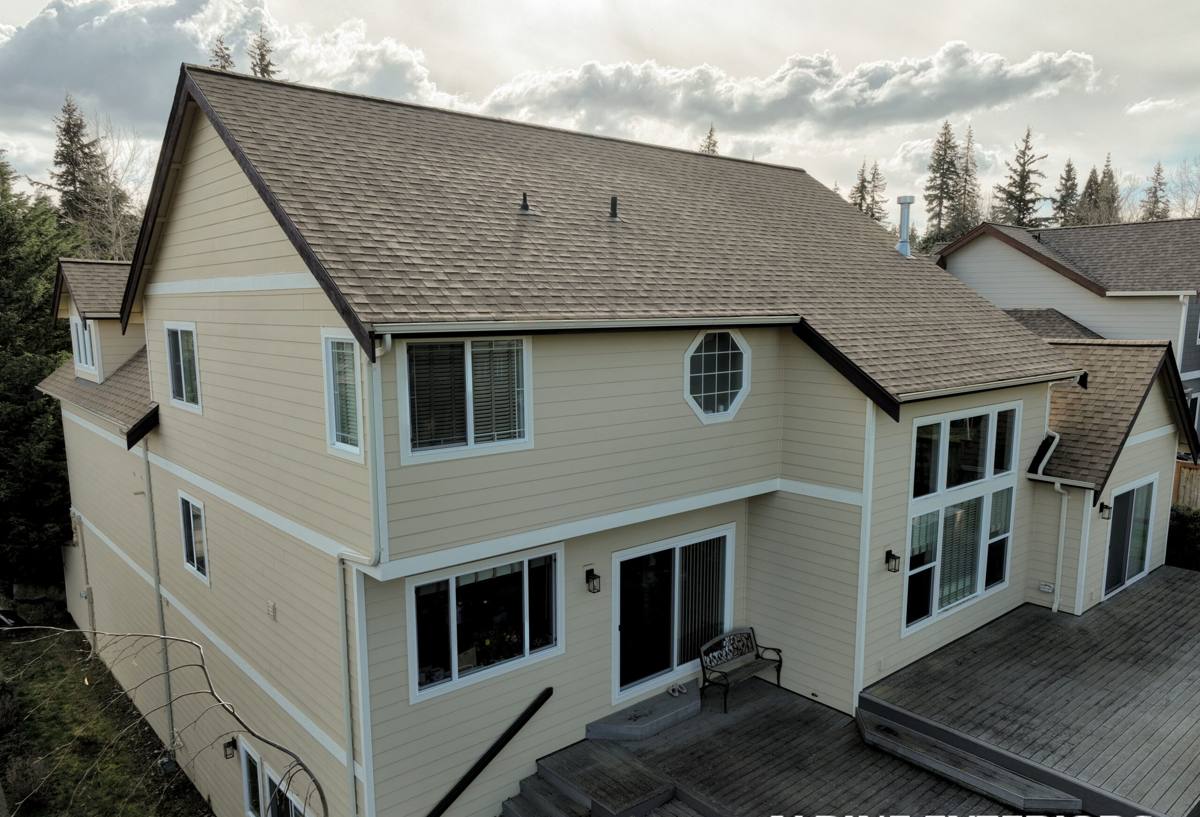
What Board and Batten Siding Actually Is
Board and batten is a vertical siding pattern: wide flat boards are installed first, then narrower strips (battens) are fastened over the seams between them. Done right, it sheds water down the face of the wall in a straight line, with the battens acting as both a design element and a physical cover over the most vulnerable joints in the assembly. Done wrong — undersized boards, no gap for movement, battens nailed directly through both boards into sheathing without any drainage path behind them — it traps water instead of shedding it, and that's when siding fails from the inside out, often years before anyone notices from the curb.
The pattern reads as simple, but it's less forgiving of shortcuts than horizontal lap siding. Every vertical seam is a place water can find its way behind the cladding, and in a marine-influenced climate like Fairhaven's, "mostly dry" isn't good enough over a 20- or 30-year timeline.
Why We Install James Hardie Fiber Cement — Not Wood, Not Vinyl
Ferndale Siding Company installs James Hardie fiber cement siding exclusively. We don't install vinyl, LP SmartSide, primed spruce, cedar, or other fiber cement brands like Cemplank or Allura. That's a deliberate standard, not a sales pitch, and it matters even more for a board and batten application in a salt-air, high-moisture area like Fairhaven.
Cedar board and batten looks great new, but real wood moves with humidity, and in a climate that stays damp for months at a time, that movement opens gaps at the very seams the batten is supposed to protect. Wood also needs ongoing refinishing to hold up against UV and moisture, and any spot where the finish fails becomes an entry point for rot. Vinyl board and batten avoids the rot question but has its own limits: it expands and contracts more than fiber cement in temperature swings, the panels are lighter-duty by nature, and it doesn't hold paint or offer the crisp, flat board profile that gives this style its character. Engineered wood products close some of that gap but are still wood-based at the core, which means the cut edges and any breach in the factory coating are still vulnerable to moisture — a real concern with seams as frequent as board and batten has.
James Hardie fiber cement is cement, sand, and cellulose fiber — non-combustible, dimensionally stable, and engineered specifically for wet climates through Hardie's HZ5 product line, which is what we spec for Whatcom County's marine exposure. The factory-applied ColorPlus finish is baked on under controlled conditions, which holds color and resists the fading and chalking that field-applied paint struggles with on the coast. It's also backed by a strong transferable warranty, which matters on a product you're expecting to look right for decades, not just get through the first winter.
What Doesn't Change With Any Siding Material
No siding product, including Hardie, is waterproof on its own. It's a rain-shedding layer over a drainage plane and a weather-resistive barrier. The material choice determines how well the siding tolerates the inevitable moisture that gets past the surface; the installation determines whether that moisture ever gets a chance to do damage in the first place.
What a Correct Board & Batten Installation Involves
For Fairhaven's exposure, a few details separate an installation that lasts from one that doesn't:
- A drainage gap behind the siding. A rainscreen furring strip or drainage wrap keeps the back of the boards from sitting flush against wet sheathing, letting incidental moisture drain and dry instead of wicking.
- Correct board and batten spacing and fastening. Boards need room to expand and contract seasonally; battens are fastened to hit framing, not just sheathing, and fastener spacing follows Hardie's published specs for the HZ5 zone.
- Flashing at every horizontal transition. Window and door heads, roof-to-wall intersections, and any horizontal trim need flashing that directs water out and away, not just caulk covering the gap.
- Proper fastener material. In salt air, standard fasteners corrode faster and can streak the finish. We use fasteners rated for the exposure, not whatever's cheapest.
- Factory-cut and factory-primed edges wherever possible. Field cuts get sealed per Hardie's specifications so raw edges aren't left exposed to moisture.
- Ventilation clearance at grade and roofline. Board and batten that runs too close to the ground or into a roof valley without clearance sets up a spot for standing water and moss to establish.
Material and Cost Factors for Board & Batten Siding
| Factor | James Hardie Fiber Cement | Cedar | Vinyl Board & Batten |
|---|---|---|---|
| Moisture tolerance in marine climate | Engineered for wet climates (HZ5) | Absorbs moisture; needs finish maintained | Won't rot, but seams can trap moisture behind panel |
| Refinishing needs | Factory ColorPlus finish, no field painting needed for years | Repainting/staining every few years | Cannot be painted easily; color fades over time |
| Fire resistance | Non-combustible | Combustible | Can soften/deform under heat |
| Dimensional stability | Low expansion/contraction | Moves with humidity, seasonal swelling | Higher thermal movement than fiber cement |
| Upfront cost | Mid-to-higher | Mid-to-higher, varies with grade | Lower |
| Long-term value | Strong transferable warranty, longer service life | Shorter service life without upkeep | Shorter service life in coastal exposure |
Our Process for Fairhaven Board & Batten Projects
We start with a walk-around inspection of the existing wall assembly, not just the visible siding — what's underneath matters as much as what goes on top. On tear-offs, we check the sheathing for existing moisture damage before anything new goes up, because covering a wet wall with new siding just hides the problem. From there we install the water-resistive barrier and drainage gap, run flashing at every horizontal penetration, then install the boards and battens to Hardie's HZ5 specifications with fasteners suited for salt-air exposure. We finish with detailing at trim, corners, and any transitions where two planes meet, since that's where most siding failures actually start.
Working Fairhaven and the surrounding Whatcom County coastline regularly means we already know which details need extra attention in this exposure — where moss tends to establish first, which orientations catch the worst of the driving rain, and how much clearance to leave at grade given the local rain patterns. That's not something a crew unfamiliar with the area picks up on the first job.
Living With Board & Batten in a Salt Air, High-Moss Climate
A correctly installed Hardie board and batten system is low-maintenance, but "low" isn't "none." A rinse-down once or twice a year keeps salt residue and organic buildup from settling into the texture of the boards, especially on shaded, north-facing walls where moss season lingers longest. Keep gutters clear so water isn't sheeting down the face of the siding in volumes it wasn't detailed to handle, and keep vegetation trimmed back so airflow can actually dry the wall between rain events. None of this is difficult, but skipping it in a climate this wet shortens the life of any siding, Hardie included.
What to Look for in a Board & Batten Contractor Here
- Ask whether they install a drainage gap behind board and batten, not just a weather-resistive barrier alone.
- Ask what fastener spec they use and whether it accounts for coastal/salt-air exposure.
- Ask how they flash horizontal trim and window heads — get a specific answer, not "we caulk it well."
- Ask which Hardie HZ zone they're specifying and why it fits this location.
- Ask how they handle field-cut edges and whether those get sealed per manufacturer spec.
- Ask for their approach to grade clearance and roof-to-wall transitions on your specific home.
If a contractor can't answer these plainly, that's worth knowing before the boards go up, not after.
If you're weighing board and batten for a home in Fairhaven or elsewhere along the Whatcom County coastline, we're happy to walk the exterior with you and give you a straight read on what your walls need. The form below gets you a free, no-pressure estimate — no obligation, just an honest look at the job.