 Ferndale Siding
 Lummi Island Homes Face a Different Kind of Weather Than Most of Whatcom County
Lummi Island sits out in the marine air, and that changes what a siding job needs to survive. Homes on the mainland around Ferndale still deal with plenty of rain, but an island property gets it from more directions at once, with salt carried on the wind and very little windbreak between the water and the wall. Add a shaded, moisture-heavy tree line on many lots and you get a long moss season that keeps siding damp for weeks at a stretch. Any exterior product that isn't built for that combination shows it early — chalking, staining, soft spots, or paint that won't hold.
We're a Ferndale-based crew, and Lummi Island is regular work for us, not an occasional trip. That matters more than it sounds like it should, and we'll get into why further down. First, it's worth being specific about what this climate actually does to a wall.
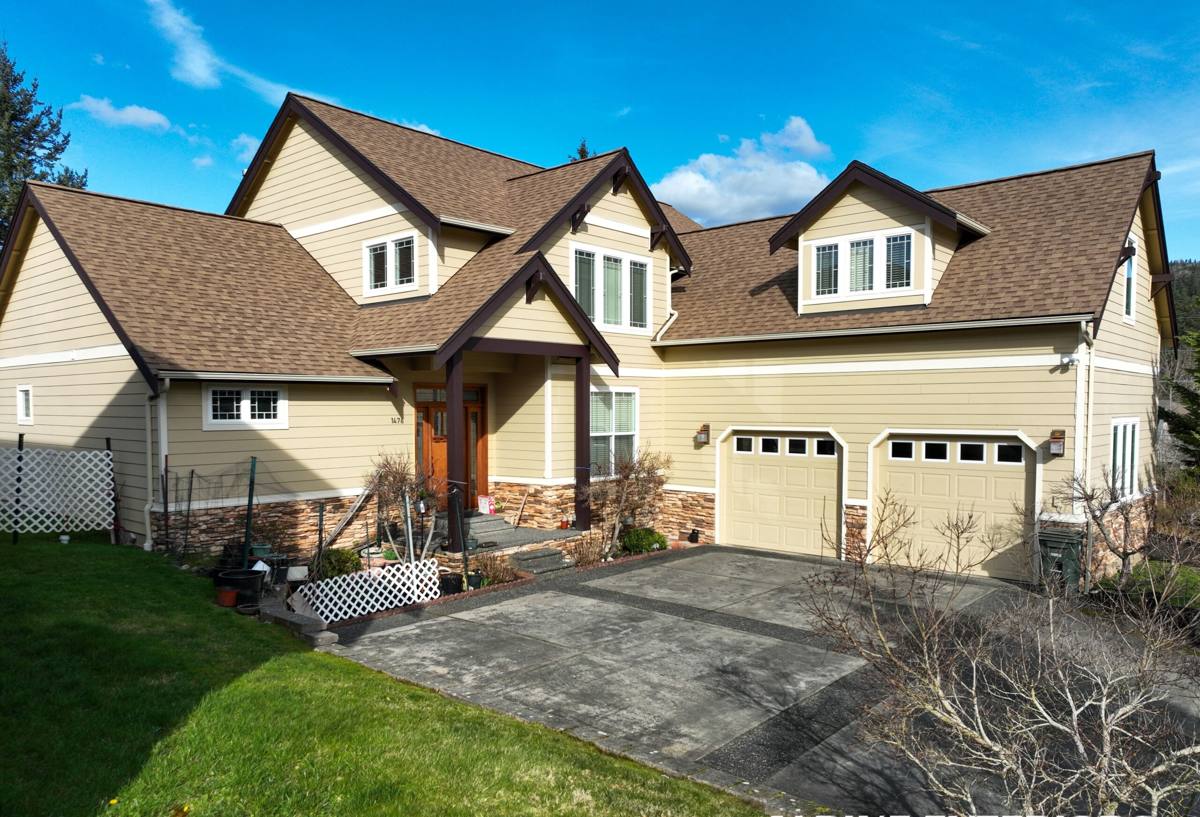
What Salt Air, Driving Rain, and Moss Season Do to Siding Over Time
Salt Air
Salt in the air settles on every exterior surface, not just near the water. On wood and engineered wood products, it accelerates the breakdown of surface coatings and speeds up rot once moisture finds a way in behind the material. On metal fasteners and trim, it drives corrosion faster than an equivalent inland home would ever see. Fiber cement doesn't rot and doesn't corrode the way wood-based products can, but even fiber cement needs a factory finish and installation details built to handle sustained salt exposure — not every product on the market is engineered with that in mind.
Driving Rain
Wind-driven rain doesn't just run down a wall, it gets pushed sideways and upward into laps, joints, and penetrations. A siding system with weak water management — thin caulk joints, no drainage plane, fasteners in the wrong spot — will eventually let that water behind the cladding. Once water gets behind siding on an island lot, it dries out slower, because the same conditions that let the rain in (wind, humidity, shade) also keep everything around it damp.
Moss Season
Whatcom County's wet stretch runs long, and shaded, north-facing walls on tree-covered lots can stay damp for much of the fall through spring. Moss and algae don't just look bad — they hold moisture directly against the siding surface for extended periods, which is hard on any product that isn't dimensionally stable or that relies on a surface coating to keep water out.
Why We Install Only James Hardie Fiber Cement — Not Vinyl, Not LP, Not Other Fiber Cement Brands
We made a deliberate call to install one product system: James Hardie fiber cement, in the HZ5 formulation engineered for the Pacific Northwest's wet climate zone. That's not a brand preference for its own sake — it's a response to what we've seen hold up on exposed, wet sites like Lummi Island and what hasn't.
- Vinyl siding is affordable and low-maintenance in mild conditions, but it can warp or become brittle with prolonged sun and temperature swings, its seams are a weak point for wind-driven rain, and it doesn't offer the same fire resistance as fiber cement.
- LP SmartSide and other engineered wood products use a wood-strand core. That core performs well when the coating and joints stay intact, but it's more sensitive to moisture intrusion than fiber cement — and once water gets past the surface on a wood-based product, the damage can spread from the inside out before it's visible.
- Other fiber cement brands (Allura, Cemplank, and similar) are legitimate fiber cement products, but we've standardized on Hardie's ColorPlus factory finish and HZ5 formulation specifically, along with Hardie's installation specs and warranty structure. Running one system means our crew installs it the same correct way every time, instead of switching techniques between brands.
Fiber cement itself is non-combustible, doesn't provide a food source for moss or mildew the way wood fiber can, and holds its factory-applied finish far longer than field-applied paint on wood siding. That's the baseline; the installation is what determines whether it actually delivers on that.
What a Correct Fiber Cement Installation Involves on an Exposed Lot
Fiber cement is only as good as the details behind it. On a site with this much wind-driven rain and salt exposure, a handful of installation choices make the difference between siding that lasts decades and siding that fails early despite being the right material.
Drainage Plane and Rainscreen Gap
A water-resistive barrier behind the siding, combined with a small drainage gap between that barrier and the back of the siding panel, lets any water that does get past the cladding drain and dry out instead of sitting against the wall assembly. On a high-moisture island lot, this detail matters more than it would on a drier, more sheltered site.
Flashing and Joint Treatment
Every window, door, and penetration needs flashing that sheds water outward, and every horizontal joint needs the correct lap and sealant treatment specified by the manufacturer. Skipping or rushing this is the single most common cause of moisture problems behind fiber cement siding — the material itself isn't usually the failure point, the flashing and joints are.
Fastening Pattern and Clearances
Hardie specifies fastener type, spacing, and placement, along with minimum clearances from grade, roof lines, and other surfaces. Correct clearance keeps splashback and standing moisture away from the bottom edge of the siding — an easy detail to shortcut and a costly one to get wrong.
Caulking and Paint Touch-Up
ColorPlus finished siding comes factory-painted, which is part of why it holds color longer than field-painted products. Cut edges and any touch-up areas need to be sealed and coated correctly during installation so the factory finish isn't compromised at the seams.
Material Comparison for Coastal and Island Exposure
| Factor | Vinyl | Engineered Wood (LP-type) | James Hardie Fiber Cement |
|---|---|---|---|
| Salt air resistance | Fair — can degrade with UV and temperature cycling | Fair — coating dependent | Strong — engineered for coastal HZ zones |
| Wind-driven rain / seams | Seams are a common water-entry point | Relies on intact caulking and coating | Fiber cement lap system with manufacturer-specified sealing |
| Moss/algae resistance | Surface growth possible, doesn't feed material | Wood-fiber core more susceptible if moisture intrudes | Cement-based, no wood fiber to feed decay |
| Fire resistance | Combustible | Combustible | Non-combustible |
| Finish longevity | Color can fade over time | Field or factory paint, repaint eventually needed | Factory ColorPlus finish, long warranty period |
Our Process for a Lummi Island Job
- Walk and assess. We look at exposure direction, existing moisture damage, trim and window condition, and what's driving the need for new siding.
- Written estimate. Scope, product line, color, and a clear cost breakdown — no vague allowances.
- Material staging. Because we already work the island regularly, we plan delivery and staging around ferry logistics as part of the schedule, not as a surprise delay mid-job.
- Tear-off and inspection. Removing old siding gives us a chance to check sheathing and framing for hidden moisture damage before anything new goes up.
- Water-resistive barrier and rainscreen install. This step happens before a single piece of siding goes on the wall.
- Hardie siding installation to manufacturer spec. Correct fastening, flashing, clearances, and joint treatment throughout.
- Final walkthrough. We go over the finished job with the homeowner before calling it done.
Why a Crew That Already Works Lummi Island Is Worth Choosing
Any licensed contractor can technically take on an island job, but a crew that doesn't normally work there is learning the logistics on your project's dollar. Ferry scheduling affects how materials, equipment, and crew arrive and leave each day — a contractor unfamiliar with that rhythm can lose real time to it, and that time often shows up as delay or rushed work near the end of a job. Weather windows matter too: driving rain off the water can shut down certain installation steps (especially anything involving open wall assemblies or wet-applied sealants) on days that would be fine on a more sheltered mainland site.
Because we're a Ferndale crew that already treats Lummi Island as part of our regular service area, we plan around those realities from the start instead of discovering them mid-project. That's a scheduling and cost advantage as much as a quality one.
What to Ask Before Hiring Anyone for Siding Work on the Island
- Do they have recent, verifiable experience working on Lummi Island or similarly exposed coastal sites — not just general siding experience?
- Do they install a drainage plane and rainscreen gap as standard, or only "if asked"?
- Can they explain their flashing and joint details in plain language, not just point to the brand of siding?
- Are they licensed and insured in Washington, and will they put material, labor, and cost breakdowns in writing?
- How do they plan around ferry access and weather delays in their schedule and quote?
Signs Your Current Siding Isn't Holding Up to This Climate
- Persistent moss or algae growth that returns quickly after cleaning
- Soft or spongy spots, especially near the bottom edge or around windows
- Visible gaps or separation at horizontal joints and trim
- Paint that's peeling, bubbling, or chalking heavily within a few years of a repaint
- Staining that tracks down from a window, door, or roofline after rain
If you're seeing any of that on a Lummi Island home, or you're planning ahead for a replacement before it gets to that point, we're happy to take a look. We offer free, no-pressure estimates — walk the exterior with you, point out what we see, and give you a straight answer on whether James Hardie fiber cement makes sense for your home.