 Ferndale Siding
 Building for Lummi Island's Marine Exposure
Lummi Island sits out in the water off Whatcom County, reached only by a short ferry crossing, and that separation from the mainland shapes how homes here have to be built and maintained. Salt-laden air moves across the island more consistently than it does a few miles inland toward Ferndale, rain tends to arrive on a slant instead of straight down, and enough tree cover and shoreline dampness keep moss active across most of the year. We install James Hardie fiber cement siding exclusively, and on an island with this level of sustained weather exposure, it's the material we're most confident standing behind.
This page covers one job in one place: putting James Hardie siding on a Lummi Island home correctly, and what that actually takes given the climate the island sees.
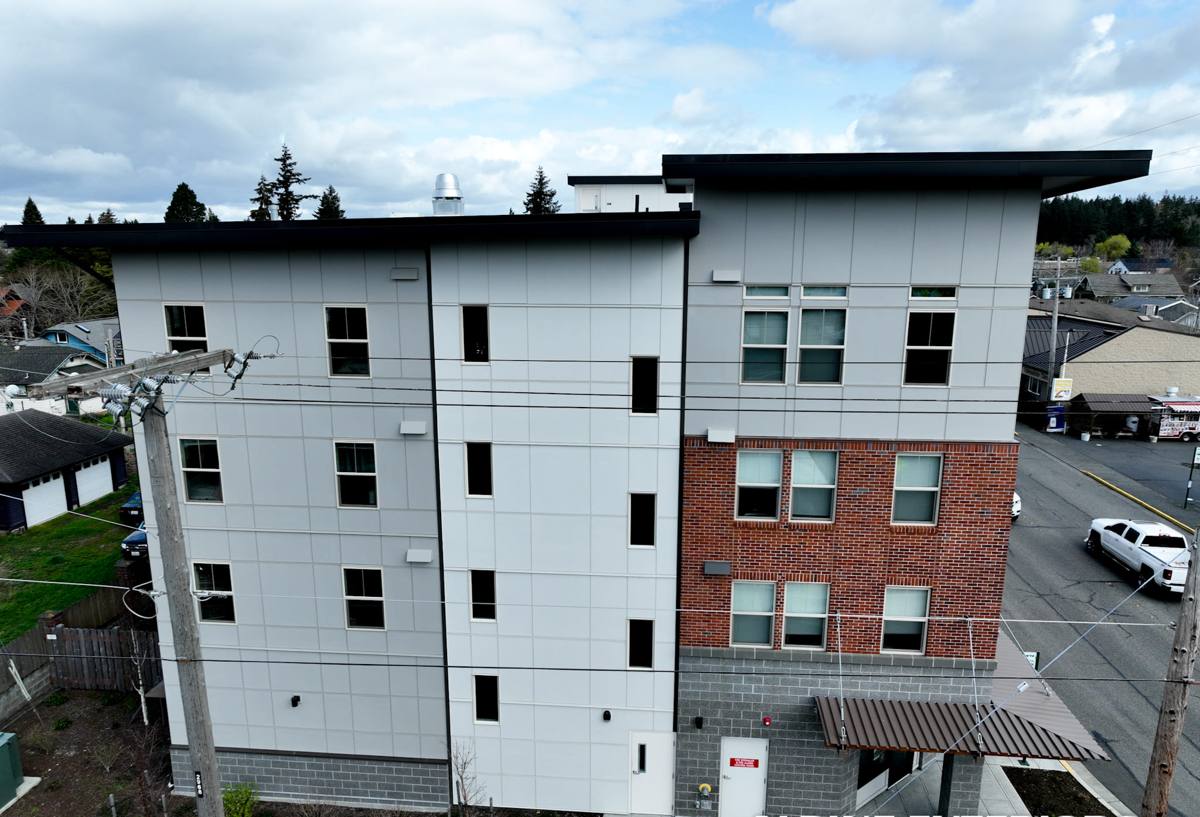
What Salt Air, Rain, and Moss Do to Island Siding
Salt Air and Corrosion
Being surrounded by water means a Lummi Island home picks up salt-laden moisture on a more constant basis than a comparable home set back from the shoreline. That exposure works on fasteners, flashing, and finishes over time — it speeds up corrosion in lower-grade hardware and breaks down site-applied paint faster than it would somewhere drier. Materials chosen without that in mind tend to show wear early: chalking paint, rust streaks below nail heads, and trim that needs attention years ahead of a normal replacement schedule.
Driving Rain
Open exposure to wind off the water turns ordinary rain into a sideways problem. Wind-driven rain gets pushed into lap joints, trim seams, and any gap where flashing isn't doing its job — a harder test on a siding system than total rainfall alone would suggest. A wall assembly that holds up fine on a sheltered inland lot can still let water in on the island if the flashing and joint details weren't built for that kind of exposure.
A Long Moss Season
Shaded lots, tree cover, and near-constant dampness add up to a moss and mildew season on Lummi Island that runs longer than it does in drier parts of Whatcom County. It typically shows up first on north-facing walls and any elevation that stays shaded through the day. Moss buildup isn't just cosmetic — sustained organic growth holds moisture directly against the wall, and that's the exact condition that leads to rot behind the siding if it goes unaddressed for a season or two.
Why James Hardie Is the Right Call for This Exposure
We install James Hardie exclusively, and we don't install LP SmartSide, vinyl siding, Cemplank, Allura, primed spruce, or cedar. Each of those has customers who are happy with it elsewhere, but for a home taking this much sustained salt and moisture, we made a professional decision that one system we trust fully is worth more than a cheaper option that quietly shifts maintenance risk onto the homeowner a few years down the line.
- Non-combustible fiber cement core: doesn't feed a fire the way wood-based siding products can — a real factor for insurance underwriting and basic household safety.
- Factory-applied ColorPlus finish: color is baked on under controlled conditions instead of brushed on in the field, so it resists salt exposure and UV fading far longer than site-applied paint.
- Climate-engineered HZ5 formulation: built for regions with heavy, sustained moisture exposure and freeze-thaw cycling — a close match for an island property with this much year-round dampness.
- Dimensional stability: fiber cement doesn't swell, cup, or warp after repeated wet-season moisture cycles the way engineered wood siding can.
- Strong transferable warranty: Hardie backs its products with a real warranty structure, provided installation follows spec — protection that still means something at resale, not just a line in a brochure.
Choosing the Right Hardie Product for a Lummi Island Home
Not every part of a house calls for the same Hardie product, and matching the right line to the right surface matters more here than on a sheltered inland lot, since every seam and transition is a potential point where wind-driven rain can test the installation.
| Hardie Product | Typical Use | Why It Fits Lummi Island |
|---|---|---|
| HardiePlank lap siding | Primary wall cladding | Widest range of profiles and colors; the workhorse product for a full re-side |
| HardiePanel vertical siding | Accent walls, gables, modern facades | Fewer horizontal joints for wind-driven rain to test on exposed elevations |
| HardieShingle | Accent sections, gable ends | A traditional look without the moisture sensitivity of real wood shingles |
| HardieTrim | Corner boards, window and door trim, fascia | Matches the siding's finish and durability instead of leaving a weaker material at the joints |
We walk the specific home and its orientation to wind and water before recommending a mix — a shaded, north-facing wall and a sun-exposed south wall on the same house can reasonably call for different attention.
What Correct Installation Actually Involves
Material choice only gets an island home halfway there. The rest comes down to installation detail, and on a property that sees more direct wind and rain than most, cutting corners on any of these steps tends to show up fast — sometimes within a single wet season instead of several.
Fastening, Flashing, and Clearances
Correct installation means fastening patterns rated for the wind exposure the site actually sees, proper clearance from grade and rooflines so water has somewhere to go, joints that are lapped and sealed rather than simply butted together, and a house wrap and flashing system that does the real work of keeping water out — not caulk covering for gaps that shouldn't be there in the first place.
Repair vs. Full Replacement
Not every siding problem on a Lummi Island home needs a full tear-off. Storm-damaged sections or an isolated area of trim failure can often be repaired and matched into existing Hardie siding. But when water has been tracking behind the wall for a while, or the home still has an older, non-Hardie product near the end of its life, patching it usually just delays a larger job while hidden rot keeps spreading underneath. We'll tell you honestly which situation you're in.
How We Handle a Lummi Island Project
Working on the island takes a bit more planning than a mainland job in Ferndale proper — materials, crew, and equipment all have to be staged and moved over on a schedule instead of just driven to the site. We plan deliveries and crew days around that logistics reality up front, so the job runs on the timeline we give you rather than stretching out because of avoidable scheduling gaps once work has already started.
On-site, the process is the same rigor we'd apply anywhere: a full walk-around to assess the existing siding and substrate, a clear explanation of what we find and what it means for repair versus replacement, a written estimate before any work begins, and a final walk-through when the job's done so you know exactly what was installed and why.
Maintenance That Actually Matters Here
A correctly installed Hardie system is low-maintenance, not no-maintenance. On an island with this much salt air and shade, a few habits go a long way toward protecting the investment:
- Rinse salt residue off siding a couple of times a year, especially on walls facing open water
- Treat moss on shaded or north-facing walls before it spreads rather than after it's established
- Keep gutters clear so overflow isn't running down the wall face during heavy rain
- Check caulking at trim joints and around windows annually and touch up as needed
- Trim back vegetation that's shading a wall and keeping it damp longer than it needs to be
- Have flashing and fastener condition checked every few years, particularly on the most wind-exposed elevation
Why a Crew That Already Works This Island Matters
A crew that works Lummi Island regularly understands how salt air, driving rain, and a long moss season actually behave on real homes here over a full year, not just how a product performs on a spec sheet. That experience shapes practical decisions on install day — which elevations stay wet longest, where extra flashing attention pays off, and which fastening details are worth the added time so you're not dealing with a callback after the next winter storm. It also means we already know how to plan around ferry logistics instead of learning that on your job.
If your Lummi Island home needs new siding, a repair, or just an honest look at what's happening behind an aging wall, we're glad to take a look. Reach out using the form below to schedule a free, no-pressure estimate.