 Ferndale Siding
 Coastal Conditions on the Lummi Peninsula
Homes on the Lummi Peninsula sit right where the marine environment of the Salish Sea meets Whatcom County's wet, tree-covered terrain. That combination is hard on exterior siding in ways that inland Ferndale homes don't experience to the same degree. Salt-laden air off the water accelerates corrosion of fasteners and metal trim, driving rain off the Strait pushes moisture into every seam and joint that isn't detailed correctly, and heavy tree cover throws long stretches of shade across roofs and walls that keeps surfaces damp for weeks at a time during the fall and winter moss season.
None of that is a reason to panic about your siding, but it is a reason to take material choice and installation quality seriously. A siding system that performs fine in a dry inland subdivision can fail years early here — not because the product is defective, but because it was never engineered for sustained coastal moisture exposure combined with salt air and shade-driven moss growth. That's the environment we plan for on every replacement job in this area.
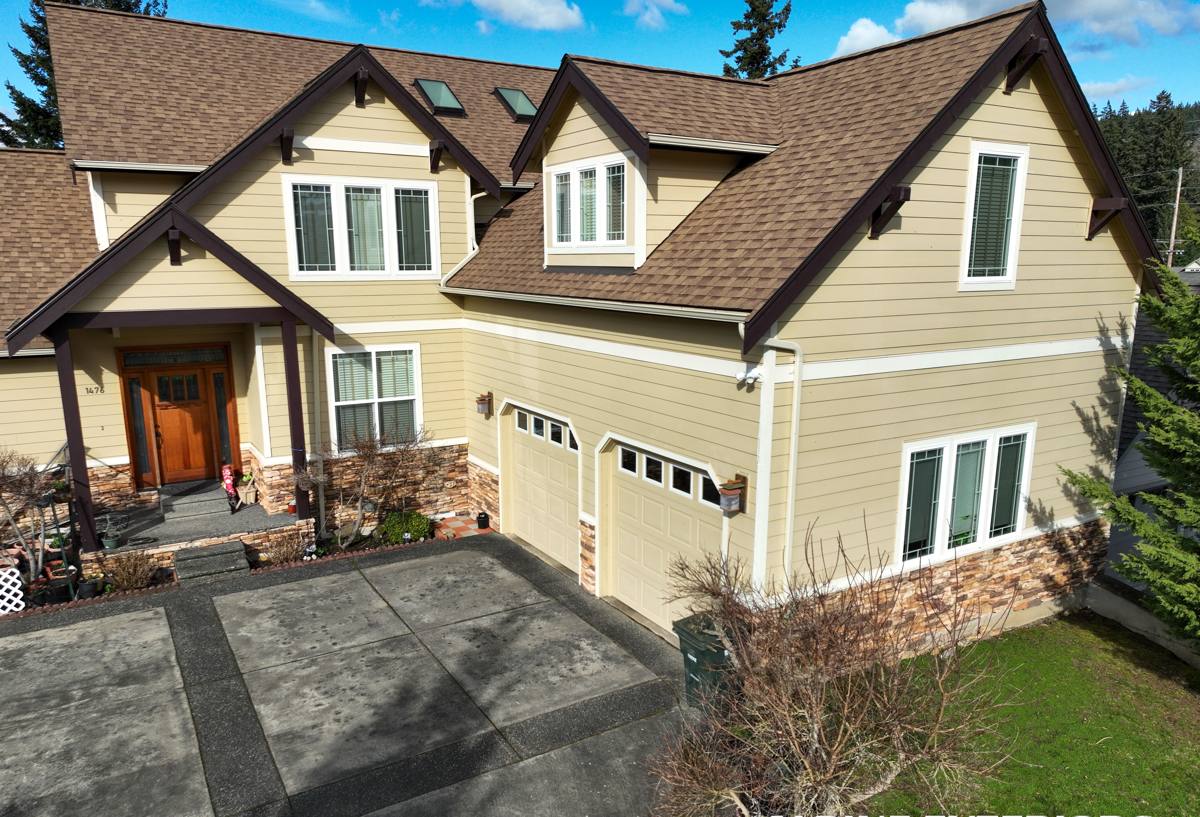
Signs Your Siding Has Reached the End of Its Life
Repainting or spot-caulking can buy time on minor issues, but certain signs mean the siding itself — not just its finish — has failed and a full replacement is the honest recommendation.
- Boards that feel soft, spongy, or crumble slightly when pressed, especially near the bottom courses and around windows
- Moss or algae staining that returns within a month or two of cleaning, rather than staying off for a season
- Paint that won't hold anymore even after proper prep — it peels, bubbles, or chalks off within a year or two
- Rust-colored streaking below nail heads or trim, a sign fasteners are corroding from salt air exposure
- Visible cupping, warping, or gaps opening up at butt joints and corners
- A noticeable jump in heating bills, which often points to moisture-compromised siding letting drafts and dampness into the wall assembly
If you're seeing two or more of these at once, it's worth having the wall assembly looked at before more moisture works its way behind the siding.
What a Correct Siding Replacement Actually Involves
Tear-Off and Inspection
The most important part of any replacement happens before a single new board goes up. Once old siding comes off, we inspect the sheathing and framing underneath for rot, soft spots, or trapped moisture — issues that are common on homes that have dealt with years of driving rain and shaded, slow-drying wall sections. Covering damaged sheathing with new siding just hides the problem and guarantees a shorter lifespan for the new material. Any compromised wood gets addressed before installation continues.
Water Management Details
Fiber cement siding performs well in this climate only when the water management behind it is done right. That means correctly lapped weather-resistive barrier, properly integrated flashing at windows, doors, and any roof-to-wall transitions, and — on homes with heavier moisture exposure — a drainage gap that lets any water that gets behind the cladding drain and dry out instead of sitting against the wall. This is where a lot of siding failures actually originate, and it's invisible once the job is finished, which is exactly why it has to be done correctly the first time.
Installation to Manufacturer Spec
James Hardie siding has a specific fastening pattern, minimum clearances from grade, roofing, and decks, and requirements for factory-cut edges to be primed or sealed before installation. Installing outside those specifications doesn't just risk premature wear — it can void the manufacturer's warranty. We install to spec every time, not as an upsell but because it's the difference between siding that lasts and siding that needs attention again in a few years.
Why We Install Only James Hardie Fiber Cement
We standardized on James Hardie fiber cement siding and don't install vinyl, LP SmartSide, or unfinished wood products, and in a coastal, moss-prone area like Lummi Nation, that decision comes down to how each material actually behaves over time, not marketing claims.
James Hardie is non-combustible fiber cement, which matters in a region with wildfire risk as well as the more everyday concern of exterior fire exposure. Hardie's HZ5 product line is engineered specifically for climates with significant moisture exposure, which fits the Whatcom County coastline better than a generic siding spec built for drier regions. The ColorPlus factory finish is baked on under controlled conditions and holds color and resists chipping far longer than a field-applied paint job, which matters a lot when your siding is dealing with salt air and months of damp shade rather than dry sun. And Hardie backs the product with a strong, transferable warranty — useful both for your own peace of mind and for resale value down the road.
To be fair to the alternatives: vinyl siding is inexpensive and low-maintenance in mild, dry climates, but it can warp and fade under sustained UV and temperature swings, and it doesn't hold up structurally the way fiber cement does under wind-driven rain. Wood and engineered wood products like LP SmartSide can look great initially, but they demand a repainting and caulking maintenance schedule that gets harder to keep up with in a climate where surfaces stay damp for extended stretches — miss a maintenance cycle here and moisture problems show up faster than they would somewhere drier. Those aren't reasons to call other products bad; they're reasons we made a professional call about what actually holds up on homes in this specific environment, and Hardie is what we're willing to put our name behind.
Comparing Siding Materials in a Marine, Moss-Prone Climate
| Factor | James Hardie Fiber Cement | Vinyl | Wood / Engineered Wood |
|---|---|---|---|
| Moisture & rot resistance | High — cement-based, doesn't absorb and swell like wood | Doesn't rot, but can trap moisture behind panels if installed poorly | Vulnerable without diligent maintenance |
| Salt air / corrosion resistance | Good; fastener and trim material selection still matter | Panel itself resists corrosion but can become brittle over time | Fasteners and finish degrade faster near the coast |
| Moss & algae resistance | Factory finish sheds growth better than field-painted surfaces | Growth can cling to seams and lap edges | Porous surface holds moisture, encourages growth |
| Maintenance needed | Occasional rinse; no repainting cycle with ColorPlus finish | Low, but limited repair options once damaged | Regular repainting and caulking, more often in wet climates |
| Typical warranty | Long-term, transferable manufacturer warranty | Varies widely by product tier | Shorter finish warranties, product-dependent |
Our Siding Replacement Process
- Estimate and wall assessment — we look at your home's exposure (waterfront-facing, shaded, wind-exposed) and walk through what we expect to find once the old siding comes off.
- Material and color selection — choosing from Hardie's product lines and ColorPlus palette to fit your home and the amount of sun or shade it gets.
- Tear-off and sheathing repair — removing old siding, addressing any rot or moisture damage found underneath before moving forward.
- Installation to manufacturer specification — correct fastening, flashing, clearances, and drainage detailing.
- Final walkthrough — going over the finished work with you and answering questions about care going forward.
Why Local Experience in Lummi Nation Matters
Siding work on the peninsula isn't identical from lot to lot. A shoreline-facing home dealing with direct wind and salt spray needs different attention to fastener choice and trim detailing than an inland, tree-shaded property where the bigger enemy is prolonged dampness and moss. A crew that already works this area has seen both conditions repeatedly and knows what to check for before problems show up. That local familiarity also means fewer surprises with scheduling around the wet season, realistic timelines, and a crew that treats the community and the property with the same respect they'd want on their own home.
Whatcom County's building requirements and typical wall assembly issues also aren't identical to what a crew coming from a different climate zone would expect. Consistency in doing the water management and fastening details right, job after job in this specific environment, is what actually protects a siding investment long-term — far more than the brand name on the product itself.
After Installation: Keeping Your Siding Looking Right
James Hardie siding is low-maintenance compared to wood, but "low-maintenance" doesn't mean "no maintenance," especially in a climate that pushes moss and algae growth as hard as this one does. A short annual routine keeps it performing the way it should for decades.
- Rinse the siding once or twice a year to clear salt residue and organic buildup, especially on shaded walls
- Keep tree branches and shrubs trimmed back from the siding to improve airflow and reduce moss-friendly shade
- Check caulking at trim, window, and door penetrations annually and have any cracked sections addressed early
- Address any impact damage (from debris, equipment, or storms) promptly rather than letting it sit exposed
- Keep gutters clear so water sheets off the roof correctly instead of running down and pooling against siding
If you're seeing signs of wear on your current siding, or you're planning ahead for a replacement before small problems become bigger ones, we're happy to take a look and talk through what your home actually needs. Reach out for a free, no-pressure estimate using the form below.