 Ferndale Siding
 Why Marietta's Location Puts Extra Stress on Siding
Marietta sits close to the water on the edge of Bellingham Bay, and that proximity shapes everything about how siding ages here. Homes in this part of Whatcom County deal with a combination that few inland neighborhoods see: salt-laden air drifting off the bay, wind-driven rain that hits walls at an angle instead of just falling straight down, and a wet season that stretches long enough to let moss and algae get a real foothold on north-facing and shaded walls. Any one of those factors alone is manageable. Together, they wear out the wrong siding material faster than most homeowners expect.
Salt air is corrosive to exposed metal fasteners and trim, and it accelerates the breakdown of coatings that aren't built for marine exposure. Driving rain finds every gap in flashing, trim, and butt joints, pushing moisture behind the siding where it can sit against sheathing for days at a time. And the region's long stretch of overcast, damp weather from fall through spring means shaded siding surfaces rarely get enough dry, sunny time to fully shed moisture before the next system rolls in. That's the exact environment where moss and mildew take hold, especially on siding that already holds water at the surface.
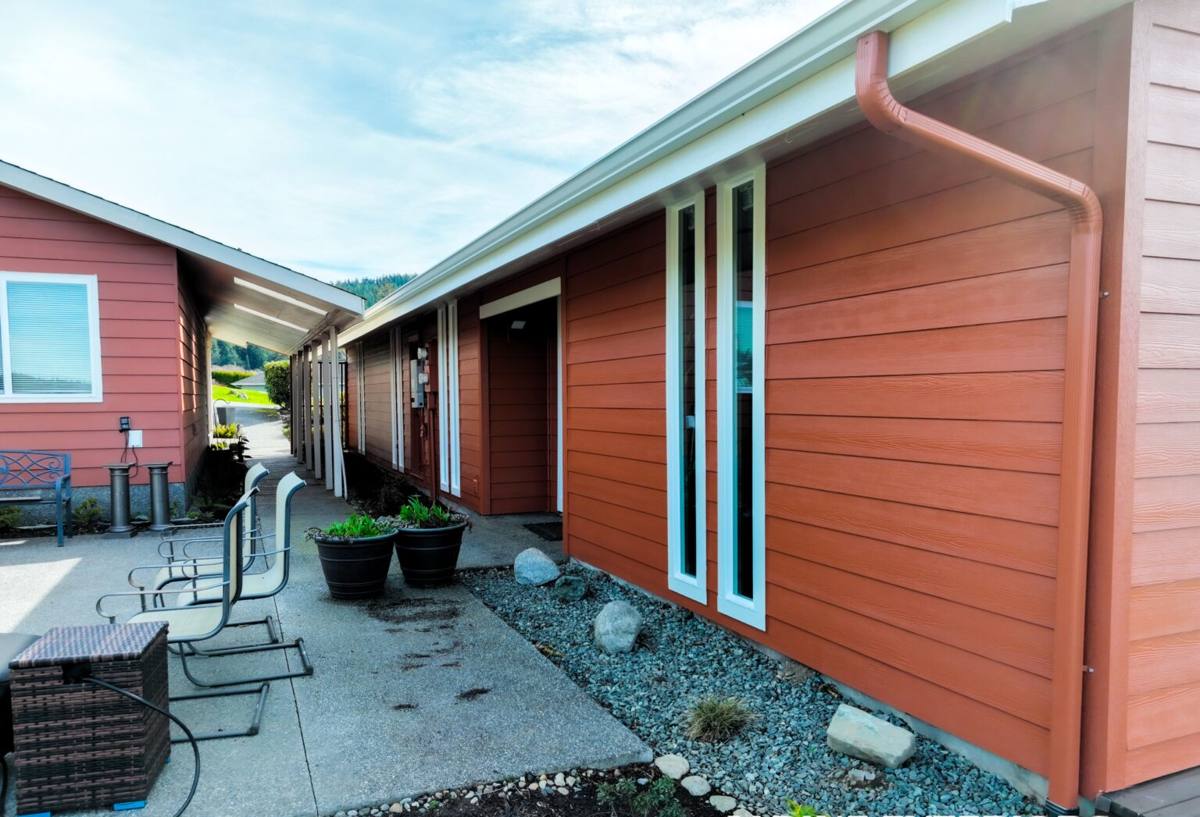
Why We Install Only James Hardie Fiber Cement Here
We standardized on James Hardie fiber cement for homes throughout Ferndale and Marietta because it's engineered for this kind of coastal-adjacent climate rather than just tolerating it. Fiber cement is non-combustible, dimensionally stable, and resistant to moisture absorption in a way that wood-based and foam-core products aren't. James Hardie's HZ5 product line in particular is engineered for climates with more moisture exposure, which matches Whatcom County's rainfall and marine air.
The factory-applied ColorPlus finish matters as much as the substrate itself. It's baked on under controlled conditions, which gives it far better adhesion and UV/moisture resistance than a field-applied paint job, and it holds color and sheds mildew growth better over time. On a wall that's shaded most of the year and regularly damp, that finish quality is the difference between siding that stays clean-looking for a decade and siding that starts showing green streaks and chalking within a few seasons.
What This Means Day-to-Day for a Marietta Homeowner
- Less repainting — the factory finish outlasts field-applied paint on wood or engineered wood siding
- Better resistance to moss and mildew staining on shaded north- and west-facing walls
- No swelling, delaminating, or rot at cut edges and butt joints from repeated wetting
- Stable performance in salt-influenced air without the corrosion issues that plague some metal trim systems
- A product line matched to Pacific Northwest moisture exposure rather than a generic national spec
What a Correct Installation Actually Involves
Fiber cement siding is only as good as the install behind it. Most of the failures we get called out to inspect on homes near the water trace back to installation shortcuts, not the material itself. A correct job in a climate like Marietta's includes several things that are easy to skip and hard to notice once the siding is up.
Weather-Resistive Barrier and Flashing
Everything starts with the water-resistive barrier underneath the siding and the flashing details around windows, doors, and any wall penetrations. Given how much driving rain this area gets, flashing has to be layered correctly — upper courses overlapping lower ones, head flashing above every window and door — so water is directed out and down instead of behind the siding.
Clearances and Fastening
James Hardie specifies minimum clearances from grade, roof lines, and decks for a reason: siding that sits too close to soil, roofing, or hardscape stays wet longer and is more likely to wick moisture. Fasteners need to be the corrosion-resistant type and driven correctly — not overdriven, not underdriven, spaced and placed per the manufacturer's fastening schedule. Get this wrong near salt air and you shorten the life of the fastening system even if the siding panel itself is fine.
Joints, Caulking, and Field Painting of Cut Edges
Butt joints and cut ends expose the raw substrate, so every field-cut edge needs to be primed or sealed per manufacturer instructions before the piece goes up. Skipping this step is one of the most common shortcuts we see, and it's exactly where moisture intrusion starts on an otherwise well-installed wall.
Our Process for a Marietta Fiber Cement Project
We approach every job here the same methodical way, because the climate leaves little room for guessing.
1. On-Site Assessment
We walk the exterior and look at drainage patterns, shading, current siding condition, and any trouble spots — areas with visible moss, staining, or past moisture damage tell us a lot about how a specific home is exposed.
2. Product and Color Selection
We help homeowners choose the right James Hardie plank profile, texture, and ColorPlus color, factoring in how much sun exposure and shade different elevations of the house get, since that affects how moss and mildew resistance will hold up over time.
3. Tear-Off and Prep
Old siding comes off, sheathing gets inspected and repaired as needed, and a compliant water-resistive barrier and flashing package goes on before a single piece of new siding is installed.
4. Installation to Manufacturer Spec
Panels are installed with correct clearances, fastening, and joint treatment, following James Hardie's published installation instructions rather than shortcuts that might save a few hours but cost years of performance.
5. Final Walkthrough
We go over the finished exterior with the homeowner, confirm trim and caulking details, and cover basic care so the siding performs the way it's supposed to for decades.
How Fiber Cement Compares to Other Siding Options
| Material | Moisture/Rot Resistance | Finish Durability | Fit for Marietta's Climate |
|---|---|---|---|
| James Hardie Fiber Cement | High — non-combustible, dimensionally stable | Factory-baked ColorPlus finish, long color/mildew resistance | Purpose-built for wet, marine-influenced climates |
| Vinyl Siding | Moderate — can warp and gap over time | Field/UV exposure can fade and chalk | Prone to cracking in wind and does not hold up as well to long-term coastal weathering |
| Primed Wood or Cedar | Low-moderate — absorbs moisture, requires ongoing sealing | Needs repainting/restaining regularly | High maintenance burden in a long wet season; rot risk at joints and cuts |
| LP SmartSide / Engineered Wood | Moderate — wood-based core is moisture sensitive at cut edges | Field-applied or factory coatings vary in longevity | Edge sealing and flashing details are critical; more installation-sensitive than fiber cement |
This isn't a knock on every other product across the board — vinyl and engineered wood siding both have legitimate use cases elsewhere. But given what we see happen to siding in this specific climate over a 10-20 year window, fiber cement is what we're willing to put our name behind.
Cost Factors for a Marietta Siding Project
| Factor | How It Affects Cost |
|---|---|
| Home size and wall complexity | More square footage, corners, and trim detail means more labor and material |
| Tear-off vs. new construction | Removing and disposing of old siding adds labor compared to new builds |
| Sheathing/substrate repair | Water damage found during tear-off may require repair before new siding goes on |
| Plank profile and texture | Different Hardie profiles and textures carry different material costs |
| Color | Factory ColorPlus finishes vs. primed-for-field-paint options affect price and long-term maintenance |
| Access and site conditions | Grade, landscaping, and proximity to structures can affect setup and labor time |
We give straightforward, itemized estimates so homeowners understand exactly what they're paying for and why — no vague lump-sum numbers.
Maintaining Fiber Cement Siding in a Marine Climate
Fiber cement is low-maintenance compared to wood or vinyl, but "low-maintenance" doesn't mean "no maintenance," especially with the moss season this area gets.
- Rinse siding with a garden hose once or twice a year to remove salt residue, dust, and organic buildup, especially on shaded walls
- Avoid pressure washing directly into joints and trim — it can force water behind the siding
- Trim back vegetation and tree limbs that keep walls shaded and damp longer than necessary
- Check caulking at trim and joints periodically and re-caulk if it's cracking or pulling away
- Address any moss or algae growth early with a gentle cleaning rather than letting it establish
- Keep gutters and downspouts clear so roof runoff isn't dumping extra water onto siding below
Why It Matters to Hire a Crew That Already Works This Area
Fiber cement installation isn't complicated in theory, but getting it right in a climate like Marietta's means understanding how salt air, driving rain, and prolonged dampness actually behave against a wall — not just following a generic installation checklist. A crew that regularly works Ferndale and the surrounding Whatcom County shoreline knows which elevations of a house typically take the worst weather, where moss tends to establish first, and how to detail flashing so it holds up to wind-driven rain rather than just vertical rainfall. That local pattern recognition is hard to replicate if a crew is installing siding in a dry climate one month and a coastal one the next.
If you're weighing a siding replacement in Marietta or elsewhere around Ferndale, we're happy to walk your property, look at what your current siding is telling us, and put together a straightforward, no-pressure estimate for a James Hardie fiber cement install built for this exact climate. Use the form below to get started.