 Ferndale Siding
 Deck Repair Built for Nooksack's Climate
Nooksack sits in a part of Whatcom County where decks work hard for a living. Between the long stretch of wet months, the marine-influenced air that moves in off Bellingham Bay and the Salish Sea, and the shade many properties get from surrounding trees, outdoor structures here take on moisture almost year-round. Add driving rain that gets pushed sideways under railings and ledger boards, and a moss season that can run from October through May, and it's no surprise that decks in this area age differently than they would somewhere dry and sunny.
That's not a reason to avoid having a deck — it's a reason to make sure the one you have is built and maintained to handle what this climate actually does to wood, fasteners, and framing. Deck repair in Nooksack isn't just about patching a soft board. It's about understanding where water collects, why it collects there, and what needs to happen so the fix lasts more than a season or two.
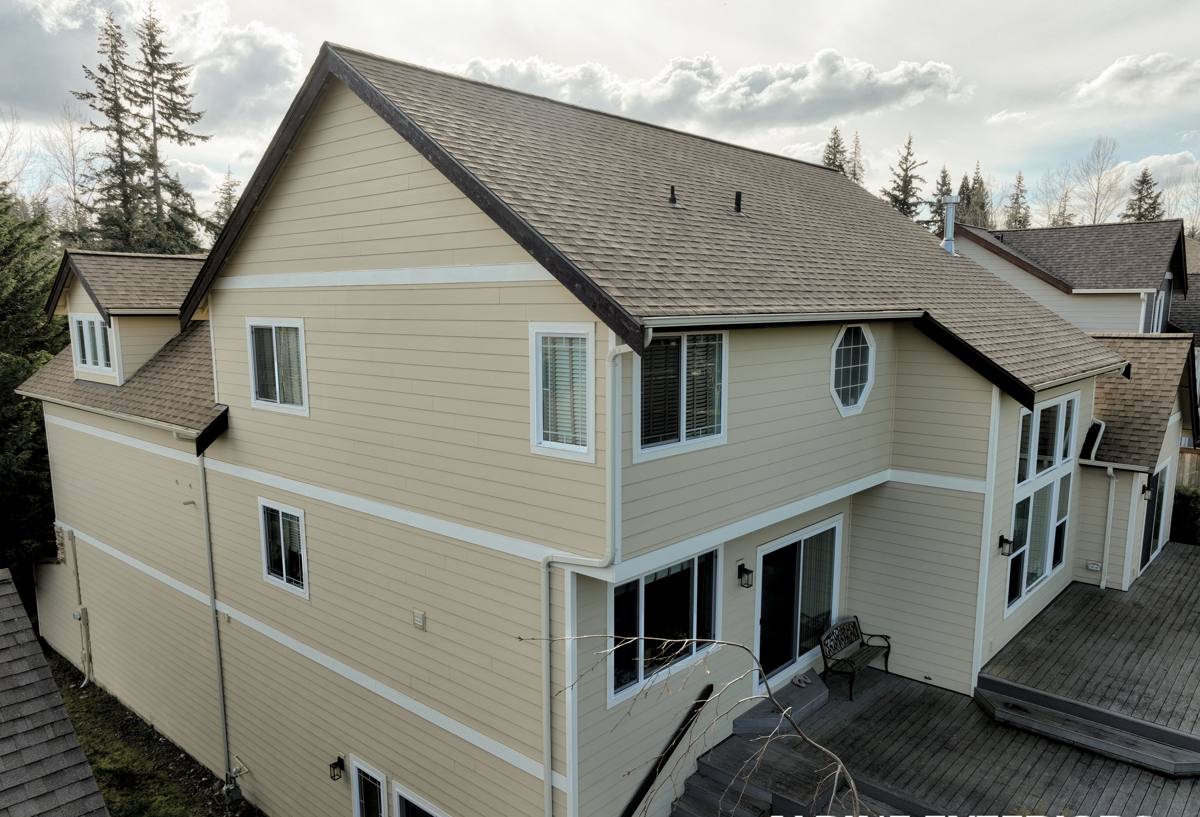
Signs Your Deck Needs Repair, Not Just a Cleaning
A lot of deck problems start small and get dismissed as cosmetic. In this climate, small problems don't stay small for long. Here's what we look for, and what you should watch for between inspections:
- Boards that feel spongy, springy, or noticeably softer underfoot than the boards around them
- Gaps opening up between the deck and the house at the ledger board
- Railings or posts that wiggle more than they should when pushed
- Dark staining, black streaking, or a persistent damp smell near the house connection
- Rust bleeding out around fasteners or metal connectors
- Green or black film that keeps coming back within weeks of cleaning
- Stairs that feel uneven, or a noticeable sag anywhere in the deck surface
- Visible daylight or gaps where flashing should be sealing a joint
Any one of these on its own might be minor. Two or three together usually means water has been finding its way into the structure for a while, not just sitting on the surface.
The Problems We See Most Often on Nooksack Decks
Ledger Board Rot
The ledger board — the piece that bolts the deck to the house — is the single most common failure point we find. It's also the most dangerous one to ignore, because it's structural. When flashing behind the ledger is missing, undersized, or was installed before code caught up to how much water this region actually sees, moisture gets trapped between the deck and the house siding. That's a slow, hidden rot that often isn't visible until you pull a board or press a screwdriver into the wood.
Post Bases and Footings
Wood posts that sit directly on or too close to concrete, without a proper standoff base, wick moisture up from the ground. Over years of wet winters, that turns into soft, crumbly wood at the base — the kind of damage that isn't obvious until the post is under load and starts to give.
Moss, Algae, and Surface Breakdown
Moss doesn't just look bad. It holds moisture directly against the decking surface, blocks airflow, and accelerates wood breakdown underneath it. On shaded lots or decks with limited sun exposure, moss can re-establish within weeks of a cleaning if the underlying moisture problem — poor drainage, tight board spacing, debris buildup between boards — isn't addressed at the same time.
Fastener and Hardware Corrosion
Regional humidity and rain accelerate corrosion on any fastener or connector that isn't rated for the wood and the exposure. The wrong fastener against treated lumber can corrode from the inside out, sometimes years before it shows visible rust on the surface — and a corroded structural connector is a bigger problem than a cracked board.
Repair or Replace? How We Make That Call
Not every damaged deck needs to come out. But not every deck is worth patching, either. We look at where the damage is, how much of the structure it affects, and what it would take to fix it properly versus starting fresh.
| Situation | Usually Repairable | Usually Needs Replacement |
|---|---|---|
| Isolated soft or cracked boards | Yes — spot replacement | No, unless widespread |
| Ledger board rot, framing intact | Yes — ledger and flashing rebuild | Only if joists are also compromised |
| Rot in multiple joists or beams | Sometimes — case by case | Often, if damage is extensive |
| Failing post bases, sound posts | Yes — base replacement | Rarely necessary |
| Surface moss/algae, sound structure | Yes — clean, treat, improve drainage | No |
| Structure over 20-25 years old with recurring issues | Case by case | Often more cost-effective long term |
We'll always tell you honestly when a repair is the right call and when you'd be spending money to delay a bigger job. There's no benefit to us talking you into more than the deck actually needs.
How Our Repair Process Works
Every deck repair starts with getting underneath the surface — sometimes literally. A repair estimate based only on what's visible from the top will miss the problems that actually matter.
1. Structural Inspection
We check the ledger connection and flashing, probe posts and joists for soft spots, look at footing condition, and check railing and stair connections for movement. We're looking for the source of the moisture, not just the symptom.
2. Honest Assessment
You get a clear explanation of what's damaged, what's driving the damage, and what your realistic options are — repair, partial rebuild, or full replacement — along with the trade-offs of each.
3. The Repair Itself
Depending on scope, this can mean replacing individual boards, rebuilding the ledger connection with proper flashing, swapping out corroded hardware for fasteners rated for the wood and exposure, replacing post bases, or correcting drainage and grading issues that are feeding the problem.
4. Moisture Management Going Forward
A repair that doesn't address why the damage happened in the first place is a repair you'll be paying for again. Where it makes sense, we improve board spacing, drainage paths, and flashing details so the fix actually outlasts the next few wet seasons.
Material Considerations When Repairing a Deck Here
What you repair with matters as much as how it's installed. In a climate with this much sustained moisture exposure, some materials simply hold up with less maintenance than others.
| Material | How It Handles This Climate | Maintenance Reality |
|---|---|---|
| Pressure-treated lumber | Resists rot well when properly fastened and sealed; vulnerable at cut ends and fastener points | Needs re-sealing every 1-2 years; requires corrosion-rated fasteners |
| Cedar | Naturally rot- and insect-resistant; ages gracefully but is softer | Needs regular sealing/staining to maintain resistance |
| Composite decking | Doesn't rot or absorb moisture like wood; still needs airflow underneath | Low maintenance, but repairs can mean full board replacement rather than sanding/patching |
| Structural hardware | Corrosion risk is high in this humidity; must match fastener to lumber treatment chemical | Stainless or properly rated hot-dip galvanized hardware, not standard-grade |
When we repair a section of an older deck, we'll talk through whether it makes sense to match the existing material or use the repair as an opportunity to upgrade a problem area to something more resistant to what this climate throws at it.
Permits and Code in Whatcom County
Depending on the scope of the work — particularly anything involving structural framing, footings, or a ledger rebuild — deck repairs can fall under Whatcom County permitting requirements. Straightforward board or railing repairs typically don't trigger a permit, but structural work often does. We'll let you know upfront if your project needs one and handle that conversation as part of the process, rather than leaving you to figure it out.
Why Hire a Crew That Already Works in Nooksack
A deck repair contractor who only occasionally works this area is guessing at how much moisture exposure your deck actually sees. A crew that regularly works Nooksack and the rest of Whatcom County already knows which details fail first in this climate — where flashing tends to get skipped, which fastener combinations cause problems five years down the road, and how much drainage a deck actually needs versus what a generic install guide assumes for a drier region.
That local pattern recognition is what separates a repair that holds up through several more wet winters from one that reopens the same problem in a couple of years.
Keeping a Repaired Deck in Good Shape
Once a deck is repaired, a little regular attention goes a long way in this climate:
- Clear leaves and debris from between boards before they trap moisture
- Rinse or gently brush off moss buildup before it re-establishes and spreads
- Re-seal or re-stain wood decking on the schedule the product actually calls for, not just when it looks faded
- Check the ledger board and flashing area once a year for any new gaps or staining
- Keep gutters and downspouts near the deck clear so water isn't being funneled onto it
If you're seeing soft boards, movement in the railing, staining near the house, or moss that keeps coming back no matter how often you clean it, it's worth having someone take a real look underneath before it turns into a bigger job. We offer free, no-pressure estimates for deck repair in Nooksack — use the form below to get one scheduled.