 Ferndale Siding
 Metal Roofing in Nooksack: Built for the Climate That's Actually Here
Nooksack sits in the part of Whatcom County where weather off the Salish Sea and the lowland river valley combine into a specific kind of wear on a roof: salt-tinged air, long stretches of driving rain, and a moss season that can run most of the year in shaded spots. A roof here doesn't fail because of one dramatic storm. It fails slowly, from moisture that never fully dries out, fasteners that corrode a little more every winter, and organic growth that holds water against the surface long after the rain stops. Metal roofing, installed correctly for this climate, handles all three of those problems better than most other roofing materials — but "installed correctly for this climate" is the part that actually matters.
This page covers what a metal roof needs to do in Nooksack specifically, what a proper installation actually involves, and how we approach the job from first estimate to final walk-through.
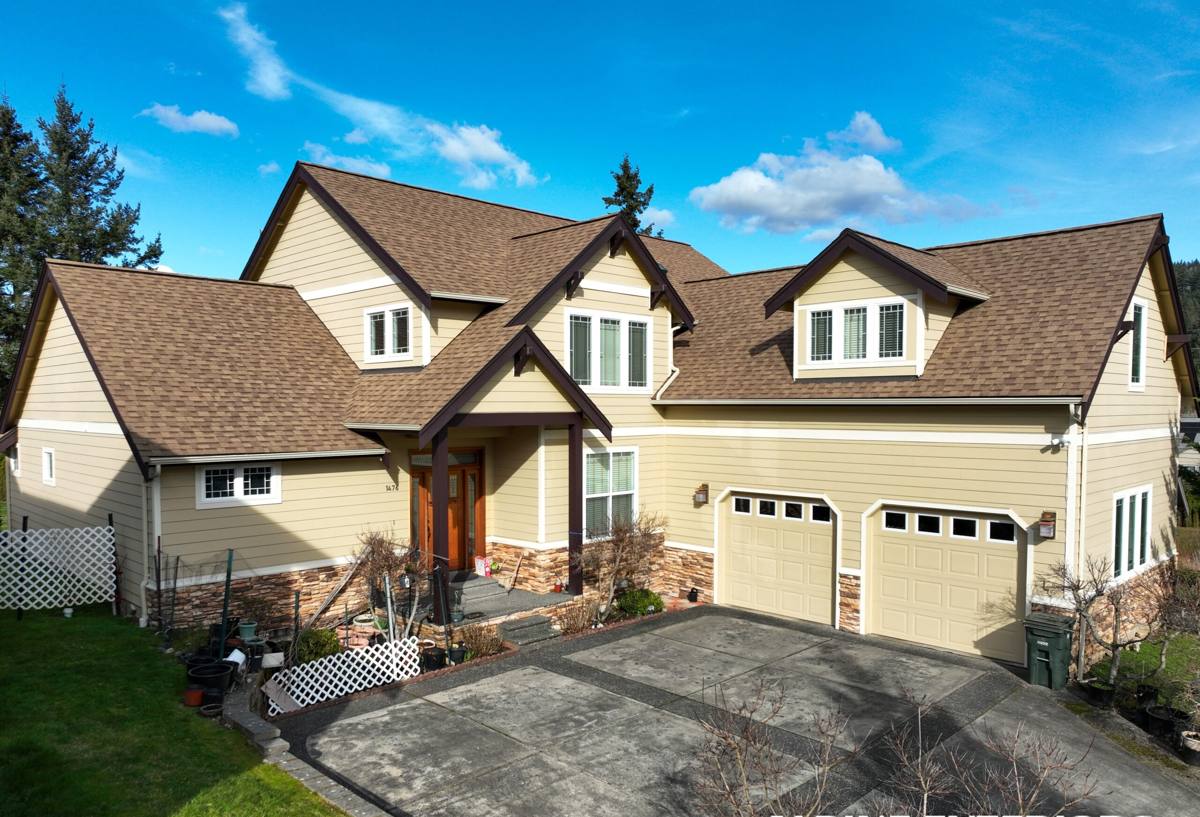
What Nooksack Roofs Are Actually Up Against
Three regional factors drive almost every roofing problem we see in this part of Whatcom County:
Salt Air
Proximity to Puget Sound and the Strait of Georgia means airborne salt reaches inland further than most homeowners assume, especially on exposed or elevated sites. Salt accelerates corrosion on any exposed metal — fasteners, flashing, gutters — long before the roofing material itself would otherwise wear out. This is why fastener and coating selection matters more here than it would in a dry inland climate.
Driving Rain
Rain in this region rarely falls straight down. Wind-driven rain pushes water sideways and upward under laps, around penetrations, and into any gap a roofer left "close enough." A roof that would perform fine in a calmer climate can leak here simply because the underlayment, flashing, or fastening pattern wasn't built for wind-driven water.
Moss and Algae
Shaded roof sections, north-facing slopes, and anything near mature trees stay damp for extended stretches, especially through fall and winter. Moss doesn't just look bad — it lifts shingle edges, holds moisture against roofing material, and works its way into fastener penetrations. Metal roofing resists moss far better than asphalt or wood, but it isn't immune, and the details of the installation affect how well it sheds growth over the years.
Metal Roofing Systems We Install
Not every metal roof is the same product wearing a different color. The system you choose affects how well it performs against salt, rain, and moss over the long run.
| System | How It's Fastened | Best Fit |
|---|---|---|
| Standing seam | Concealed clips, no exposed fasteners on the field | Coastal and salt-exposed sites, long-term low-maintenance goals |
| Exposed-fastener panel | Screws driven through the panel face | Budget-sensitive projects, outbuildings, shops |
| Stone-coated steel | Interlocking panels, often nailed like traditional roofing | Homeowners wanting a shake or tile look with metal's durability |
We steer most full-time residences in this climate toward standing seam or a high-quality stone-coated system. Exposed-fastener panels cost less up front, but every screw penetration is a future maintenance point — the washers under those screws age faster in salt air, and a missed or loosened fastener is exactly the kind of gap wind-driven rain will find. That's not a claim against the product itself; it's an honest trade-off between upfront cost and long-term maintenance, and we'll walk you through it plainly rather than upsell you past what your project actually needs.
Panel Material and Coating
Steel and aluminum are the two materials we work with most. Aluminum doesn't rust, which makes it a strong choice for sites with heavier salt exposure. Steel is generally more affordable and very durable when it carries a proper factory paint or coating system — but that coating and its warranty terms are worth reading closely, since coating failure (not the steel itself) is the most common long-term issue on lower-grade panels.
What a Correct Installation Actually Involves
A metal roof is only as good as what's underneath it and how it's fastened down. This is where a rushed or inexperienced install shows up later as a leak, not on day one.
Underlayment
In a climate with this much sustained rain, we use a synthetic or self-adhered underlayment rated for extended UV and moisture exposure, not a bargain felt product. Around eaves, valleys, and any low-slope transition — the spots wind-driven rain targets first — we use self-adhered ice-and-water-style membrane regardless of season, because the risk here is wind and volume, not just freeze-thaw.
Fastening and Clips
Standing seam panels need clips rated for the wind exposure of the actual site, spaced correctly, with fasteners matched to the panel metal to avoid galvanic corrosion. Mixing incompatible metals — say, the wrong fastener alloy against an aluminum panel — sets up a corrosion reaction that has nothing to do with the roof's overall quality and everything to do with a detail that was skipped.
Flashing and Penetrations
Every chimney, vent pipe, and wall intersection is a place water can get behind the roofing plane. Proper step flashing, counter-flashing, and sealed penetration boots — installed in the right order, not just caulked over — are what actually keep wind-driven rain out, far more than the panel material itself.
Ventilation
A well-ventilated attic keeps the underside of the roof deck dry and reduces condensation that can rot sheathing from beneath. Metal roofs make this easier with ridge vent options designed specifically for standing seam profiles, and we size intake and exhaust to the actual attic, not a generic rule of thumb.
Our Process, Start to Finish
- Roof and site assessment — we look at slope, exposure, existing deck condition, and how much shade and moss pressure the roof actually deals with.
- System recommendation — we walk you through the honest trade-offs between panel types and coatings for your specific site, not a one-size answer.
- Written estimate — clear scope, materials, and pricing before any work begins.
- Tear-off or deck inspection — we check the deck for rot or soft spots before anything new goes down; hidden damage gets flagged and priced before, not after.
- Underlayment and flashing — installed to handle wind-driven rain, not just a straight-down downpour.
- Panel installation — fastened and seamed to the manufacturer's spec for the wind and exposure conditions at your address.
- Final walk-through — we review the completed roof with you and explain any maintenance points specific to your site.
Maintenance in a Marine Climate
Metal roofing needs less maintenance than most materials, but "less" isn't "none." A few habits go a long way in this climate:
- Keep gutters and valleys clear of needles and debris so water sheds rather than pools against seams.
- Trim back overhanging branches to reduce shaded, damp areas where moss and algae take hold.
- Have flashing and penetration boots checked periodically — sealants age faster under constant rain exposure than the panels do.
- Rinse off heavy moss or algae buildup with a soft wash rather than a pressure washer, which can damage coatings and force water under laps.
- Watch for any chalking, scratches, or bare spots in the coating, especially near the coastline side of the home, and have them addressed before bare steel is exposed to salt air.
Cost Factors on a Nooksack Metal Roof
Pricing depends on more than square footage. These are the factors that actually move the number:
| Factor | Why It Matters |
|---|---|
| Panel system chosen | Standing seam runs higher than exposed-fastener panel, but requires far less long-term upkeep |
| Roof complexity | Valleys, dormers, and multiple penetrations add flashing labor and material |
| Deck condition | Rotted or soft sheathing found during tear-off adds repair cost before installation can continue |
| Access and pitch | Steep or hard-to-access roofs take longer and require more safety setup |
| Coating and warranty tier | Higher-grade coatings cost more upfront but resist salt-air fading and chalking longer |
We don't quote a per-square-foot number without seeing the actual roof — anyone who does is guessing, and that guess tends to grow once the work starts.
Signs Your Current Roof Is Telling You Something
- Moss buildup that returns within a season of cleaning
- Streaking or dark staining on shaded slopes
- Lifted or curling shingle edges near valleys or eaves
- Rusty streaks near fasteners, flashing, or gutter lines
- Soft spots or sagging visible from inside the attic
- Granule buildup in gutters, a sign asphalt shingles are wearing thin
Any one of these is worth a look before it turns into an interior leak, especially heading into the wetter months.
Why a Crew That Already Works in Nooksack Matters
Roofing technique that works in a dry inland climate doesn't automatically work here. A crew that regularly works Whatcom County's lowland and coastal-influenced areas already knows how far wind-driven rain travels under a poorly lapped panel, how fast moss reclaims a north-facing slope, and which fastener and coating combinations hold up against salt air instead of failing early. That local pattern recognition is the difference between a roof that's technically installed and one that's installed for where it actually sits.
We also know the practical side of working in this area — permitting expectations, typical deck conditions on homes of the area's common building age, and how local weather windows affect scheduling a tear-off safely.
Get a Straight Answer on Your Roof
If you're weighing a metal roof for a home in Nooksack, we're glad to take a look and give you a straightforward, no-pressure assessment of what your roof actually needs. Use the form below to request a free estimate, and we'll walk the roof, answer your questions honestly, and give you a clear picture of the options before you decide on anything.