 Ferndale Siding
 Roof Repair Built for How Sudden Valley Actually Weathers
Sudden Valley sits in a part of Whatcom County where the roof over your head does more work than it would almost anywhere else in the country. The combination of salt-tinged air moving in off the water, driving rain that comes sideways more often than straight down, and heavy tree cover that keeps roof surfaces shaded and damp for weeks at a time adds up to conditions that punish a roof faster than a textbook maintenance schedule would predict. A roof that would go fifteen years without a second thought in a dry, sunny climate can develop real problems here in half that time if it isn't built and maintained with this specific environment in mind.
This page is about one thing: repairing roofs on homes in Sudden Valley, done by a crew that treats the climate as a design factor, not an afterthought. We're not going to give you a generic rundown of roof repair — we want to walk through what actually goes wrong on roofs in this neighborhood, what a correct repair looks like, and how we approach the job.
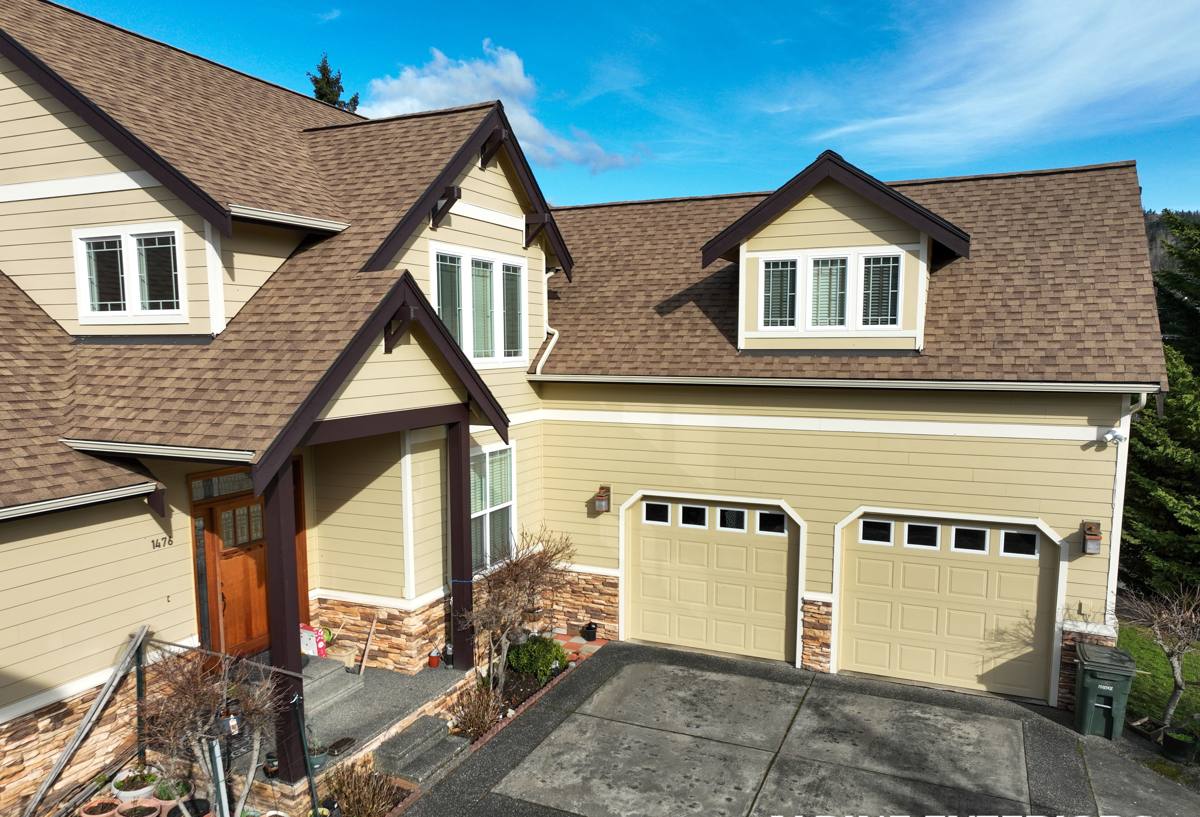
Why Sudden Valley Roofs Take a Different Kind of Beating
A few things stack together here that don't always get talked about separately, but on a roof they compound each other.
Moss and shade
Many lots in Sudden Valley are wooded and sloped, which means a lot of roof surfaces sit in partial shade for a large part of the day, especially through fall, winter, and spring. Shaded roof sections stay damp longer after every rain, and damp shingles are exactly what moss and algae need to establish. Once moss gets a foothold under shingle tabs, it holds moisture against the roofing material around the clock, which accelerates granule loss and, eventually, lets water find its way underneath.
Driving rain and wind-driven moisture
Whatcom County doesn't just get a lot of rain — it gets a lot of rain pushed by wind, which changes how water behaves on a roof. Instead of running straight down and off, wind-driven rain gets forced up under shingle edges, around flashing, and into any gap that a calmer rain would never find. Repairs and flashing details that would hold up fine in a mild climate can fail here simply because the water is coming from a different angle than the original installer planned for.
Salt air and metal fatigue
Even set back from open water, homes throughout this part of Whatcom County pick up salt-laden air carried inland off the Salish Sea. That air is hard on exposed metal — flashing, fasteners, vents, and gutter hardware corrode faster than they would inland in a drier climate. A fastener or flashing detail that's just starting to corrode is often the first quiet failure point in an otherwise sound roof.
The Roof Problems We See Most Often in Sudden Valley
Most of the repair calls we get in this neighborhood fall into a handful of categories:
- Moss and algae staining that has started lifting shingle tabs or holding moisture against the roof deck
- Clogged valleys and gutters from needle drop and leaf litter, which backs water up under shingles instead of letting it drain
- Flashing failures around chimneys, skylights, and roof-to-wall transitions, usually from corrosion or sealant that's dried out and cracked
- Wind-lifted or missing shingles along ridges and eaves after a storm
- Soft or stained decking discovered once a small leak has been going on longer than anyone realized, often in a shaded, hard-to-see section of roof
None of these are unusual roofing problems on their own. What's different in Sudden Valley is how quickly they show up and how often they're clustered together on a single roof, because the shade, moisture, and wind exposure are all working on the same surfaces at once.
What a Correct Repair Actually Involves
A roof repair that's done right in this climate isn't just "replace the damaged shingles and caulk the gap." It's a short diagnostic process followed by work that accounts for why the damage happened in the first place.
Start with the cause, not just the symptom
If we're replacing shingles around a leak, we want to know why water got in — was it moss holding moisture against the surface, a cracked pipe boot, corroded flashing, or ice and debris backing water up in a valley? Patching the visible damage without addressing the cause just buys time before the same spot fails again.
Match materials properly
New shingles, flashing, or underlayment need to integrate with what's already on the roof — both in appearance and in how the layers shed water. A patch that isn't woven into the existing shingle courses correctly can actually create a new place for wind-driven rain to get underneath.
Address moss, don't just remove it
Scraping moss off without treating the surface or improving airflow and shade conditions where possible means it comes back. On a heavily shaded roof section, we're honest about the fact that moss will likely return over time no matter what — the goal is slowing that cycle down and repairing any granule or surface damage it's already caused.
Reseal and re-flash properly
Any repair near a chimney, skylight, vent, or valley gets fresh, properly lapped flashing and compatible sealant — not just a bead of caulk over the old material. Caulk is a short-term fix; correct flashing lap and layering is what actually keeps water out long-term.
Repair or Replace? How We Help You Decide
Not every roof problem in Sudden Valley needs a full replacement, and we're not going to tell you it does. The honest answer usually comes down to a few factors we walk through together during the inspection.
| Factor | Leans toward repair | Leans toward replacement |
|---|---|---|
| Roof age | Under roughly 12-15 years, in otherwise good condition | Nearing or past the material's expected lifespan |
| Extent of moss/algae damage | Localized to one or two shaded sections | Widespread across most of the roof surface |
| Decking condition | Solid, dry, no soft spots found | Soft, stained, or damaged decking found during inspection |
| Number of past repairs | First or second repair on this roof | Long history of repeated patch jobs in different spots |
| Flashing condition | Isolated corrosion or wear at one detail | Corrosion or failure at multiple flashing points |
We'll tell you plainly which side of that table your roof falls on, and why, before we ever talk about cost.
Our Process for a Sudden Valley Roof Repair
- Full roof inspection — including shaded and hard-to-see sections, not just the area you called about
- Straight assessment — what's actually wrong, what caused it, and whether repair or replacement makes sense
- Written estimate — clear scope of work and pricing before anything starts
- Repair work — matched materials, properly lapped flashing, and moss/debris removal from the affected area
- Cleanup and walk-through — we show you what was done and what to watch going forward
Materials We Use — and the Trade-Offs We're Honest About
For most Sudden Valley repairs, we're matching into existing composition shingle roofing, since that's what the large majority of homes in the neighborhood are built with. When a full section or full roof replacement is on the table, we'll talk through options honestly, including their real maintenance implications for this specific climate:
- Standard composition shingles — cost-effective and widely used, but need periodic moss treatment and inspection in shaded areas
- Algae-resistant shingle lines — built with copper or zinc granules that slow algae and moss growth; a reasonable upgrade for heavily shaded roof sections, though no shingle is fully moss-proof under constant shade
- Metal roofing — sheds moss more easily due to its smooth surface and drainage, but it's a bigger investment and installation quality matters even more given how sensitive metal panel systems are to wind-driven rain at seams and flashing
We don't push a single product as a cure-all. Every roofing material still needs maintenance in this climate — the differences are in how much and how often.
A Maintenance Checklist for Sudden Valley Homeowners
Between repairs, a few simple habits go a long way toward keeping small problems from becoming big ones:
- Clear gutters and valleys of needles and leaves at least twice a year, more often under heavy tree cover
- Have moss treated or removed before it visibly thickens on shaded roof sections
- Check attic spaces after major windstorms for any signs of new moisture or daylight
- Trim back branches that overhang the roof to reduce shade, debris, and physical abrasion
- Have flashing around chimneys and skylights inspected every few years for corrosion or sealant failure
- Address small leaks immediately rather than waiting for a dry spell to "see if it's still there"
Why Hiring a Crew That Already Works in Sudden Valley Matters
Roofing crews that mostly work in drier, sunnier parts of the state can absolutely install a roof correctly on paper and still miss the details that matter specifically here — how much moss pressure a shaded valley will see, how wind-driven rain behaves against local roof pitches, or how fast salt-exposed metal fasteners need to be checked. A crew that regularly works Sudden Valley and the surrounding Whatcom County neighborhoods has already seen how roofs in these exact conditions age and fail, which means fewer surprises and repairs that are built to hold up to what this specific climate throws at them, not a generic set of best practices.
If you're dealing with a leak, moss buildup, storm damage, or you just want an honest read on your roof's condition, we're glad to take a look. Fill out the form below for a free, no-pressure estimate.