 Ferndale Siding
 Roofing a Home in Sandy Point Is a Different Job Than Roofing One Inland
Sandy Point sits right on the water in Whatcom County, and that changes what a roof has to deal with year-round. Homes just a few miles inland in Ferndale or Lynden are dealing with rain and cool winters like everywhere else in the Pacific Northwest. Homes in Sandy Point are also dealing with salt-laden air coming off the water, steady wind exposure with almost nothing to break it, and long stretches of shade and dampness that keep moss and moisture active for most of the year. A roofing system that's "fine" on a sheltered inland lot can fail early on a waterfront lot in Sandy Point, simply because it was never built with that exposure in mind.
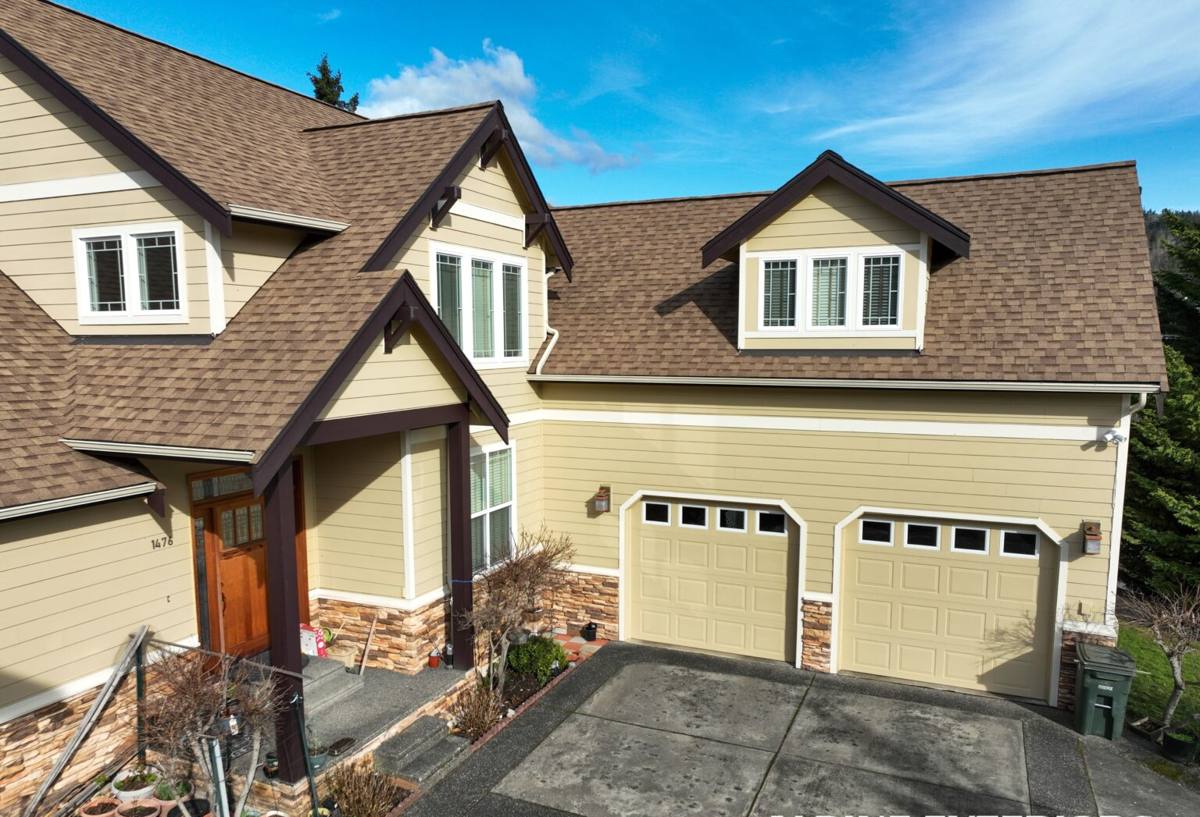
This page is about one job, done right, in this one area: a full new roof installation for a Sandy Point home, built around what this specific stretch of Whatcom County coastline actually throws at a roof.
What Salt Air, Driving Rain, and Moss Actually Do to a Roof
Salt Air and Metal Fasteners
Salt in the air accelerates corrosion on any exposed metal — nail heads, flashing, vent boots, gutter fasteners, and drip edge. On a standard roof a few miles from the water, corrosion is a slow, decades-long process. On a Sandy Point roof, unprotected or lower-grade metal can start showing rust streaking and pitting years sooner. This is why fastener and flashing selection matters more here than in most of the surrounding area — it's one of the first things we look at differently on a coastal job.
Wind-Driven Rain
Open water exposure means wind and rain rarely arrive straight down. Driving rain pushed sideways by wind off the water finds its way under shingles, around vent penetrations, and behind poorly lapped flashing far more easily than rain falling straight down on a sheltered inland roof. A roof built for Sandy Point needs every lap, seal, and flashing detail treated as a wind-driven-rain problem, not just a rain problem.
Moss and Trapped Moisture
Whatcom County's long wet season already favors moss growth, and shaded, damp lots near the water make it worse. Moss doesn't just look bad — it holds moisture against the roofing material, works its way under shingle edges as it grows, and keeps sections of the roof from drying out between storms the way they should. Over a long moss season, that trapped moisture is what actually shortens a roof's life, more than the moss itself.
Signs a Sandy Point Home May Need a New Roof, Not Another Patch
Coastal exposure tends to age a roof unevenly — one slope facing the water can be well ahead of the others. Some signs are worth a real inspection rather than another round of patching:
- Granule loss showing up in gutters or at downspout outlets, especially on the water-facing slope
- Curling, cupping, or lifted shingle edges, particularly where wind exposure is highest
- Rust staining running down from nail heads, flashing, or metal vents
- Moss that keeps coming back within a season or two of cleaning, or moss established at shingle edges rather than just on the surface
- Soft spots, staining, or sagging visible from the attic side of the roof deck
- Flashing around chimneys, skylights, or roof-wall intersections that looks lifted, cracked, or rusted
- A roof already past 18-20 years old with visible wear — coastal exposure tends to shorten useful life compared to inland roofs of the same age
Any one of these can sometimes be repaired. Several at once, especially on an older roof, usually means repair costs start approaching replacement costs without buying you much extra time.
Choosing a Roofing Material for a Waterfront Whatcom County Home
There's no single "best" roofing material for every home — it depends on your budget, roof pitch, and how much maintenance you want to take on. Here's how the common options actually compare for a salt-air, high-moss environment like Sandy Point:
| Material | Salt Air / Wind Performance | Moss Resistance | Maintenance | Typical Lifespan Here |
|---|---|---|---|---|
| Architectural (dimensional) asphalt shingle | Good, with quality fasteners and flashing | Moderate — benefits from periodic cleaning | Low to moderate | 20-30 years |
| Standard 3-tab shingle | Fair — thinner profile, more edge lift risk in wind | Lower — flatter profile traps debris | Moderate | 15-20 years |
| Metal (standing seam or coated panel) | Excellent when properly coated and fastened | High — sheds moss more easily than shingle | Low | 40-plus years |
| Synthetic/composite shingle | Good — resists cracking in wind and temperature swings | Moderate to high, depending on product | Low | 30-plus years |
We steer most Sandy Point homeowners away from basic 3-tab shingle and toward architectural shingle, metal, or synthetic products — not because 3-tab is a bad product everywhere, but because this location's wind and moisture exposure asks more of a roof than that product is built to give. It's a trade-off between upfront cost and how often you'll be dealing with maintenance or early repairs.
What a Correct New Roof Installation Actually Involves
A roof is a system, not a single layer of shingles. On a coastal home, the details underneath and around the shingles matter as much as the shingle brand.
Tear-Off and Deck Inspection
We remove the old roofing down to the deck rather than layering over it. That's the only way to actually see the plywood or OSB underneath — including any soft, stained, or rotted sections caused by trapped moisture from moss or old flashing failures. Bad decking gets replaced before anything new goes down; installing new roofing over a compromised deck just hides the problem.
Underlayment and Ice-and-Water Barrier
Given the amount of wind-driven rain this area sees, we don't treat underlayment as an afterthought. Self-adhered ice-and-water barrier at eaves, valleys, and roof-wall intersections gives a second line of defense in exactly the spots where wind-driven rain is most likely to force its way past the shingle layer.
Flashing and Penetrations
Chimneys, skylights, vent pipes, and roof-wall intersections are where most leaks actually start — not in the open field of shingles. On a Sandy Point home we use corrosion-resistant flashing materials and make sure every lap is installed to shed water downhill, not just tucked in place. This is one of the areas where a rushed installation shows up as a leak years later.
Ventilation
Balanced intake and exhaust ventilation keeps the attic dry and temperature-stable, which matters for shingle life and helps prevent condensation issues that mimic roof leaks. In a damp climate like this, poor ventilation can quietly damage a roof from underneath even when the shingles above look fine.
Our Installation Process, Start to Finish
- On-site inspection and estimate — we walk the roof (or use appropriate access for steep or hard-to-reach areas), check the deck condition where visible, and talk through material options honestly, including trade-offs.
- Written proposal — clear scope, material selection, and pricing, so you know exactly what's being installed and why, with no vague allowances.
- Scheduling and material delivery — timed around weather windows, since a coastal installation needs a reasonably dry stretch to do the tear-off and dry-in properly.
- Tear-off and deck inspection — old roofing removed, deck inspected and repaired as needed.
- Dry-in — underlayment and ice-and-water barrier installed the same day the deck is exposed, so your home isn't left open to weather overnight.
- Flashing, shingle or panel installation, and ventilation work — installed to manufacturer specifications, with extra attention to laps and fasteners given the wind and salt exposure.
- Cleanup and magnetic sweep — job site and yard cleared of debris and stray nails before we consider the job done.
- Final walkthrough — we go over the finished roof with you before we leave.
Why a Crew That Already Works in Sandy Point Matters
Roofing a coastal Whatcom County home isn't a completely different trade, but it does reward experience with the specific conditions. A crew that regularly works Sandy Point and the surrounding shoreline neighborhoods already knows to spec corrosion-resistant fasteners without being asked, already treats flashing details as non-negotiable rather than optional upgrades, and already understands how moss and shade patterns on shoreline lots behave differently than they do a few miles inland. If your home is part of a homeowners association, exterior material choices or colors may need approval before work begins — that's worth checking early, and it's something we can help you plan around rather than discovering mid-project.
A crew unfamiliar with waterfront exposure isn't incompetent — they're just applying inland standards to a job that needs coastal ones, and that gap tends to show up as an early callback for corrosion, a leak at a flashing detail, or moss taking hold faster than expected.
Protecting Your New Roof Through Moss Season
A correctly installed roof still benefits from basic upkeep in a climate like this. A few habits go a long way:
- Keep gutters and downspouts clear so water isn't pooling at the eaves during heavy rain
- Have moss growth addressed gently before it establishes under shingle edges, rather than waiting until it's visibly thick
- Trim back overhanging branches where possible to reduce shade and debris buildup on the roof surface
- Have the roof looked at after major windstorms, since coastal wind can lift or loosen shingles even when nothing looks obviously wrong from the ground
- Schedule a periodic check of flashing and vent boots — these age faster than the shingle field in salt air
None of this requires aggressive pressure washing, which can strip granules and shorten shingle life. Gentle, regular attention beats occasional harsh cleaning.
Get a Straight Answer About Your Roof
If you're dealing with an aging roof in Sandy Point, or you just want an honest read on how much life is left in the one you have, we're glad to take a look. We'll walk the roof, explain what we find in plain language, and put together a written estimate with no pressure to decide on the spot. Use the form below to request your free estimate.