 Ferndale Siding
 Why Semiahmoo Homes Wear Out Siding Faster
Semiahmoo sits right on the water in Whatcom County, and that location comes with a specific set of problems for exterior siding. Salt-laden air moves off Semiahmoo Bay and settles on everything facing the water, driving rain off the Pacific pushes moisture sideways into wall assemblies during winter storms, and the combination of shade, dampness, and mild temperatures gives moss and algae a long season to take hold — often close to year-round on north- and west-facing walls. None of this is unique to one house on one street; it's the baseline condition for any home sitting this close to the water in this part of the county.
Siding here does more than look good. It's the first line of defense against salt corrosion, wind-driven moisture intrusion, and the slow surface breakdown that comes from constant dampness. When siding is under-built for that job — or installed without the coastal-specific details it needs — problems show up years earlier than they would on a home a few miles inland.
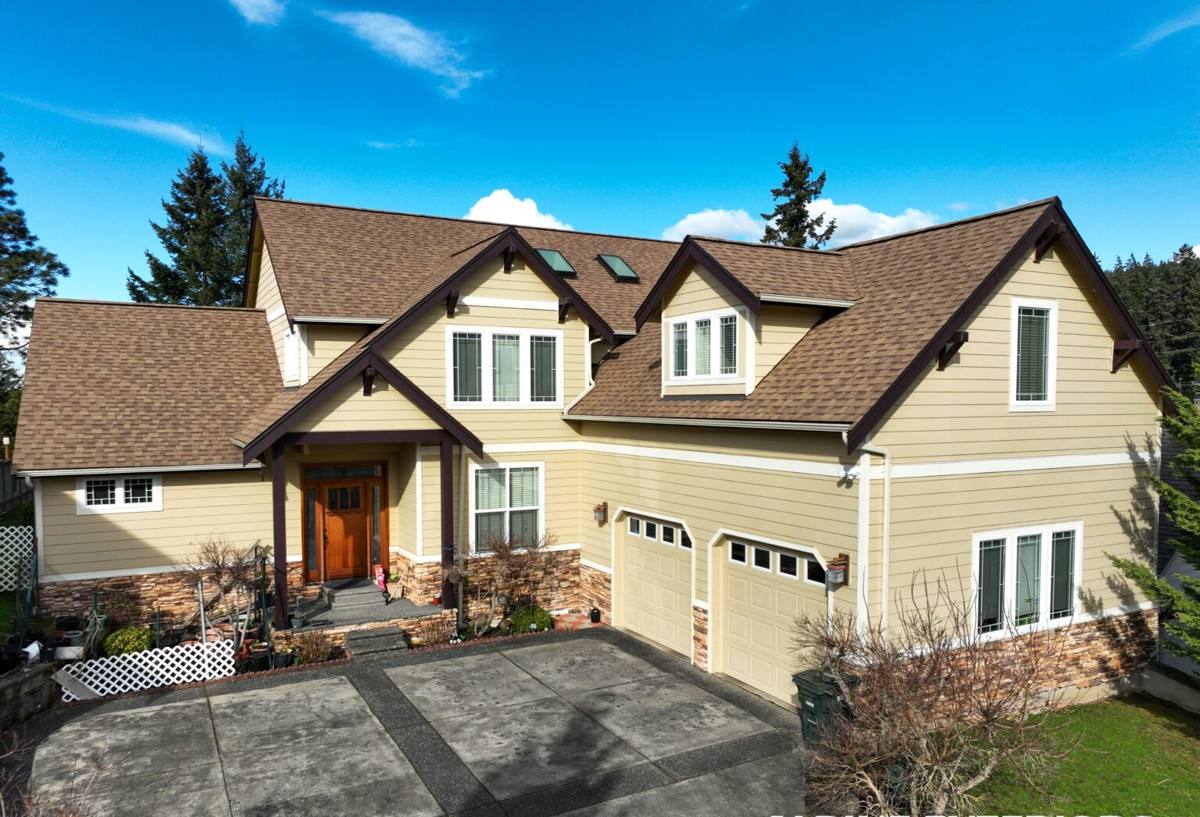
Signs Semiahmoo Siding Needs Replacing, Not Patching
Not every siding issue on a coastal home calls for full replacement. But there's a point where patching stops making sense and a full re-side is the more honest recommendation. Common signs we look for on Semiahmoo homes include:
- Soft or spongy spots when you press on siding near the bottom courses or around windows — usually trapped moisture, not just surface wear
- Persistent moss or algae staining that comes right back within weeks of cleaning
- Visible warping, cupping, or separation at panel seams, especially on the water-facing side of the house
- Paint that's failing faster than the repaint cycle should allow, or chalking/fading that's uneven across elevations
- Corrosion streaks around fasteners or trim, a common tell on homes with heavy salt exposure
- Rot at butt joints, corners, or anywhere siding meets a window, door, or roofline
One or two of these on an otherwise sound wall might be a repair. Several of them together, especially combined with siding that's original to a home 20-plus years old, usually means the material and the underlying moisture management have both reached the end of their useful life.
What Coastal Conditions Demand From a Siding Material
Not every siding product handles salt air and driving rain the same way, and this is where a lot of homeowners get surprised a few years after a re-side. Wood-based products — including primed spruce, cedar, and engineered wood panels like LP SmartSide — rely on a paint film and factory sealing to keep moisture out. In a marine climate with this much sustained dampness, any breach in that seal (a nail pop, a cut edge, a caulking gap) gives water a path into the substrate, and wood-based cores swell, delaminate, or rot from the inside out. Vinyl holds up reasonably well against moisture itself but softens, warps, or becomes brittle with UV and temperature swings, and it doesn't offer the same rigidity or fire performance homeowners increasingly want.
This is why we install James Hardie fiber cement exclusively. It's a cement-based product, not a wood-based one, so it doesn't have organic material for salt-laden moisture to break down, and it doesn't rely on an unbroken paint film for its structural integrity. It's also non-combustible, which matters to insurers and homeowners alike, and it holds its shape and finish in the freeze-thaw and rain cycles typical of a Whatcom County winter.
ColorPlus Finish and Coastal Fading
Standard field-painted siding on a coastal home tends to fade unevenly — the water-facing side takes more UV and salt exposure and shows it first, so within a few years you get a visibly two-toned house. Hardie's ColorPlus finish is baked on at the factory under controlled conditions, which gives it better fade resistance and adhesion than site-applied paint, and it comes with a longer finish warranty than what you'd realistically get from a repaint. For a home exposed to constant salt air, that factory-applied consistency is one of the more practical, less flashy reasons the product holds up.
HZ5 and Climate-Engineered Product Lines
Hardie manufactures its siding in region-specific formulations, and for a wet coastal Pacific Northwest climate that means specifying the HZ5 line, engineered for high-moisture, freeze-prone regions. This isn't a marketing distinction — the composition is adjusted for the moisture exposure a home like this actually faces. Specifying the correct HZ product for the region is a basic part of getting a coastal siding job right, and it's something we build into every estimate for homes in this area.
What a Correct Installation Actually Involves
Material choice only solves half the problem. Most siding failures we see on coastal homes — regardless of what product was originally installed — trace back to installation shortcuts, not the siding itself. A correct job on a Semiahmoo home includes:
- A continuous, correctly lapped weather-resistive barrier behind the siding, so any moisture that does get past the surface has a drainage path instead of a dead end
- Proper flashing at every window, door, roofline, and penetration — this is where the vast majority of water intrusion actually starts
- Correct fastener spacing and type, including corrosion-resistant fasteners appropriate for salt air exposure
- Manufacturer-specified clearances from grade, roofing, and decks, so siding isn't sitting in standing water or trapped moisture at the bottom edge
- Proper panel gaps and caulking at joints, matched to Hardie's published installation instructions rather than generic siding practice
- Rainscreen or drainage gap detailing where the wall assembly calls for it, giving the wall a way to dry out between storms instead of staying saturated
Skipping any one of these doesn't usually show up on day one. It shows up three, five, or eight years later as rot behind a window, a moss-blackened wall that never seems to dry, or fasteners bleeding rust through the paint. A crew that's genuinely experienced with coastal installs treats these details as non-negotiable, not optional upgrades.
Our Process on a Semiahmoo Home
1. On-Site Assessment
We walk the exterior, check for soft spots, moisture damage, and failed flashing, and look at how each elevation is actually exposed to wind and water — the water-facing side of a Semiahmoo home often needs different detailing than the sheltered side.
2. Tear-Off and Substrate Check
Once old siding comes off, we inspect the sheathing underneath. Any rot or moisture damage gets addressed before new siding goes on — covering damaged sheathing with new siding just hides the problem for a few more years.
3. Weather Barrier and Flashing
This is the step that determines whether the new siding lasts 10 years or 40. We install a continuous weather-resistive barrier and flash every opening and penetration before a single piece of Hardie goes up.
4. Installation to Manufacturer Spec
Panels, fasteners, gaps, and clearances follow James Hardie's published installation guidelines for the HZ5 climate zone — not a generalized approach used everywhere regardless of region.
5. Trim, Caulking, and Final Detail
Corners, trim boards, and joints are finished and sealed with attention to how water will actually move across the wall during a driving rain event, not just how the wall looks on a dry day.
6. Walkthrough
We walk the finished job with the homeowner, point out what was done and why, and answer questions about care going forward.
Material Comparison for a Coastal Whatcom County Home
| Material | Moisture Behavior | Salt Air Durability | Finish Longevity |
|---|---|---|---|
| James Hardie Fiber Cement (HZ5) | Cement-based, no organic core to rot | Strong; engineered for wet climates | Factory ColorPlus finish, long warranty |
| Vinyl | Moisture-resistant but not rigid | Fair; can warp/discolor over time | Color molded in, but fades and chalks |
| LP SmartSide / Engineered Wood | Wood-based core vulnerable if seal breaks | Moderate; needs vigilant caulk/paint upkeep | Field or factory paint, shorter cycle |
| Cedar / Primed Spruce | Organic, absorbs and releases moisture | Weak without heavy ongoing maintenance | Requires repainting or restaining regularly |
This isn't a claim that other products fail outright — it's why, after years of doing this work in this specific climate, fiber cement is what we're willing to put our name behind and what we install on every job.
What to Expect From a Crew That Knows This Area
A siding crew that regularly works Semiahmoo and the surrounding Whatcom County coastline already knows which elevations take the worst weather, how much moss growth to expect on shaded walls, and which flashing details matter most in a marine climate. That experience shows up in small decisions — where to add extra flashing, which fastener spec to use, how tight to run panel gaps — that a crew unfamiliar with coastal conditions might not think twice about. A homeowner vetting contractors for this kind of job should ask directly about coastal-specific detailing, not just general siding experience.
Questions Worth Asking Before You Hire
- Do you install to James Hardie's published HZ5 specifications, or a generic siding standard?
- How do you handle flashing at windows, doors, and rooflines specifically?
- What weather-resistive barrier do you use, and how is it lapped?
- Have you worked on homes with direct salt air exposure before, and what did that change about the install?
- What does your warranty cover, separate from the manufacturer's material warranty?
Caring for New Siding in a Salt Air Climate
Fiber cement siding installed correctly is low-maintenance, but "low" isn't "none." A yearly rinse to knock down salt residue and early moss growth, prompt attention to any caulking that starts to pull away, and keeping gutters and downspouts clear so water isn't dumping directly onto walls will all extend the life of the job well past its warranty period. None of this is heavy work — it's the kind of upkeep that takes an afternoon and prevents the slow damage that shows up from neglect over several winters.
Get a Straightforward Estimate
If your Semiahmoo home is showing signs of wear from salt air, driving rain, or moss, we're happy to take a look and give you an honest assessment of what's going on and what it would take to fix it right. Reach out for a free, no-pressure estimate using the form below.