 Ferndale Siding
 Why Semiahmoo Windows Wear Differently Than Inland Homes
Homes near the Semiahmoo shoreline sit in one of the harder microclimates in Whatcom County to build for. The Salish Sea sends salt-laden air onto siding, trim, and window hardware almost daily, wind-driven rain hits window assemblies at angles that flat, inland rainfall never produces, and the long gray stretch of fall through spring keeps exterior surfaces damp for months at a time. That combination doesn't just make windows look tired faster — it actively shortens the working life of seals, fasteners, and finishes that would hold up fine twenty or thirty miles inland.
None of this means windows near Semiahmoo need to be replaced more often than anywhere else. It means they need to be installed correctly for this specific exposure the first time. A window that's a perfectly good product, installed with generic technique meant for a drier, calmer site, will underperform here regardless of brand or price point.
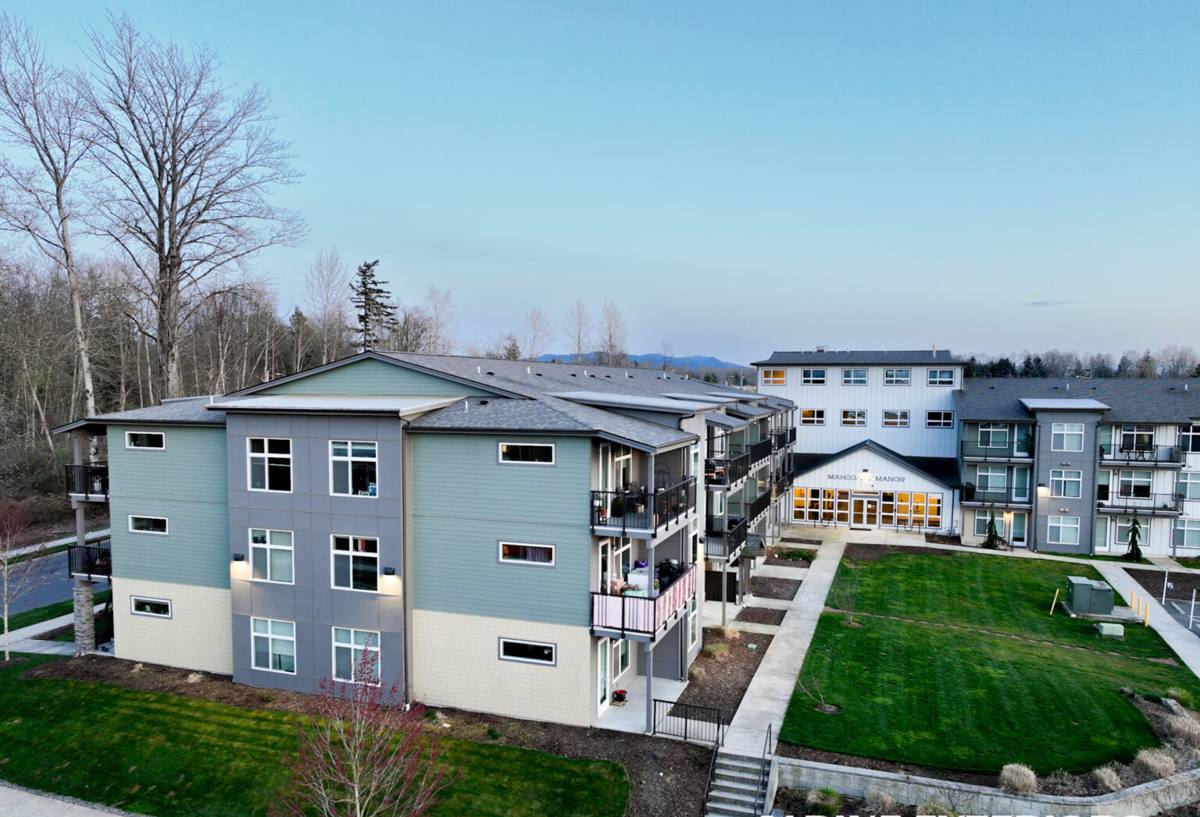
What Salt Air, Driving Rain, and Moss Season Actually Do
Salt Air and Corrosion
Airborne salt is conductive and hygroscopic — it holds moisture against metal surfaces longer than plain rainwater would. Over years, this accelerates corrosion on window hardware: hinges, cranks, screws, and lower-grade cladding fasteners are usually the first things to show it, well before the window frame or glass unit itself fails.
Driving Rain and Water Intrusion
Wind off the water pushes rain sideways and upward under trim and through any gap in the flashing that a still-air installation would never expose. Most window leaks we're called out to inspect near the coast aren't a bad window — they're a flashing detail or sealant joint that was adequate for calm rain but not for wind-driven rain hitting the assembly from an angle.
Moss and Prolonged Dampness
Whatcom County's moss season runs long, and anywhere shaded or slow to dry — under eaves, around window heads, along north-facing walls — stays damp enough to grow moss and mildew for much of the year. Sitting moisture against wood trim or unsealed joints is what turns a small gap into rot over a few seasons.
Signs Your Current Windows Are Losing That Fight
- Sash or frame hardware that's stiff, pitted, or visibly rusting
- Soft or discolored trim or sill wood, especially on the weather side of the house
- Fogging or a milky haze between panes, meaning the seal on the insulated glass unit has failed
- Drafts or a cold line felt near the frame edge even with the window closed
- Moss or dark streaking building up on the sill or just below the window
- Paint or finish that's peeling specifically around the window opening rather than the wall generally
- Difficulty opening, closing, or locking that wasn't there a year or two ago
Any one of these on its own might just mean routine maintenance. Two or three together, especially on a west- or south-facing wall exposed to the water, usually means moisture has already gotten past the original installation and it's worth having someone look at the assembly, not just the glass.
What a Correct Installation Involves in This Environment
Flashing and Water Management
The single biggest factor in whether a window survives a marine climate is how the opening is flashed, not which brand of window goes into it. That means a proper weather-resistive barrier integration, sill pan flashing that directs any water that does get past the window back out and away from the framing, and head flashing that sheds wind-driven rain rather than just still rain. This is boring, invisible work — and it's the part that actually determines whether you get a callback in three years or not.
Sealant Selection and Joint Design
Not every exterior sealant is rated for constant salt exposure and UV, and the wrong one will crack, shrink, or lose adhesion faster here than in a drier climate. We also build joints so that sealant is a backup to good flashing, not the only thing keeping water out — sealant alone, without proper flashing behind it, is not something we consider an acceptable substitute.
Hardware and Fastener Choice
Standard steel fasteners and mill-finish hardware corrode faster near the water. We use fasteners and hinge/lock hardware rated for coastal or marine exposure wherever the manufacturer offers that option, because replacing a corroded hinge on a window that's otherwise fine is an avoidable expense.
Comparing Window Materials for Coastal Whatcom County
| Material | Salt Air / Moisture Resistance | Maintenance | Typical Trade-offs |
|---|---|---|---|
| Vinyl | Good — won't rot or corrode; hardware is the weak point | Low — occasional cleaning | Lower cost; limited color/finish options; can look utilitarian on higher-end homes |
| Fiberglass | Very good — dimensionally stable, resists moisture-driven warping | Low | Higher upfront cost; fewer installers stock every configuration |
| Wood-clad (composite exterior) | Depends heavily on cladding quality and installation detail | Moderate to high — interior wood still needs periodic attention | Best interior appearance; most installation-sensitive option in this climate |
| Aluminum | Fair — thermally conductive, prone to condensation; needs marine-grade coating to resist corrosion | Moderate | Slim sightlines; not our first recommendation directly on the water without upgraded coatings |
We don't push one material on every home. Vinyl and fiberglass are our default recommendations for most Semiahmoo-area replacements because they hold up with the least ongoing maintenance. Wood-clad windows can be the right call for a home where the interior look matters most, but we're upfront that they ask more of both the installation detail and the homeowner's upkeep schedule in this climate.
Cost Factors: What Actually Moves the Price
| Factor | Why it matters here |
|---|---|
| Retrofit vs. full-frame replacement | Full-frame costs more but lets us correct old flashing — often the right call on homes with existing water damage |
| Window count and size | Larger openings and picture windows cost more in unit and labor, and need more careful flashing at the head |
| Material grade | Marine-rated hardware and higher-grade glass packages add cost but reduce corrosion and condensation issues |
| Existing damage found during removal | Rotted sheathing or framing discovered once old windows come out adds repair cost before new units go in |
| Wall exposure | West- and south-facing walls that take the brunt of wind-driven rain sometimes justify upgraded flashing details |
Retrofit vs. Full-Frame Replacement
A retrofit (pocket) installation reuses the existing frame and is faster and less invasive, but it only makes sense if that frame and the flashing behind it are still sound. On a lot of coastal-exposed homes we inspect, especially older ones, the frame looks fine from inside but the flashing or sheathing behind it has been slowly compromised by years of wind-driven rain. In those cases a full-frame replacement costs more up front but is the only way to actually fix the underlying water management, not just cover it with a new window.
We'll tell you honestly which situation you're in after a look at the opening — not after we've already sold you one approach.
Our Process for Semiahmoo Installations
- On-site inspection of existing windows, trim, and any visible water or moss damage
- Honest assessment of retrofit vs. full-frame replacement for each opening
- Material and hardware recommendation based on that specific wall's exposure to wind and rain
- Removal with a check of the framing and sheathing condition once the old unit is out
- Sill pan and flashing installation built for wind-driven rain, not just gravity drainage
- Window set, shimmed, and fastened to manufacturer spec with coastal-rated hardware
- Sealant and trim finish work, checked for continuous water-shedding paths
- Final walkthrough and operation check on every window installed
Why Local Experience on This Coastline Matters
A crew that mostly works drier, inland jobs can install a technically fine window and still get the flashing detail wrong for this exposure — because the failure mode they're used to guarding against isn't the one that shows up here. Crews that regularly work Ferndale and the surrounding Whatcom County coastline have already seen which details actually fail near the water: which sealants hold up, which hardware corrodes early, and which flashing shortcuts come back to bite a homeowner two winters later. That's not something you can fully substitute with a good product alone.
Keeping New Windows Performing Long-Term
A correct installation is most of the battle, but a little seasonal attention extends it further in this climate:
- Rinse accumulated salt film off frames and glass a few times a year, especially after storms
- Clear moss and debris from sills and tracks before it holds moisture against the frame
- Operate hardware periodically through the wet months so cranks and locks don't seize
- Check exterior caulk lines annually and have any cracked sealant redone before it lets water in
- Watch for condensation between panes — it's the earliest sign of a failing glass seal
If your windows near Semiahmoo are showing wear, or you're planning ahead for a replacement, we're happy to take a look and give you a straight assessment — no pressure, no upsell. Use the form below to request a free estimate.