 Ferndale Siding
 Composite Decking Built for How Sudden Valley Actually Sits
Sudden Valley homes tend to sit on wooded, sloped lots with a lot of tree canopy overhead. That's part of the appeal — privacy, shade, quiet — but it's also exactly the combination that wears out an outdoor living space faster than homeowners expect. Whatcom County's wet season brings long stretches of driving rain, and the moss season here runs longer than most people plan for. Add salt-laden air moving in off the water on windy days and you've got a deck environment that punishes the wrong materials and the wrong build details. Composite decking, installed correctly, holds up to all of it. Installed carelessly, it fails in the same places wood does — just more slowly and more expensively.
This page is about composite decking specifically for Sudden Valley properties: what the site conditions demand, what a correct installation looks like, and how we approach the work when we're already familiar with this neighborhood's terrain.
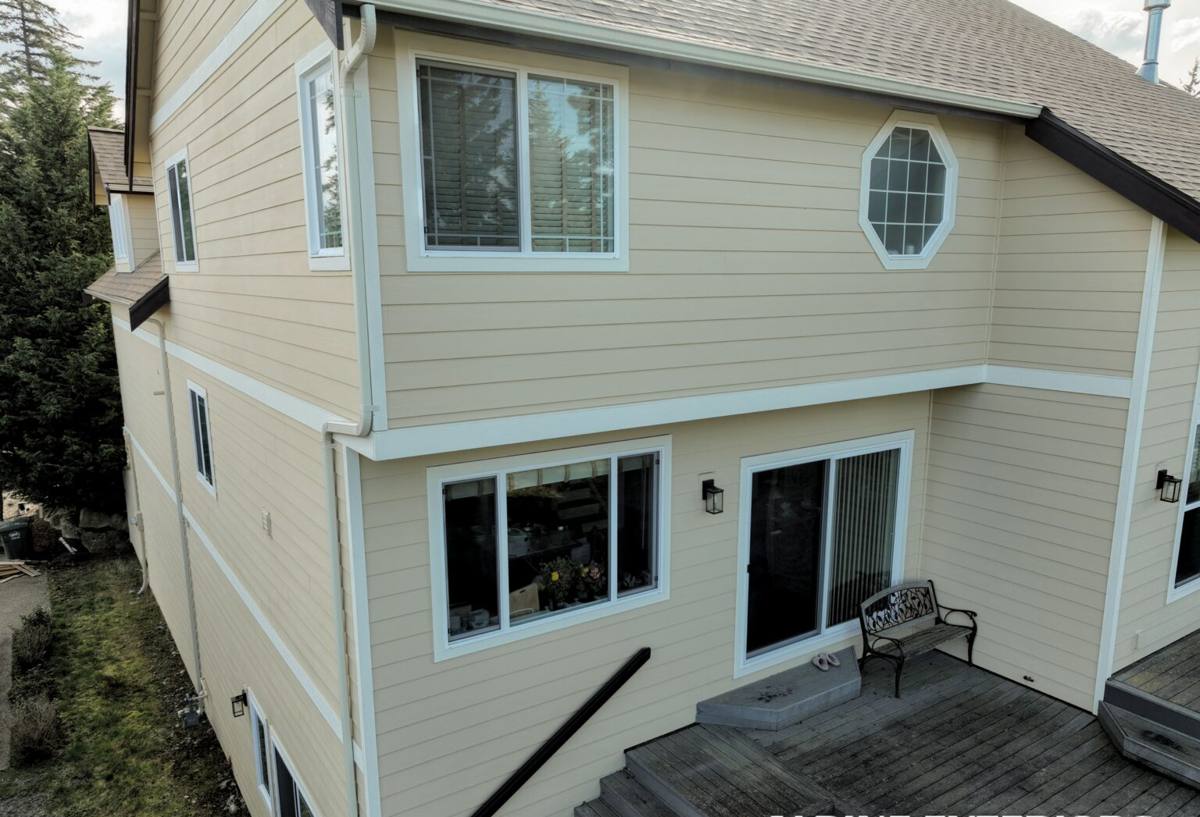
Why Composite Fits Shaded, Moisture-Heavy Lots
Wood decking depends on the wood staying dry enough, often enough, to resist rot and fungal growth. On a shaded lot under mature trees, that almost never happens — the deck surface can stay damp for days after a storm because sunlight never gets a real chance to dry it out. That's the exact condition that grows moss, algae, and soft, punky wood fiber.
Composite boards don't rot. The wood fiber inside is encased in plastic, so moisture doesn't soak into the board's core the way it does with solid wood. That doesn't mean composite is maintenance-free in a shaded, mossy environment — surface growth can still take hold on any decking material if it's left wet and dirty long enough — but the board itself isn't degrading underneath that growth. On a Sudden Valley lot with heavy tree cover, that difference matters more than it would on an open, sun-exposed site.
Salt Air and Driving Rain
Whatcom County's coastal-influenced weather means fasteners, flashing, and hardware take a beating over the years, even on a wooded inland lot. We spec stainless or coated fasteners and hidden fastening systems rated for this kind of exposure, not the cheapest hardware that happens to fit the board profile. Driving rain also means end-grain and cut edges need to be sealed or capped — an exposed cut edge on a composite board is the one place it can still take on water over time.
What a Correct Composite Deck Build Involves
The board is only part of the deck. Most of the problems we get called out to fix on other contractors' decks — squeaking, soft spots, boards that cup or grow moss faster than the rest of the deck — trace back to what's underneath the boards, not the boards themselves.
Substructure and Ledger Attachment
On sloped Sudden Valley lots, footing depth and post height often vary across a single deck. We set footings below frost depth and grade the substructure so water sheds away from the house rather than pooling against the ledger board — that ledger-to-house connection is the single most common source of hidden rot on any deck, composite or wood, because it's the hardest spot for water to escape once it gets in. Proper ledger flashing, and in many cases standing the deck off the house on its own footings instead of ledger-mounting at all, avoids that failure point entirely.
Joist Protection, Ventilation, and Spacing
We tape or wrap joists to keep moisture out of the framing lumber, since the composite boards on top will outlast untreated joists underneath them if the frame isn't protected. Board spacing and airflow underneath the deck both need to account for a shaded site drying more slowly than an open one — tighter gaps or blocked airflow just trap the moisture composite doesn't absorb, right at ground level where moss and mildew start.
Fastening
Hidden fastener systems keep the deck surface free of exposed screw heads, which matters both for appearance and because every exposed fastener hole is a spot where water can sit. We follow the manufacturer's fastening spacing and expansion gaps exactly — composite boards expand and contract with temperature more than people expect, and a deck fastened too tight will buckle within a season or two.
Comparing Composite Decking Options
Not all composite decking is built the same way, and the differences matter more in a wet, shaded environment than they would somewhere dry and sunny. Here's how the main categories stack up for a Sudden Valley application:
| Type | Moisture Behavior | Moss/Mildew Resistance | Maintenance |
|---|---|---|---|
| Uncapped composite | Wood fiber near the surface can still absorb some moisture | Lower — surface texture holds onto organic growth more | Periodic cleaning and occasional sealing recommended |
| Capped composite | Plastic cap shell resists surface moisture absorption | Better — smoother, less porous surface | Routine washing; no sealing needed |
| Solid PVC decking | No wood fiber at all; essentially moisture-inert | Best — least porous surface of the three | Lowest; typically just periodic washing |
We don't push homeowners toward the most expensive option by default. On an open, sunny Sudden Valley lot, capped composite is often the right balance of cost and performance. On a heavily shaded, damp lot under mature trees, we'll often recommend solid PVC or a premium capped composite specifically because the lower porosity pays for itself in less cleaning and better long-term appearance. We'll walk your specific site conditions with you rather than defaulting to one product line.
How Our Process Works
We keep the process straightforward, and we don't pressure anyone into a bigger job than they need.
- Site walk and design conversation — we look at your lot's slope, tree cover, sun exposure, and how the deck will actually be used, then talk through material options honestly.
- Written estimate — a clear scope and price, no vague allowances that turn into surprise change orders later.
- Permitting and footing layout — handled before any demo or digging starts, so the substructure is engineered for your site, not a generic template.
- Substructure build — framing, joist protection, and drainage detailing done first and correctly, since this is the part that's invisible once the deck is finished.
- Decking installation — hidden fastening, proper spacing, and finish trim work.
- Final walkthrough — we go over care and cleaning specific to your site's shade and moisture conditions before we consider the job done.
Maintaining a Composite Deck in a Moss-Prone Environment
Composite decking cuts down on maintenance — it doesn't eliminate it, especially under tree cover in Whatcom County's wet months. A little seasonal attention keeps a shaded deck looking like a shaded deck's better version instead of a mossy one.
- Sweep leaves, needles, and debris off the deck regularly through fall — trapped organic matter is what moss actually feeds on.
- Wash the surface at least once or twice a year with a soft-bristle brush and a cleaner rated for composite decking; avoid pressure washing at close range, which can damage the board surface.
- Keep gutters and downspouts near the deck clear so runoff isn't dumping extra water directly onto or under the deck.
- Check that shrubs and low branches aren't blocking airflow across the deck surface — more airflow means faster drying between rain events.
- Inspect fasteners, railings, and stair connections once a year; hardware is usually the first thing to show wear, even when the boards look fine.
What Affects the Cost
Every deck is different, but these are the factors that move the price most on Sudden Valley projects specifically:
| Factor | Why It Matters Here |
|---|---|
| Slope and footing depth | Hillside lots often need deeper or additional footings compared to a flat lot |
| Access for equipment and materials | Wooded, sloped driveways can limit how materials are staged and moved to the build site |
| Decking material tier | Uncapped, capped, and solid PVC composite carry different material costs |
| Substructure condition (replacement projects) | Rotted ledger boards or joists found during demo add scope but shouldn't be skipped |
| Railings and stairs | Code-required railing height and stair geometry change with deck height and site grade |
We'll flag anything we find once we open up an existing deck rather than guessing at a number up front and hoping it holds.
Why a Crew That Already Works Sudden Valley Matters
A contractor who's built decks on Sudden Valley's sloped, wooded lots before already knows to expect variable footing depths, tighter equipment access, and the drainage detailing a heavily shaded site needs. That's fewer surprises mid-project and a build that accounts for your site's actual conditions from the estimate forward — not a generic deck plan adjusted on the fly once problems show up. It also means we're a known, reachable local crew if a warranty question or a hardware check-up comes up down the road, not a company that was in the area for one job and gone.
If you're planning a new composite deck or replacing an aging wood deck on your Sudden Valley property, we're happy to walk the site with you and talk through what your specific lot actually needs. Reach out for a free, no-pressure estimate using the form below.