 Ferndale Siding
 Roofing in Sudden Valley: A Different Set of Demands
Sudden Valley sits in a stretch of Whatcom County where the roof over your head does more work than it does in drier parts of the state. Between the tree cover, the lake-effect humidity, and the weather that rolls in off the water, roofs here age differently than roofs forty miles inland. A shingle that might last 25 years in a dry climate can be showing real trouble at 15 if it's been fighting moss, moisture, and wind-driven rain the whole time.
We work on homes throughout this area regularly, and the patterns repeat: north-facing slopes that never fully dry out, valleys and eaves clogged with debris from surrounding trees, and roofs that were replaced once with a bargain shingle that couldn't keep up with the moss cycle. A roof replacement done right for this specific setting looks different from a generic tear-off-and-reroof job done by a crew that doesn't normally work this side of the county.
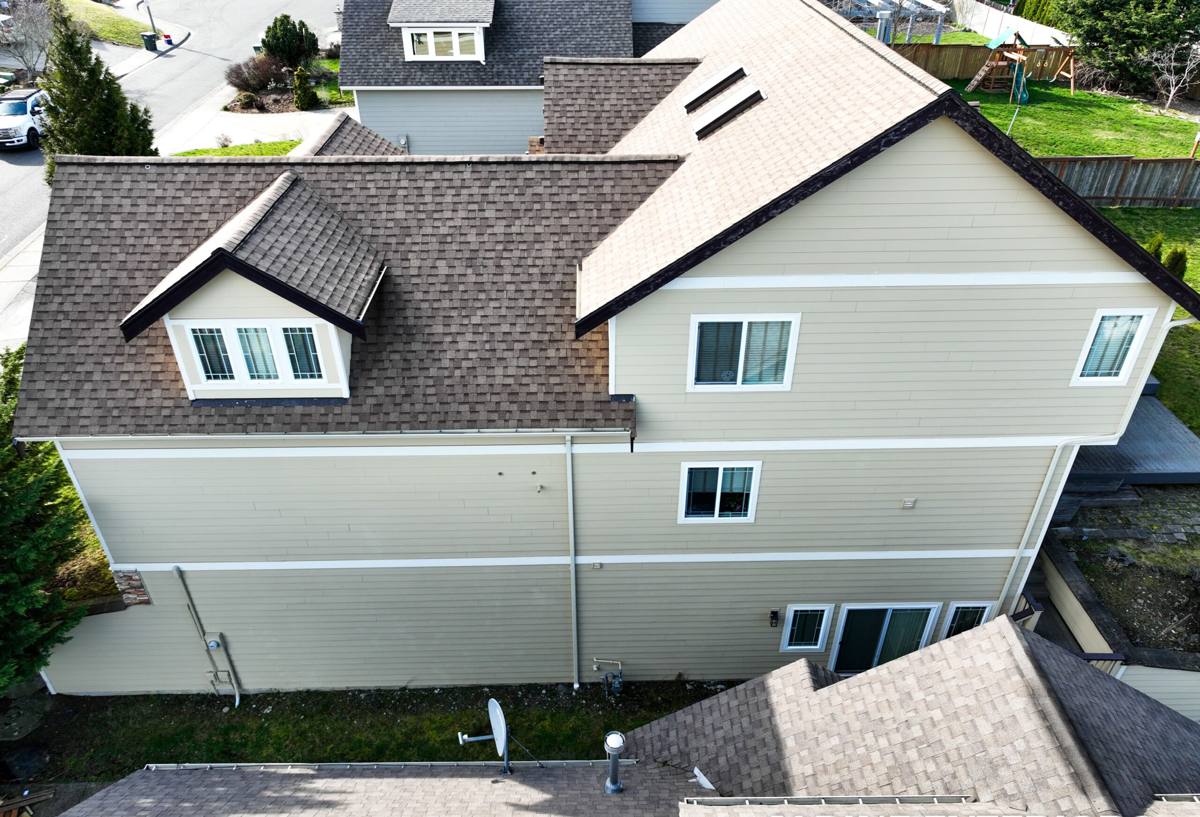
What This Climate Does to a Roof
Three things drive most of the roof replacements we do out here, and they compound each other.
Moss and Organic Growth
Shaded, tree-lined lots hold moisture longer than open ones. Moss doesn't just sit on top of shingles looking bad — it lifts shingle edges, holds water against the roofing surface, and works its way under tabs and around fasteners. Left alone through a few wet seasons, moss growth is one of the most common reasons a roof fails years before it should.
Driving Rain
This part of Washington gets rain that doesn't fall straight down. Wind-driven rain finds every weak point in flashing, underlayment laps, and fastener patterns. A roof that's fine in a light shower can leak in a sideways storm if the install wasn't detailed for wind-driven conditions.
Salt Air
Proximity to the water means airborne salt reaches roofing materials, fasteners, and metal flashing. Salt exposure accelerates corrosion on unprotected metal components — nails, vents, valley flashing — long before the shingles themselves wear out. A roof system built for this area needs corrosion-resistant fasteners and flashing, not standard-grade hardware.
None of these factors are dramatic on their own. Together, over a long moss season and years of driving rain, they're why roofs in this part of Whatcom County often need attention on a shorter timeline than homeowners expect.
Signs Your Roof Is Telling You It's Time
- Moss growth that returns within months of cleaning, especially on north- or shade-facing slopes
- Shingle granules collecting in gutters or at downspout outlets
- Curling, cupping, or cracked shingles, particularly on older three-tab roofing
- Soft spots or sagging when walked on (we check this — you shouldn't have to)
- Daylight visible through the roof deck from inside the attic
- Water stains on interior ceilings or in the attic near valleys and chimneys
- Flashing that's rusted, lifted, or separating from the roofline
- A roof approaching or past 20 years old with no major work done
Any one of these by itself might just mean a repair. Several together, or a roof that's aging out and showing more than one, usually means replacement is the more honest answer than another round of patching.
What a Correct Roof Replacement Involves
A roof replacement isn't just stripping old shingles and laying new ones. For homes in this climate, the details underneath the shingles matter as much as the shingles themselves.
Tear-Off and Deck Inspection
We remove the existing roofing down to the deck. This is the point where hidden moisture damage shows up — soft or delaminated sheathing from years of trapped moisture under moss or failed underlayment. Any damaged decking gets replaced before anything new goes down; covering up a compromised deck just buries the problem.
Ice and Water Protection at Vulnerable Points
Eaves, valleys, and areas around chimneys and skylights get self-adhering water-resistant underlayment, not just standard felt. These are the spots where driving rain and ice find their way in first.
Synthetic Underlayment Across the Field
A quality synthetic underlayment, properly lapped against the direction of prevailing wind and rain, is the roof's real backup line of defense. This is where a lot of shortcut jobs cut corners, and it's usually invisible until the first bad storm.
Corrosion-Resistant Flashing and Fasteners
Given the salt air exposure common to this area, we use flashing and fastener materials chosen to resist corrosion, not just whatever's cheapest at the supply house. Valley metal, step flashing around chimneys and walls, and vent flashing all get this treatment.
Ventilation That Matches the Home
Proper intake and exhaust ventilation keeps the attic dry and temperature-balanced, which slows moss regrowth from underneath and helps the new roof reach its full service life. A roof replacement is the right time to correct ventilation that was inadequate on the old system.
Final Shingle Installation
Only after the deck, underlayment, flashing, and ventilation are right do the finish shingles go down, per manufacturer spec, with attention to nailing pattern and exposure — details that matter more in wind-driven rain than they do in calmer climates.
Material Options for This Climate
Not every roofing material handles moss, moisture, and salt air the same way. Here's how the common choices compare for a home in this setting.
| Material | Moss/Moisture Resistance | Salt Air Durability | Typical Lifespan Here |
|---|---|---|---|
| Standard 3-tab asphalt shingle | Lower — more prone to moss lift | Fair, if fasteners are corrosion-resistant | 12–18 years in shaded, wet conditions |
| Architectural (laminate) asphalt shingle | Better — thicker profile sheds debris more effectively | Good, with proper flashing/fasteners | 20–30 years |
| Algae-resistant (AR) shingle | Best asphalt option — copper/zinc granules resist growth | Good, with proper flashing/fasteners | 20–30 years, with slower moss return |
| Metal roofing | Very good — sheds moss and debris well | Depends on coating/finish; needs marine-grade fasteners | 40+ years with correct install |
For most homes in Sudden Valley, we lean toward algae-resistant architectural shingles as the best balance of upfront cost, appearance, and realistic performance against the local moss cycle. Metal is a strong option where budget allows and the roof profile suits it, but it's a bigger upfront investment and needs a crew experienced with coastal-grade fastener and flashing details to actually deliver on its longevity.
What Drives Cost
We don't quote prices sight unseen, but these are the factors that move the number up or down on most jobs out here.
| Factor | Why It Matters |
|---|---|
| Roof size and number of facets | More squares and more valleys/hips mean more material and labor |
| Deck condition | Rotted or delaminated sheathing found at tear-off adds material and labor to replace |
| Material choice | Standard asphalt, AR shingle, and metal carry different material costs |
| Roof pitch and access | Steep or hard-to-access roofs take longer and require more safety setup |
| Tree cover and site prep | Overhanging limbs or tight access can add time for protection and cleanup |
| Ventilation upgrades | Correcting inadequate intake/exhaust venting adds modest cost but pays off in roof life |
We walk every roof and give a written estimate that spells out what's included — we don't believe in vague numbers that turn into surprise add-ons once the tear-off starts.
Why a Crew That Works This Area Already Matters
A roofer who mainly works dry, open subdivisions elsewhere in the state doesn't necessarily know to spec corrosion-resistant fasteners as standard, or to pay extra attention to valley and eave protection on a shaded, tree-covered lot. We work in Ferndale and throughout Whatcom County, including communities like Sudden Valley, often enough that these aren't special-case decisions — they're just how we build a roof here.
That local familiarity also shows up in smaller ways: knowing which slopes on a given lot orientation tend to hold moisture longest, understanding how tree canopy affects debris buildup through the year, and having a realistic sense of how a roof will actually perform through a full wet season rather than how it looks on a spec sheet.
Before You Call: A Quick Checklist
- Note which slopes have visible moss or dark streaking, and whether it's returned after past cleaning
- Check the attic (if accessible) for daylight, staining, or damp insulation
- Look at gutters for accumulated granules — a sign of shingle wear
- Note the age of the current roof, if known
- Check for soft spots when it's safe to walk near the roof edge, or mention any ceiling stains inside
- Have a rough sense of your timeline — some replacements can wait for a dry stretch, others can't
Bringing this information to your estimate helps us give you a faster, more accurate picture of what your roof actually needs.
Get a Straight Answer About Your Roof
If your roof is showing moss that keeps coming back, granule loss, or just years of wear from this area's wind-driven rain and salt air, it's worth getting an honest look before another wet season sets in. We'll walk the roof, tell you plainly whether you're looking at a repair or a replacement, and put together a written estimate with no pressure attached. Reach out using the form below to schedule a free estimate for your Sudden Valley home.